
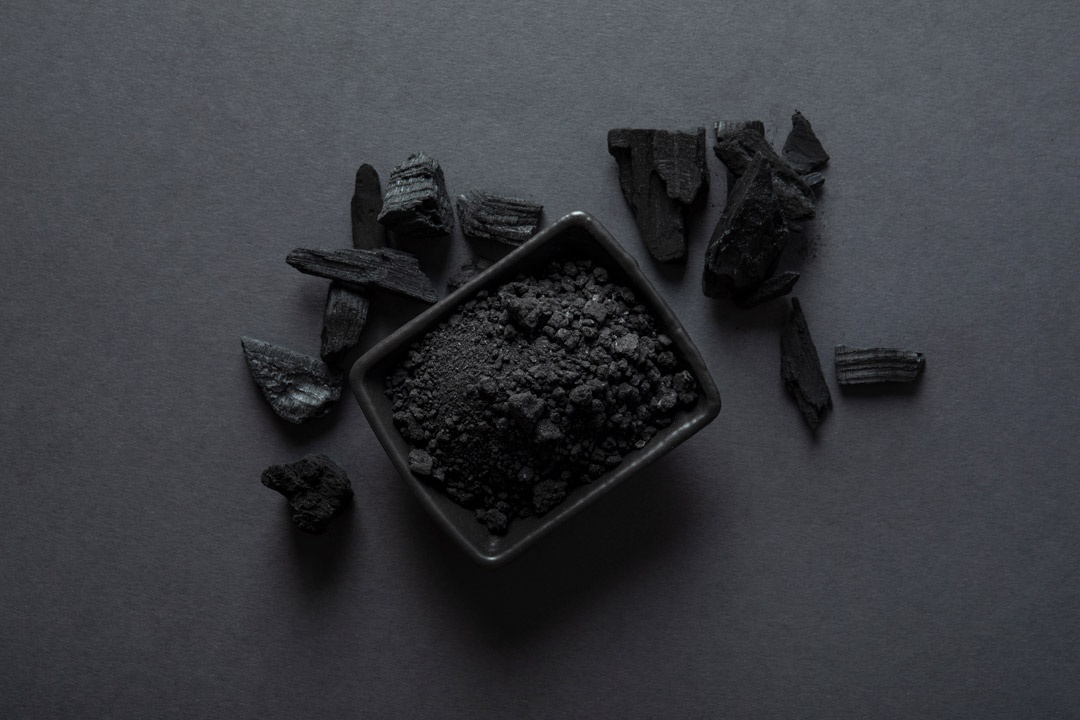
Biochar is no longer merely an experimental hypothesis in flatfish aquaculture; it is now taking a tangible place in the discussion around new functional feed additives. That is the key conclusion emerging from the CARBODIET project following the presentation of its results as the Higher Technical School of Marine Sciences (CASEM) at the University of Cádiz, in southern Spain.
The open-access event was organised with the support of the Biodiversity Foundation of Spain’s Ministry for Ecological Transition and the Demographic Challenge, through the Pleamar Programme, and is co-financed by the European Union under the European Maritime, Fisheries and Aquaculture Fund (EMFAF).
The meeting opened with a presentation by Manuel Manchado from IFAPA El Toruño Centre, who framed the discussion within the current context of Senegalese sole production. He highlighted progess achieved in the species, while pointing to ongoing challenges in production efficiency, nutrition and sustainability. He stressed the need to integrate biotechnological tools and selective breeding criteria into the design of new feeding strategies.
Teresa Álvarez Centeno from ICAR-CSIC then addressed the origin and properties of biochar, underlining its transformation from waste material into a valued-added resource with physicochemical characteristics that influence its biological behaviour.
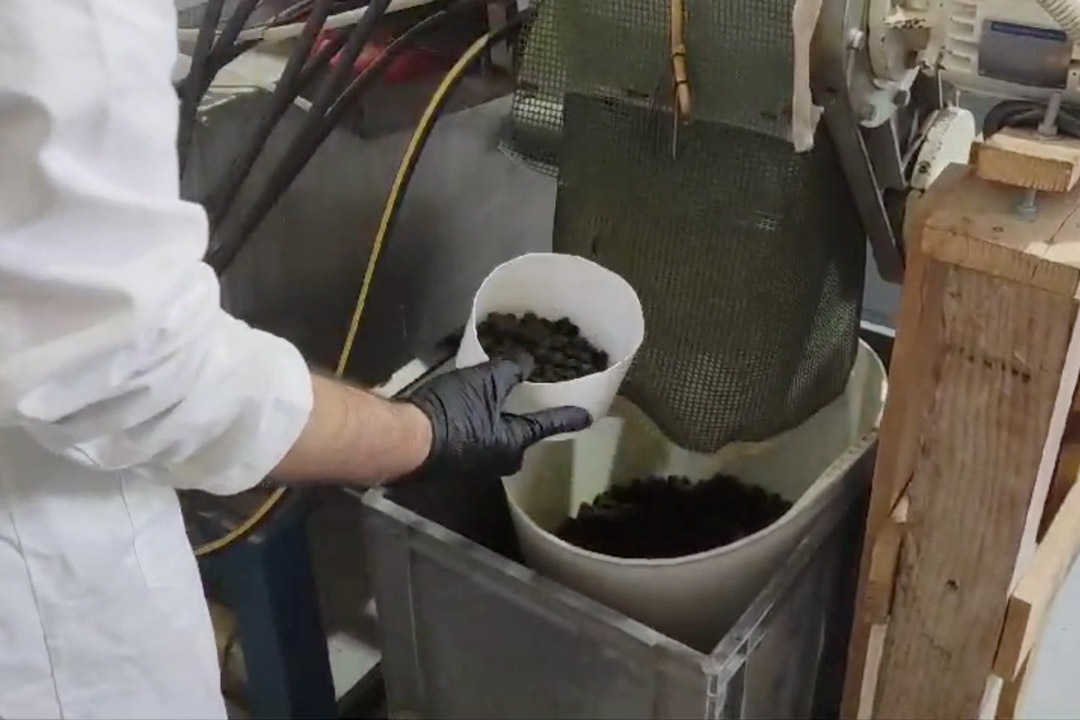
The core production results were presented by Cristina Rodríguez Rodríguez from IEO-CSIC in Santander. Trials conducted in turbot (Scophtalmus maximus) and Senegalese sole (Solea senegalensis) confirmed that dosage is critical. Inclusion at 0.25% proved viable in both species, with no negative impact on growth performance or overall physiological condition. However, at 0.50%, turbot exhibited reduced growth and structural changes in the intestine, consistent with increased energetic costs.
Juan Miguel Mancera Romero, Professor at the University of Cádiz, explored the metabolic and molecular responses in greater depth. In turbot, lower basal energy mobilisation was observed, whereas in sole the physiological adjustments were compatible with improved short-term growth potential. At the gene expression level, biochar showed trends linked to changes in lipogenesis and in the regulation of lipid and immune-related metabolic pathways.
The assessment of intestinal functionality and muscle composition, presented by Francisco Javier Alarcón López from the University of Almería (Spain), revealed species-specific effects. In turbot, biochar reduced muscle protein content and, at higher inclusion levels, decreased intestinal absorptive surface area. In sole, by contrast, muscle lipid content increased and shifts in muscle metabolites suggested improved metabolic efficiency. Variations in fatty acid profiles were also detected, including differences in arachidonic acid levels and in the EPA/DHA ratio depending on species and diets.
María del Carmen Castro Pérez, from IEO-CSIC addressed microbiota and culture system parameters. In sole, biochar modulated the intestinal microbial community, reducing the presence of Spirochaeota and enriching groups such as Proteobacteria, associated with digestive enzyme production. In turbot, alpha diversity showed no significant changes, although a reduction in Firmicutes was observed. In culture water, biochar-based diets led to occasional reductions in phosphate and, in some cases, ammonium, indicating potential to decrease nutrient discharge and eutrophication risk, although results were influenced by species and experimental design.
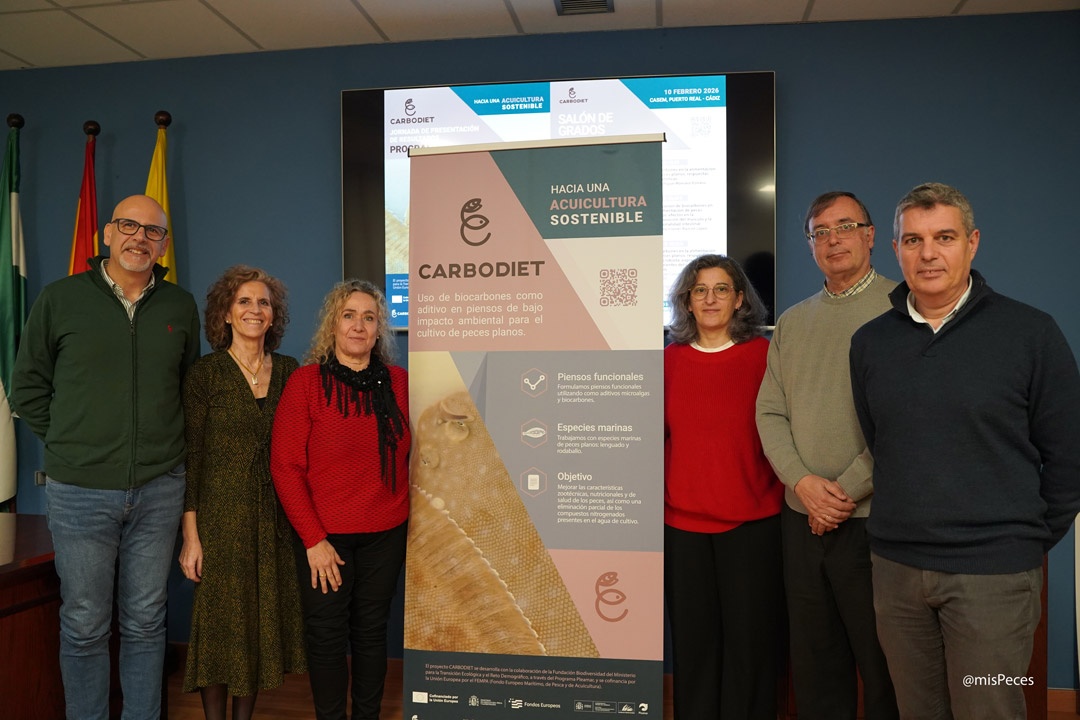
Alfonso Macías, representing the Association of Marine Aquaculture Companies of Andalusia (ASEMA), emphasised that effective transfer of these findings to industry is essential if research is to achieve practical impact. He highlighted the close collaboration between research centres and production companies as one of the project’s key strengths.
Taken together, the results demonstrate that while biochar is not a universal solution, it may serve as a functional tool with clear, dose – and species – dependent effects. Given that both Senegalese sole and turbot are farmed commercially in recirculating aquaculture systems (RAS), the next step will be to refine dosage under these conditions. All indications suggest that biochar could become a useful component within functional nutrition strategies and broader sustainability approaches in flatfish aquaculture.

Related


Latest news
-
Lubimar’s fish farms: from traditional model to globally certified benchmark under the Aquaculture Stewardship Council
Barbate, Cádiz, 30 March 2026 | Andalusian aquaculture takes a significant step towards a unified certified model.
-
Nueva Pescanova returns to profit and confirms shift towards efficiency and aquaculture as recovery drivers
Vigo, Spain, 30 March 2026 | The group closes 2025 in positive territory, improves margins and enters a new phase focused on value and productivity
-
Finishing diets with insect and poultry by-product meals prove their effectiveness at commercial scale in gilthead seabream
Italy, 30 March 2026 | A real farm trial confirms improved growth and efficiency without compromising product quality or consumer acceptance
EVENTS
-
21AprTue, 21 Apr - Fri, 24 AprGran Via - Fira Barcelona - Barcelona