

Aquaculture in Spain is undergoing a phase of transformation driven by investment, the adoption of new technologies and the introduction of high-value species. This trend is becoming increasingly visible within the European Union, where the development of new production projects shows more limited momentum.
Rather than a sudden shift, the sector is evolving progressively, combining established models with new industrial approaches.
However, this evolution contrasts with a policy framework that does not always integrate aquaculture on equal terms with other primary sectors, even in periods of rising cost pressures.
Seriola: from experimental promise to industrial opportunity
At the same time, the sector is moving towards more controlled systems, particularly through recirculating aquaculture systems (RAS), both in early stages — hatchery and pre-ongrowing — and increasingly in grow-out, supporting production diversification.
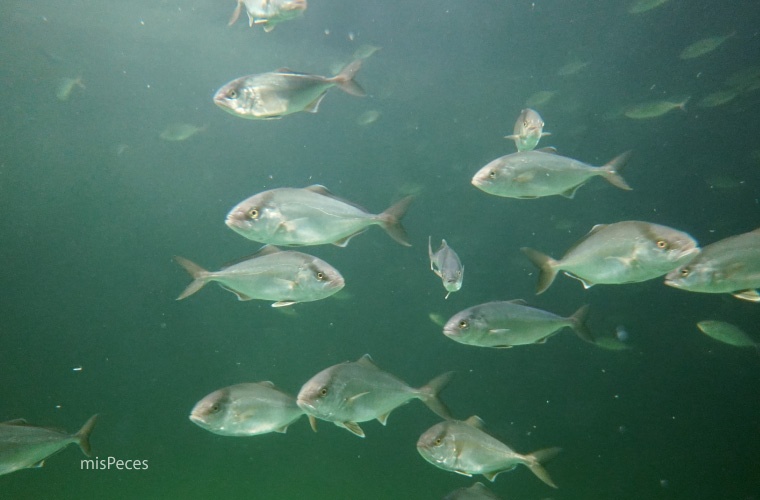
In this context, greater amberjack (Seriola dumerili) is emerging as one of the most relevant vectors of change, with clear industrialisation potential. Spain is beginning to position itself with developments that move beyond the experimental phase towards commercial scale.
At the forefront is Futuna Blue Spain — backed by Norwegian capital — currently the only commercial-scale supplier of Seriola dumerili juveniles, with a capacity close to one million units per year for international markets. This link in the value chain is key to enabling industrial scaling.
In parallel, through Acuicultura Cádiz, the company is developing a land-based grow-out project in phases, from an initial 450 tonnes to a target of 5,000 tonnes annually.
This momentum is complemented by Alicante Aquaculture, which has launched a land-based facility in the Valencia region with an investment of around €15 million and an initial capacity of 600 tonnes per year. It represents one of the first industrial-scale validations of Seriola grow-out in RAS in Europe, following earlier pilot and semi-industrial experiences such as Blennius, which is currently inactive.
Taken together, these developments point towards the consolidation of a land-based model for a traditionally marine species, although still dependent on technical and economic validation in its early stages.
At the same time, these projects are exposed to increasing operational pressure from key inputs such as energy, feed and oxygen, all of which directly affect their economic viability.
Spain, a leader in established species: form turbot to the rise of sole
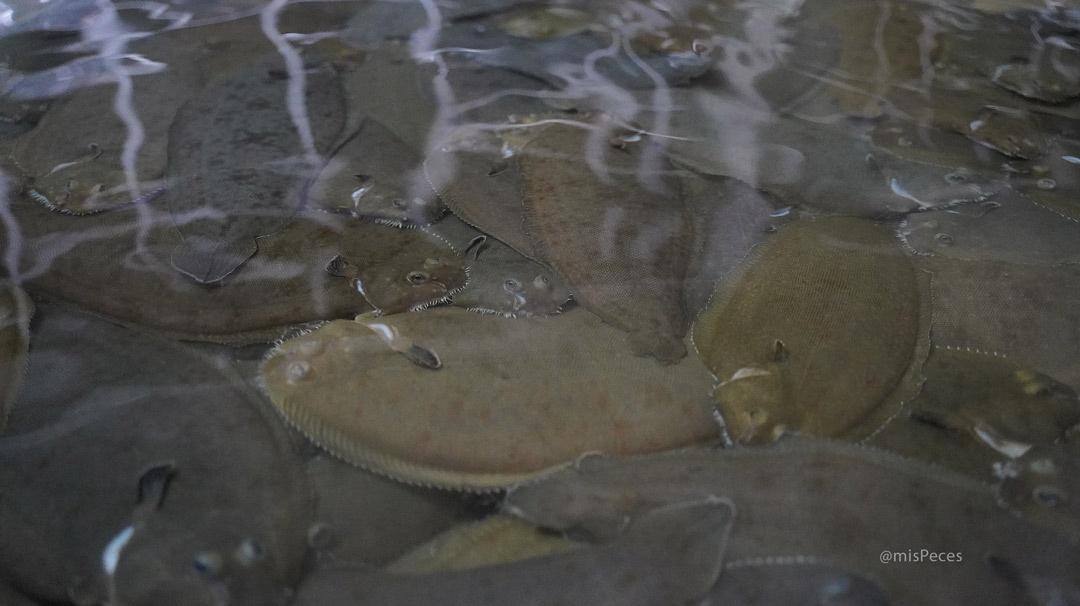
Alongside these emerging developments, the sector maintains a strong base in established species such as turbot and, increasingly, sole, which is starting to position itself as a viable industrial alternative in Europe.
Stolt Sea Farm illustrates this solidity through its 2025 results, where price stability and strength have supported growth, reflecting both market maturity and exposure to external factors.
Meanwhile, Sea Eight continues to advance the industrialisation of sole through the expansion of its project at the port of El Musel (Gijón), with a planned capacity of up to 1,400 tonnes per year in RAS. The integration of hatchery and grow-out phases in a single location strengthens production control and biosecurity in a species historically considered difficult to scale.
The project also introduces a structural element of growing importance: the use of port infrastructure for intensive land-based aquaculture — a trend gaining traction in Europe due to its logistical advantages and proximity to markets.
Salmon in Spain: shortening supply chain, assuming risk
This diversification is further reinforced by the introduction of traditionally imported species into intensive systems. The start of construction of a land-based salmon facility in Burela, with an investment exceeding €80 million, strengthens the trend towards local production in RAS.
These initiatives aim to shorten supply chains, but they also highlight the operational and cost challenges associated with large-scale RAS production.
In this context, the sector’s ability to absorb cost increases without dedicated support mechanisms becomes a critical factor for future development.
Beyond RAS: towards circular production models
In parallel, CUPIMAR represents an evolution of RAS-based sole production towards more efficient and circular models by integrating it with multitrophic production of invertebrates and halophyte plants. This approach, already validated at pilot scale, reinforces Spain’s position in sustainability and traceability, with potential to influence the sector’s future direction.
This progress is supported by increasing collaboration between companies, research centres and public administrations, enabling advances in key areas such as genetics, nutrition and animal welfare.
Nevertheless, the recent exclusion of aquaculture from certain extraordinary support measures for the primary sector highlights a structural gap in its recognition within public policy frameworks.
Structural challenges remain. Regulatory complexity, competition from imports produced under lower standards, and constraints in critical infrastructure — particularly access to energy — continue to shape the pace of new developments.
In addition, unlike agriculture, livestock and capture fisheries, aquaculture still lacks automatic response mechanisms in times of crisis.
Overall, aquaculture in Spain is not moving in a single direction. Established models coexist with new species and emerging technologies in a phase of active exploration. Rather than a completed transformation, the sector remains under construction — without a clearly dominant model, but with increasingly clear signals of where it may be heading.
The speed of this evolution will depend not only on investment and technology, but also on the ability of regulatory and policy frameworks to keep pace with the sector’s development.
Related


Latest news
-
Cooke moves to take control of AVRAMAR Greece through debt acquisition
Athens, Greece, 20 March 2026 | The Canadian group strengthens its Mediterranean strategy by securing financial and operational control of Avramar’s Greek business
-
Transient bacteria hold the key to the use of probiotics in gilthead seabream
Castellón, Spain, 20 March 2026 | Bacterial communities in fish such as gilthead seabream differ depending on their location
-
Estuarine kelp strains outperform oceanic ones under low salinity, study finds
Chile, 20 March 2026 | Not all kelp is equally suited for aquaculture: there are differences from estuarine and oceanic environments when exposed to low salinity and varying temperatures
EVENTS
-
21AprTue, 21 Apr - Fri, 24 AprGran Via - Fira Barcelona - Barcelona