
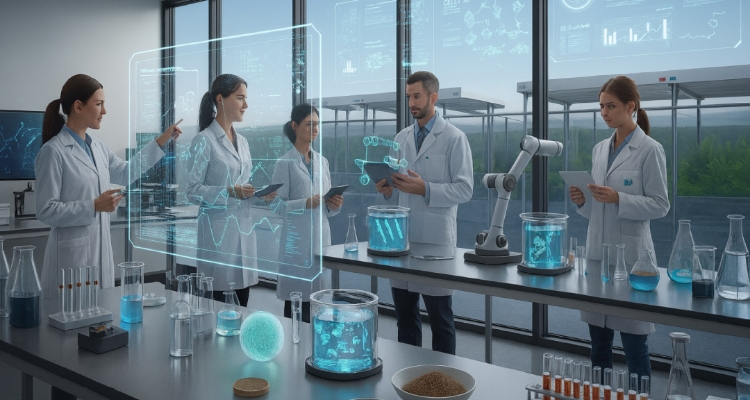
A new wave of biotechnological research is using Artificial Intelligence to solve one of the modern aquaculture’s greatest challenges: the limited digestibility of plant-based aquafeeds. By integrating AI with genetic and metabolic engineering, scientists are designing tailor-made cellulases – key enzymes for breaking down plant fibre – which promises to revolutionise the sector’s efficiency and sustainability.
With pressure mounting to reduce reliance on fishmeal, the aquaculture industry has massively adopted vegetable protein sources. However, carnivorous fish and shrimp lack the necessary enzymes to efficiently assimilate cellulose, resulting in poor nutrient assimilation.
AI is becoming a powerful tool capable of adding value to the generation of new enzymes, transforming the process of cellulase discovery and optimization. Through algorithms such as Machine Learning, it eliminates parts of the traditional trial-and-error process. It analyses thousands of combinations of factors (temperature, pH, substrate concentration, genetic design) to predict and model the optimal combination that maximises cellulase activity and stability. This accelerates industrial scaling and reduces enzymatic production costs.
Secondly, AI is crucial for designing ‘climate-adaptive’ enzymes. Climate change demands solutions that work in any environment, and AI helps predict which genetic modifications will create cryo-active cellulases (which work efficiently in cold waters) and thermos-tolerant ones (which withstand extreme heat). These AI-supported enzymes ensure that fish maintain their growth capacity and feed assimilation even during temperature peaks, safeguarding production against environmental stress and climate change.
Finally, this technology promises to usher aquaculture into the era of precision nutrition. In the long term, AI will enable the adaptive management of enzyme use. Monitoring systems will employ models to predict the exact dose of cellulase needed based on the feed composition, the specie’s life stage, and real-time environmental conditions, maximising efficiency and profitability per tonne. AI is not just a big data tool, but the engine driving biotechnology towards creating a vegetable feed as efficient as traditional feeds.

Latest news
-
The real bottleneck for Mediterranean aquaculture is marine space
By Alejandro Guelfo, editor of misPeces, 9 March 2026
-
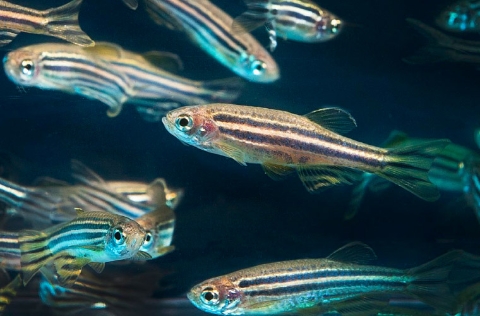
Zebrafish reveals a new brain circuit acting as a biological “sleep switch”
Vigo, 9/03/2026 | This discovery may help identify new molecular targets for drugs to treat sleep disorders
-
Cooke strengthens its position in the Mediterranean with the potential integration of Culmarex and Avramar Spain
Alicante, 5 March 2026 | Cooke could create a group generating more than €300 million in seabream, seabass and meagre sales