
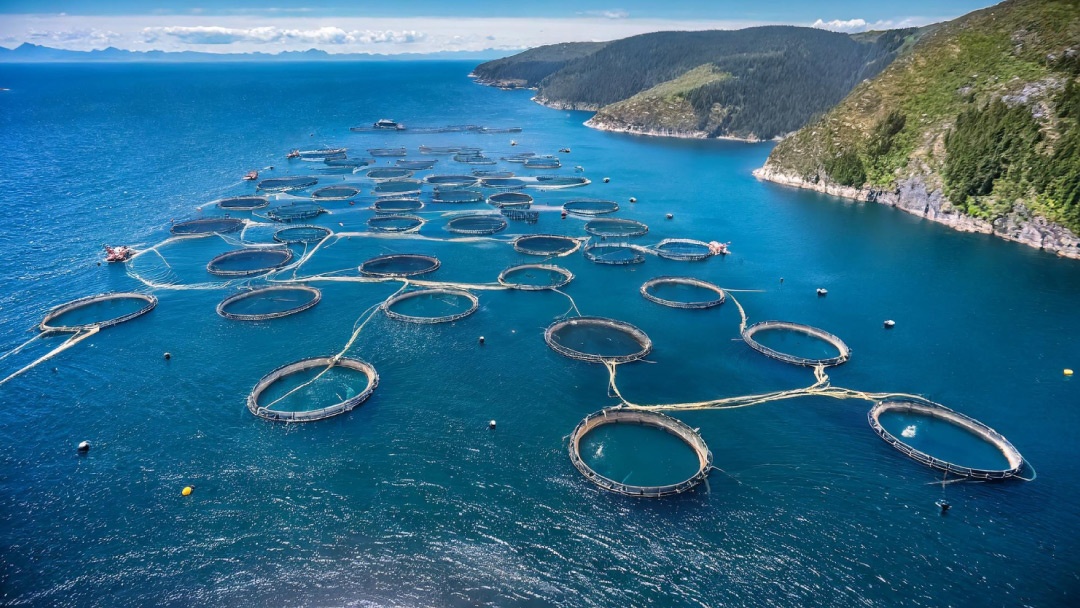
The situation of AVRAMAR Greece, one of the largest producers of gilthead seabream and European seabass in the Mediterranean, remains critical as the year draws to a close. The company’s bank creditors are reassessing the direction of the restructuring and sale process following the emergence of enhanced and clearly differentiated offers from international investors.
According to the Greek daily Kathimerini, the main financial institutions leading the restructuring – Piraeus Bank, Alpha Bank, Eurobank and the National Bank of Greece – are examining ways to disengage from the preliminary agreement reached with the Abu Dhabi-based fund Aqua Bridge, in order to allow a more open competition with the bid submitted by Canada’s Cooke Aquaculture.
Aqua Bridge initially appointed as preferred investor, has strengthened its proposal in December with the explicit aim of protecting its position against Cooke. According to the reports in the specialised press, its plan would allow creditors to recover around €150 million, albeit spread over a period of up to seven years, within a restructuring framework that includes a write-off of close to 70% of AVRAMAR’s existing debt. The proposal also foresees an investment programme of approximately €40 million to stabilise and modernise the group’s operations over the coming years.
By contrast, Cooke Aquaculture has tabled a proposal with a much stronger immediate cash component. Sector media report that the Canadian group is offering €118 million in cash to acquire liabilities, bringing the total potential recovery for creditors to close to €140 million. Cooke’s bid also includes a further investment commitment of around €60 million, aimed at upgrading assets and integrating AVRAMAR into its global industrial structure.
This contrast between a higher but deferred recovery under Aqua Bridge’s restructuring plan and a faster, cash-based exit proposed by Cooke helps explain the growing divide among creditors. Banking sources cited by Kathimerini indicate that an increasing number of lenders view the Canadian offer favourably, considering it to carry a lower execution risk and shorter recovery timelines. As a result, some banks are exploring legal avenues to withdraw from the preliminary agreement with Aqua Bridge without triggering penalties, a move acknowledged to be complex given the commitments already in place.
All this unfolding against a backdrop of repeated delays in the judicial validation of the restructuring plan. The submission of the file to the Athens Court of First Instance has been postponed due to technical requirements and the need to update financial data, adding further uncertainty at a crucial stage of process.
As 2025 comes to an end, there is still no official confirmation of a change of control nor of final court approval for the restructuring plan, leaving AVRAMAR Greece in a legal financial limbo. The decision taken by creditors in the coming weeks will be decisive in determining whether the Aqua Bridge route prevails, Cooke’s bid succeeds, or the process is reshaped altogether – with significant implications for the Greek and Mediterranean aquaculture sector.

Latest news
-
From innovation to integration: the next phase of aquafeed ingredients
By Alejandro Güelfo, 30 December 2025 | The challenge for 2026 is to consolidate alternative ingredients into a robust nutritional model
-
Sex matters in the nutritional value of polychaetes as aquafeed ingredients
Germany, 30 December 2025 |
-
AVRAMAR Greece’s 2026 begins with a choice between cash and restructuring
Athens, 30 December 2025 | Next year creditor banks must decide to back Cooke’s immediate recovery or Aqua Bridge’s longer-term rescue plan