
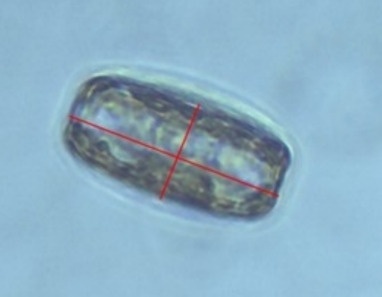
A new web-based application, Algalytics, is set to transform the way microalgae culture are monitored in both industrial and research settings. By integrating advanced image processing and machine learning, the platform provides an efficient, cost-effective alternative to traditional methods of counting and sizing algae.
Traditionally, monitoring microalgae involves labor-intensive and time-counting methods, such as using microscopes, which can be inaccurate and costly.
The Algalytics system works by automatically analysing microscope images. Through a series of image processing steps, the tool segments the images, classifies the algae, and then perform precise measurements. This helps researchers and industry professionals track the health, growth rates, and biomass productivity of microalgae culture – key factors in industries such as aquaculture, pharmaceuticals, and biofuel production.
The application has been tested on two important microalgae species: Porosida galialis, used for CO2 sequestration and biomass production, and Tisochrysis lutea, a species used in aquaculture for feeding shellfish larvae. Validation tests on these species revealed that Algalytics consistently delivers accurate counts, with some challenges observed in size measurements due to optical artifacts, such as the halo effect.
“These challenges can be mitigated by improving image focus and acquisition settings”, author note, emphasising that while size measurements can be tricky, the system excels at tracking growth trends over time. Additionally, Algalytics is user-friendly, requiring minimal operator training, making it a suitable solution for both large-scale industrial operations and small research labs.
The methodology was validated using real-world data collected from both lab-controlled experiments and industrial-scale photobioreactors. The system demonstrated high counting accuracy and reliable size estimates, particularly with Porosida glacialis. The application was able to predict cell concentrations and monitor growth dynamics, which are critical for ensuring the success of microalgae-based processes.
Moreover, the application has the potential to replace traditional, manual methods and high-cost automated systems, such as Coulter counters or flow cytometers, which are often inaccessible to smaller labs or less equipped operations. As author explain, “the system provides a low-cost, scalable solution specifically designed to meet the needs of large-scale industrial cultivation and research environments”.
Next Steps and Challenges
Despite its success, the system is not without its limitations. One of the primary challenges remains the sizing accuracy, especially due to the halo effect, which can cause algae cells to appear larger than they actually are. This issue, however, can be mitigated with improved microscopy techniques or by implementing adjustments in the software.
The team is also exploring ways to improve the tool’s performance on different types of algae, including species with more complex or spherical morphologies, like Tisochrysis lutea. Researchers believe that expanding the database and incorporating more species will further enhance the application’s versatility and robustness.
Looking ahead, the development team plans to refine the system to ensure even greater accuracy and applicability in diverse environments. As the continue to fine-tune the system, authors are optimistic: “our findings suggest that Algalytics has the potential to support real-time monitoring of monocultures in biotechnological applications, from CO2 optimization to aquaculture feed production.”
Referencia:
Popescu, E.-R., Einbu, A., Israelsen, L., Eriksen, G., Hardy, N., Ingebrigtsen, R. A., & Pettersen, T. (2025). Web application for automated counting and size analysis of industrial microalgae monocultures using image processing and Convolutional Neural Network based deep learning. Algal Research, 90, 104173.
https://doi.org/10.1016/j.algal.2025.104173

Latest news
-
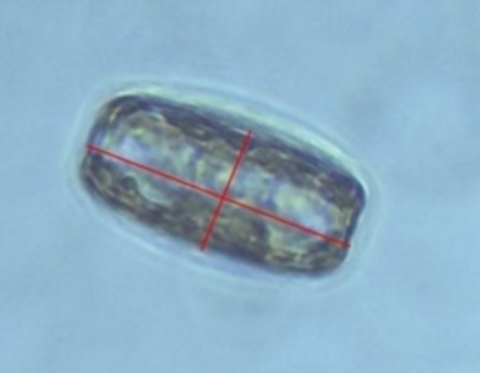
Algalytics platform improves monitoring of microalgae used in aquaculture and biotechnology
Norway, 16 December 2025 | The application has been validated on species used for larval feeding and biomass production
-
-

Italian aquaculture producers call for greater transparency on the origin of fish served in the HORECA channel
Verona, Italy, 12 December 2025 | The two associations leading the proposal, API and AMA, represent approximately 90% of Italian farmed fish and shellfish producers
