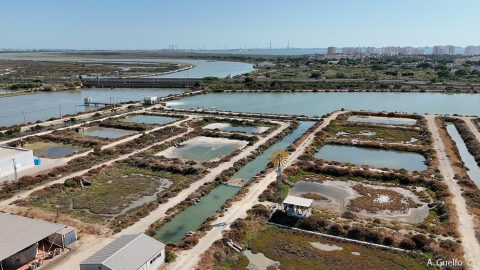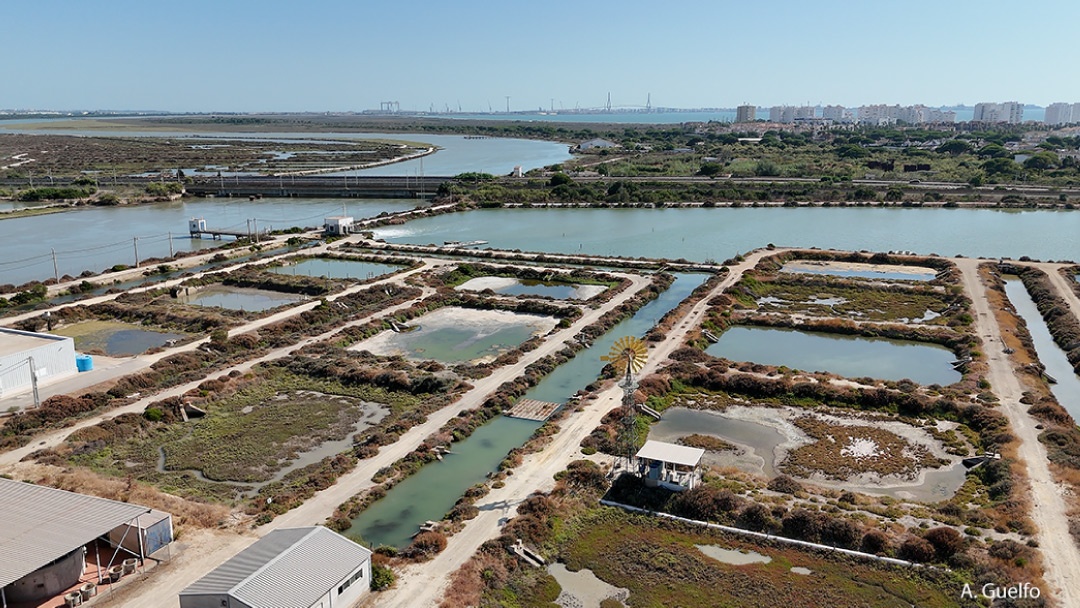
Andalusia has defined a strategic roadmap to support the transition towards circular and eco-intensive aquaculture models, positioning the sector as a key contributor to the Andalusian Blue Economy Strategy and regional sustainability goals.
Developed within the framework of the AZA4ICE project, the Action Plan focuses particularly on the Bay of Cádiz as a pilot territory. However, beyond its policy architecture, the document highlights a more structural issue: circularity is not yet embedded in the operational core of much of the sector.
An assessment of aquaculture-related SMEs across the Euro-MED area shows that the average Circular Economy Readiness Index (CERI) stands at 1.9 out of 5, placing most companies in an “eco-thinking” phase focused on basic efficiency improvements rather than systemic circular integration. In contrast, the Willingness to Invest in Circular Economy (WICE) index reaches 3.5, signalling strong openness to transition if enabling conditions are in place.
The figures are telling: 43% of SMEs do not formally integrate circular economy principles into their business planning, 84% do not systematically valorise processing waste, and a large share of fleets still rely on conventional high-consumption fuels. The structural gap between intention and operational capacity is one of the key challenges the plan seeks to address.
From linear production to eco-intensive systems
According to Manuel Manchado, project coordinator, the objective of the plan is “to create a framework that facilitates the transition towards more sustainable and competitive production models in Andalusia, positioning aquaculture as a strategic actor within the regional Blue Economy agenda”.
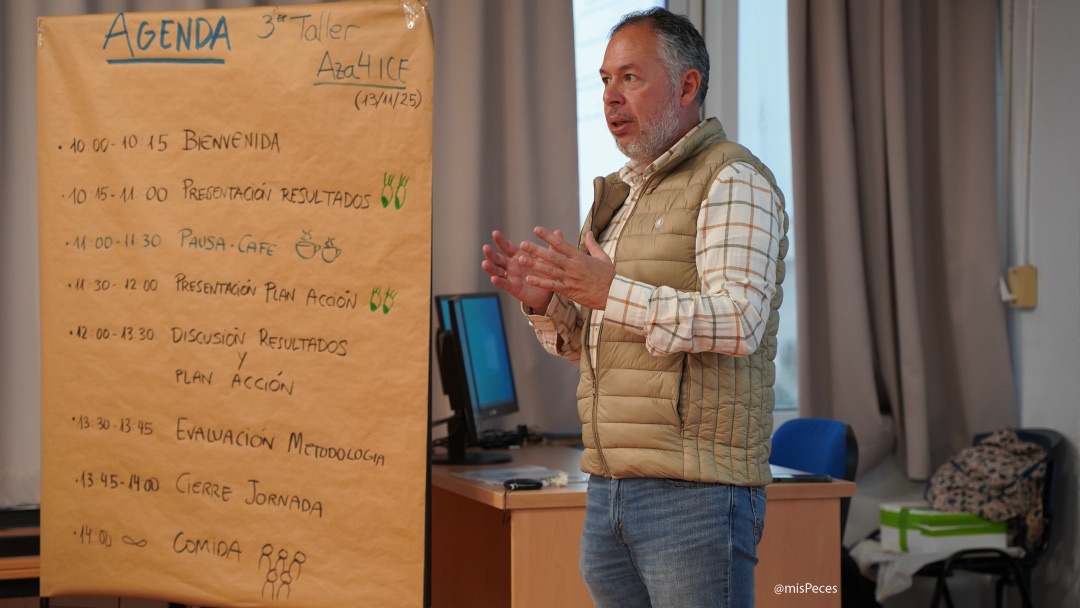
The roadmap builds on participatory LiRRIE workshops carried out under AZA4ICE, where stakeholders analysed the main challenges, barriers and opportunities for the sector, using the Bay of Cádiz as a reference case. “This is not a purely theoretical document, but a roadmap based on real needs identified on the ground,” Manchado explains.
The plan is structured around five pillars covering the adoption of circular production systems (including IMTA, hybrid IMRAS configurations, biofloc and marine aquaponics), improved competitiveness and economic viability, innovation and knowledge transfer, regulatory and financial adaptation, and strengthened stakeholder participation and market development.
Particular emphasis is placed on scaling low trophic level biomass production – such as macroalgae, halophytes and bivalves – improving digital monitoring, enhancing feed efficiency and enabling the recovery of underutilised traditional estuarine ponds (“esteros”) within Natura 2000 areas.
Introducing measurable circularity
One of the most relevant aspects of the roadmap is the inclusion of a monitoring framework based on measurable KPIs. These include nutrient recovery rates, biomass yield per hectare, feed conversion ratio (FCR), production cost per kilogram, share of revenues derived from secondary biomass streams, and mobilisation of public and private investment.
Environmental indicators – such as water quality, restored surface area and contaminant thresholds – are complemented by metrics tracking digital adoption and the implementation of circular practices by operators.
This performance-based approach suggests that circular aquaculture is framed not only as a sustainability narrative, but as a quantifiable transition pathway.
Consultation phase and implementation challenge
The Action Plan is currently under consultation. “It is essential that companies, researchers, civil society organisations and public authorities actively participate to identify practical barriers, refine proposals and ensure that measures are applicable and useful for the sector,” Manchado notes. The level of stakeholder engagement will be decisive for the plan’s real impact.
In a context of increasing environmental pressure, spatial competition in coastal areas and the need to improve production margins, circular aquaculture could become a strategic lever for resilience and differentiation.
The real test, however, will not be the ambition of the roadmap, but its ability to translate indicators into regulatory clarity, financial instruments and concrete investment decisions that drive structural transformation across the sector.
More information:
Go to the AZA4ICE project action plans

Latest news
-
-
Governance, not just budget: defence of the EMFAF aligns with European auditor’s warnings
Brussels, 25 February 2026 |
-