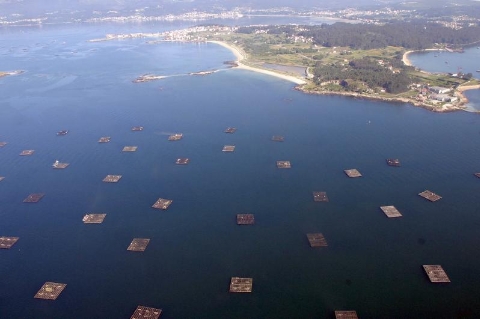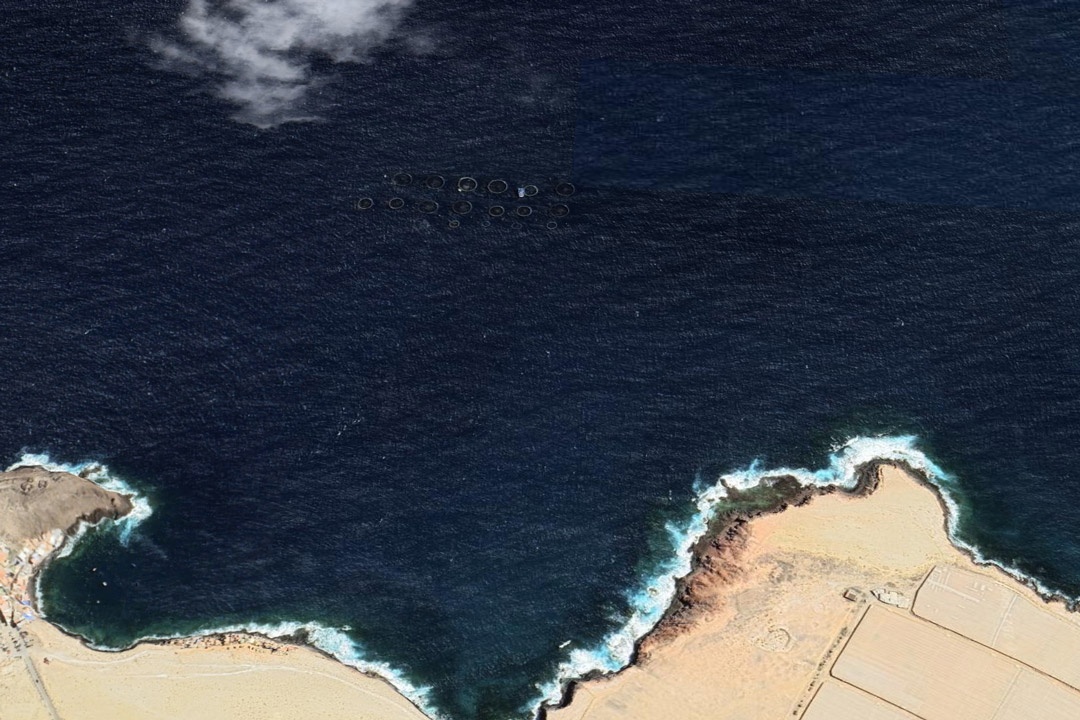
Aquanaria, a leading producer of high-quality European seabass in the Canary Island, has announced that it is considering bringing forward to 2026 the dismantling of tis marine farm located off Melenara beach (Telde), Gran Canaria. The installation was originally scheduled to close in 2027, while its administrative concession remains valid until 2029.
The company justifies the decision on the grounds of insufficient guarantees regarding water quality in the area surrounding outfall 222. Various indications suggest that this outfall may have been linked to the chemical discharge in October 2025 that caused a massive fish mortality event at the site, an incident currently under judicial investigation.
Following months of its own analytical monitoring, the company maintains that indicators consistent with insufficiently treated discharges persist. These findings are accompanied by unfavourable inspections carried out by the Canary´s Government.
From a technical standpoint, an offshore aquaculture installation depends fundamentally on environmental stability and high-water quality. Where risks are associated with nearby urban infrastructure – such as a wastewater outfall facing treatment shortcomings – the impact on production is immediate.
This represents an external risk over which the operator has no control, yet one that directly conditions operational and economic viability. In such a context, reconsidering the continuity of activity becomes a rational business decision rather than a strategic retreat.
What is unfolding in Melenara once again exposes the vulnerability of marine farms to structural weaknesses in coastal governance. Aquaculture requires a high-quality marine environment to operate effectively, making it particularly sensitive to environmental failures originating outside the production system itself.
Beyond this specific case, the situation raises broader questions for sector: legal certainty, site planning criteria, and risk assessment in areas where aquaculture coexists with urban infrastructure and tourism.
The Melenara case is not merely a local dispute. It reflects a structural tension within coastal territories. On the one hand, aquaculture is promoted for reasons of sustainability and food sovereignty. On the other, its development depends on environmental and institutional guarantees that extend far beyond the farm perimeter.
Aquaculture arguably needs clean waters more than any other coastal activity. When wastewater systems fail, producers are among the first to absorb the economic consequences.
Ultimately, the debate should not be framed in ideological terms, but in technical and governance terms. Establishing the factual origin of environmental incidents and reinforcing wastewater management systems are essential not only for the continuity of aquaculture, but for the overall health of the coastal environment. With or without aquaculture, water quality remains a collective responsibility.

Latest news
-
Early copepod feeding improves structural quality in gilthead seabream larvae
Greece, 2 March 2026 | Acartia tonsa feeding may enhance nutrient digestion and absorption during the sensitive transition to Artemia and weaning diets
-
Aquanaria considers early closure in Canary Island, highlighting coastal use conflicts
Gran Canaria, Spain, 2 March 2026 | The installation was originally scheduled to close in 2027
-