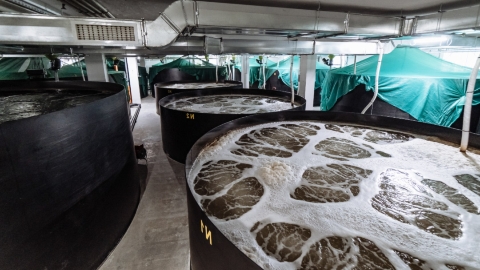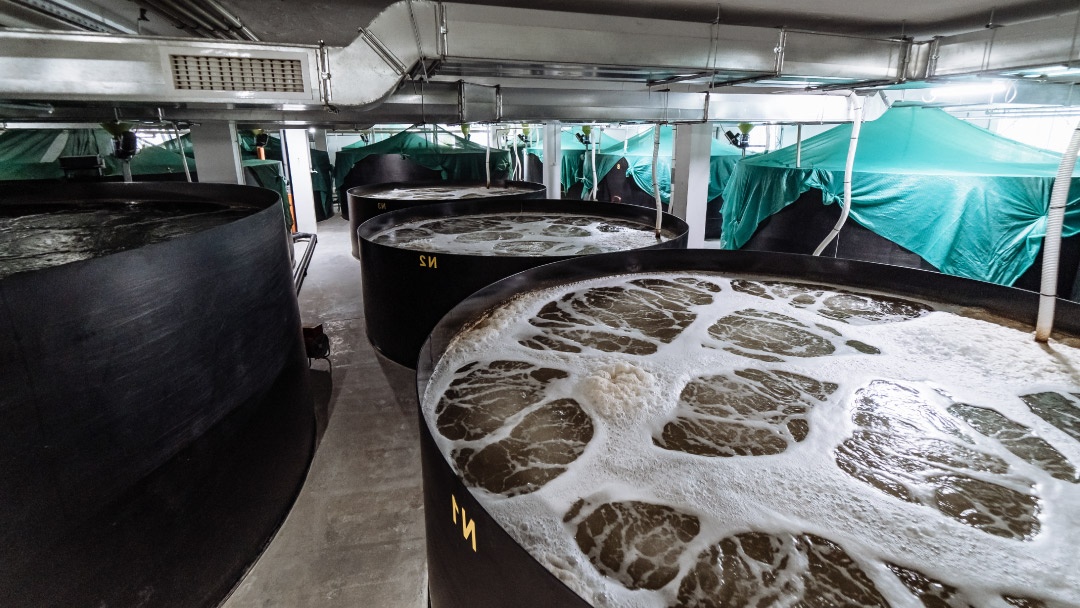
A recent study published in Scientific Reports provides new insight into how stocking density affects the performance and welfare of tropical shrimp (Litopenaeus vannamei) in recirculating aquaculture systems (RAS).
While the negative impact of high density on growth and survival is well established, this work goes further by integrating behavioural, morphological and physiological responses under chronic stress and subsequent recovery.
Shrimp reared at low density showed higher survival, faster growth and better physical condition, whereas high density led to significant mortality, reduced performance and visible damage to appendages such as antennae and uropods.
However, once density was reduced, shrimp rapidly stabilised, showing partial compensatory growth, recovery from injuries and normalisation of stress-related gene expression, highlighting a strong capacity to cope with and recover form crowding stress.
One of the most relevant findings is that classical physiological indicators, including hemolymph parameters, immune response and enzymatic activity, remained largely unchanged despite clear biological impairment. In contrast, behavioural alterations such as abnormal swimming and loss of balance, together with physical damage, showed a consistent and direct response to stocking density and improved during recovery.
This suggests that traditional biomarkers may have limited sensitivity in detecting chronic density stress, whereas observable indicators provide more reliable and operational tools.
For European RAS production, where welfare, product quality and regulatory pressure are increasingly important, these results reinforce the value of behaviour and morphology as practical indicators, while also supporting the development of non-invasive monitoring systems and AI-based tools for real-time farm management.
The study ultimately shifts the focus from laboratory-based metrics to farm-level observation, indicating that what producers can see in terms of behaviour and physical condition may be more informative than what can be measured through conventional physiological assays.
Reference:
Gamberoni, P., Bögner, M., Kreuz, E., Slater, M. J., Bierbach, D., & Wuertz, S. (2026). Impact of different stocking densities on growth performance, welfare and physiology of Litopenaeus vannamei in RAS. Scientific Reports, 16, 9087. https://doi.org/10.1038/s41598-026-42332-2

Latest news
-
-

Andalusia tests aquaculture’s social licence as part of 2030 strategy review
Seville, Spain, 24 March 2026 | A public consultation aims to assess how society perceives aquaculture at a critical stage for the sector’s development
-
Cooke moves to take control of AVRAMAR Greece through debt acquisition
Athens, Greece, 20 March 2026 | The Canadian group strengthens its Mediterranean strategy by securing financial and operational control of Avramar’s Greek business