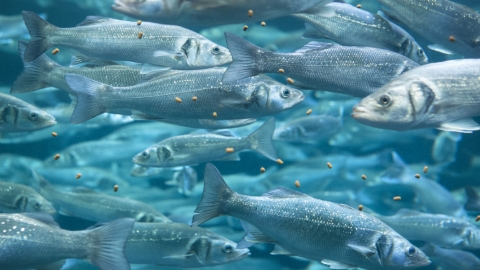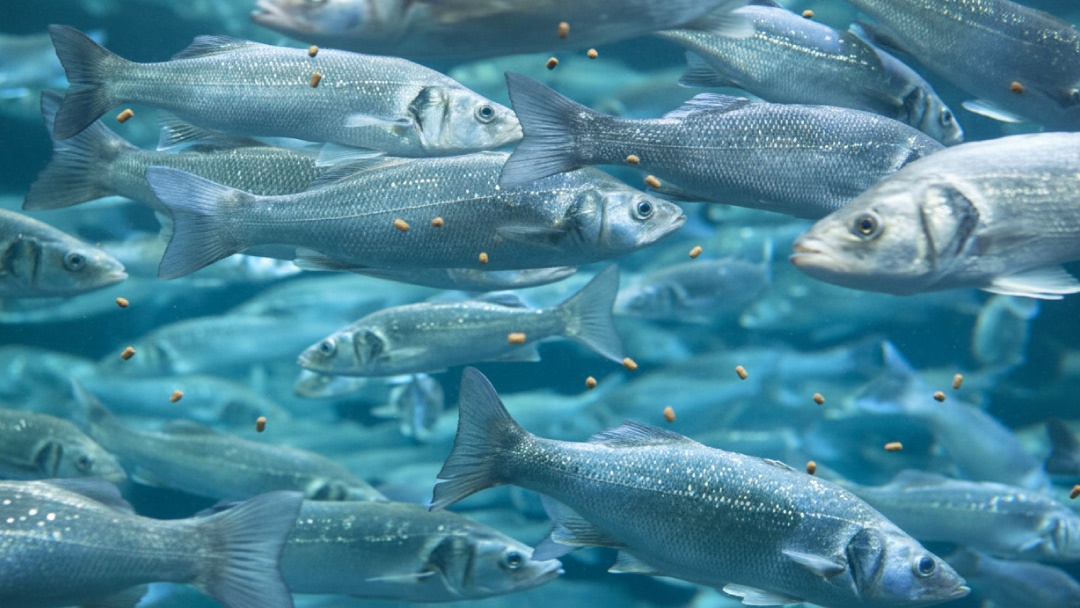
Assessing the true well-being of fish remains one of the greatest challenges in modern aquaculture. Most of what happens to them – their stress, physical effort, or how they respond to adverse situations – remains hidden from view. To open up this “black box”, a team of researchers, including several from the Mediterranean Institute for Advanced Studies (IMEDEA, CSIC-UIB), has succeeded in describing, with unprecedented detail, how the European seabass (Dicentrarchus labrax) responds to stress.
The key is a small electronic device implanted inside the fish, capable of continuously recording parameters such as heart rate and body acceleration.
These sensors, known as biologgers, are poised to transform how welfare is assessed in farmed fish. Until now, information has depended on external observations or occasional measurements. With biologgers, however, researchers can “listen” to what is happening inside the fish as it swims, struggles or remains still, and can detect physiological changes that would be impossible to observe from the outside.
In this study – published in Scientific Reports, a journal from Nature group – the scientists subjected the seabass to tests commonly used in aquaculture production: a swimming trial in a flow tunnel, where the fish had to swim at different speeds, and a crowding test, which simulates one of the most frequent sources of stress on farms.
The results reveal that seabass do not react in the same way to both challenges, and that these responses can be clearly distinguished thanks to the data recorded by the biologgers. During forced swimming, for example, heart rate and acceleration increase progressively as the current intensifies; under crowding, however, many fish sharply reduce their movement – sometimes entering a “freezing” state – while their heart rate remains extremely high.
From this pattern of internal signals, the team identified four states that help interpret the fish’s welfare: rest, normal activity, reactive response, and proactive response. According to the authors, the latter two states correspond to episodes of acute stress, while the former reflect normal or good welfare conditions.
“This type of study allows us to understand in detail how fish react to the different challenges of the production cycle. Gaining physiological and behavioural information is key to adjusting routine aquaculture practices and ensuring greater welfare throughout their lives,” says Esther Hoyo Álvarez, IMEDEA researcher and one of the study’s authors.
The study shows that biologgers could become a fundamental tool for continuously monitoring fish health and welfare, as they make it possible to directly relate body activity, heart rate and the animal’s energetic effort. This opens the door to detecting early signs of stress and acting before they affect health or production performance.
Even so, the researchers acknowledge that the technology has limitations: it can currently only be implanted in fish of a certain size, and the devices do not transmit data in real time, meaning they must be physically recovered to analyse the information. “We are increasingly close to having systems capable of monitoring fish welfare in real time”, the authors note. “This will not only improve the animal’s quality of life, but also the sustainability and efficiency of aquaculture production.”
Reference:
Hoyo-Alvarez, E., Tomàs-Ferrer, J., Lankheet, M.J. et al. Biologging assessment of behavioural and physiological responses of European seabass (Dicentrarchus labrax) during stress challenges. Sci Rep 15, 42051 (2025). https://doi.org/10.1038/s41598-025-26039-4

Latest news
-

European aquaculture organisations urge Commissioner Kadis to provide political leadership to revive production
Brussels, 5 December 2025 |
-
-
EFSA launches consultation process on dioxins and dioxin-like PCBs
Brussels, 5 December 2025 | This consultation is of particular interest to feed manufacturers, aquaculture producers, and certification bodies