
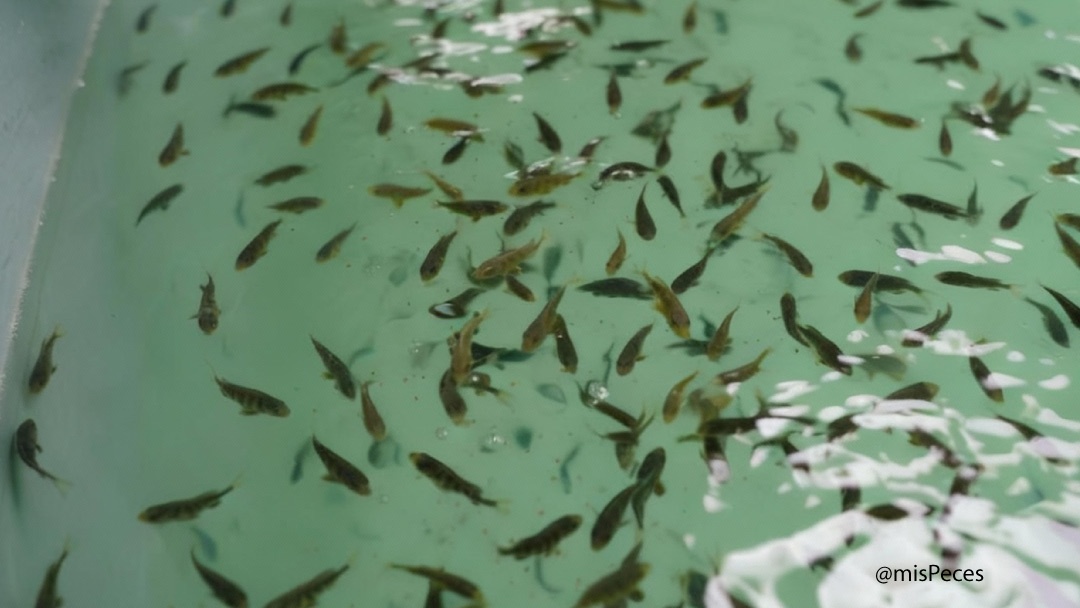
It is widely documented that taurine is a critical nutrient in the larval nutrition of carnivorous marine fish. However, the fine line between optimal requirements and toxicity caused by excess is often narrowed than assumed in commercial feed formulation.
For the Greater Amberjack (Seriola dumerili) – a priority species for the diversification of European aquaculture – weaning remains a significant bottleneck. Calibrating the exact dosage during this phase not only determines immediate growth but also prevents pathologies that can compromise performance during the on-growing stage.
To define this optimal level, a research team from the Aquaculture Research Group at the University of Las Palmas de Gran Canaria (ULPGC), in collaboration with the University of Cádiz and ICMAN-CSIC, in Spain, evaluated the effect of varying taurine levels in inert microdiets during the transition from live prey to dry feed (30 to 44 days post-hatching).
The results determined that a taurine content of 1.39% on a dry matter basis is the optimal level to maximise larval growth and health. Higher levels (2.46%) provided no significant advantages, whilst an overdose (4.16%) proved counterproductive, negatively affecting fish development.
The study yields a key insight for nutritionist noting that Seriola requirements differ substantially from other established species, advising against the use of generic diets or extrapolated formulations. The 1.39% optimum places the amberjack well above the requirements of gilthead seabream (0.71%), Atlantic bluefin tuna (0.37%) or turbot, yet significantly below those of Senegalese sole (3%). This reinforces the need for specific microdiets for Seriola that avoid both deficiency and overdose.
The hidden cost of “just in case”: Steatosis and deformities
One of the most relevant findings for farm management is the adverse effect of excess taurine. Contrary to the practice of ‘supplementing in excess’ to ensure intake, the study demonstrated that diets with 4.16% taurine caused severe quality issues such as fatty liver (steatosis).
Larvae feed excess taurine presented severe hepatic vacuolisation, with enlarged hepatocytes and ‘empty’ cytoplasm due to lipid accumulation. This early hepatic damage can compromise the juvenile’s metabolic capacity and stress resistance in later stages.
Specific skeletal damage was also documented. The overdose significantly increased the incidence of severe deformities, concentrated specifically in the pre-haemal region of the vertebral column, manifesting primarily as the fusion and compression of vertebral bodies and kyphosis.
Successful weaning was also reflected at the molecular level. The optimal 1.39% level not only upregulated growth-related genes (gh, igf2) but also positively modulated the stress response. A downregulation of pomcb and star genes (involved in cortisol biosynthesis) was observed, suggesting that fish receiving the correct dose suffer less physiological stress during the transition to inert diets. This translates into more robust batches with better energy conversion, as the animal does not divert metabolic resources to combat stress.
Although final survival was similar across all treatments (approximately 30%), the study highlights that survival is not the sole indicator of weaning success. The quality of the fry – measured by skeletal integrity, hepatic health and stress response – varies drastically depending on the formulation.
Therefore, supplementing above 1.4 – 1.5% in weaning diets for Seriola dumerili is not only an economic waste of raw materials but also a zootechnical risk factor that can trigger discard rates due to deformities and hepatic pathologies.
Reference: Djellata, A., Sarih, S., Izquierdo, M., Torres Rodríguez, M., Martínez-Rodríguez, G., Martos-Sitcha, J. A., & Roo, J. (2026). Improving the larval performance of greater amberjack (Seriola dumerili) during the weaning phase with taurine supplementation on dry diets. Aquaculture International, 34:31. https://doi.org/10.1007/s10499-025-02430-w

Latest news
-

Aquafeed prices enter 2026 under pressure amid uncertainty over marine ingredients
Madrid, 19 January 2026 | The year begins with uncertainty over marine ingredient supply and pricing
-
Dose matters: defining the optimal taurine levels to overcome the weaning bottleneck in Greater Amberjack (Seriola dumerili)
Gran Canaria, 19 January 2026 |
-
Shrimp farming sustainability depends more on management than on the production model, study finds
China, 16 January 2026 | Variables such as survival rate, energy consumption and nutrient management have a greater impact on overall sustainability