
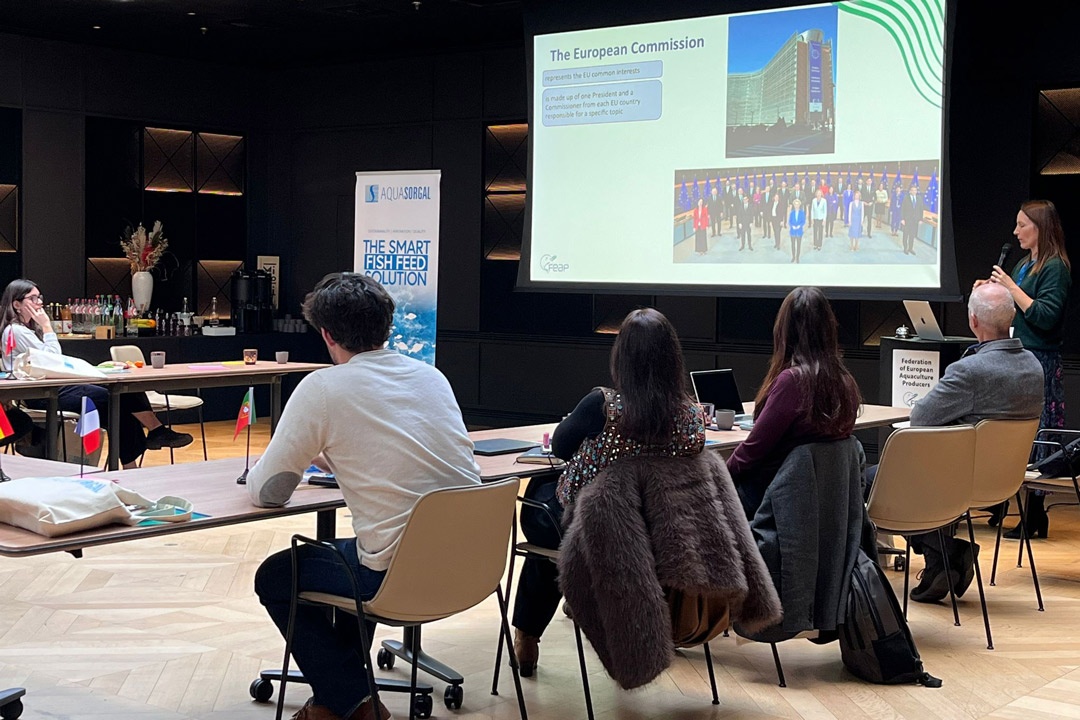
The Federation of European Aquaculture Producers (FEAP) has held in Brussels the second edition of its NextGen “Deep Dive into EU Institutions” programme, an initiative aimed at improving young professionals’ understanding of European decision-making processes.
According to FEAP, the 2026 edition brought together nine participants from across Europe for two days of technical sessions, institutional visits and meetings with key stakeholders, including representatives from the Directorate-General for Maritime Affairs and Fisheries (DG MARE).
Based on information provided by the organisation, the programme also featured contributions from high-level experts and institutional representatives such as Nikos Zampoukas (DG RTD), Julien Peris (CINEA), Alexander Döring (FEFAC), Mieke Eggermont (EATiP) and Cynthia Benites (Aquaculture Advisory Council), offering participants a broad overview of the European policy and stakeholder landscape.
Beyond its training dimension, the initiative reflects a broader strategic effort by FEAP to strengthen the aquaculture sector’s ability to engage with an increasingly complex regulatory framework. In a context shaped by growing demands around sustainability, climate and food security, the federation is moving towards a more structured and proactive role in European policymaking processes.
In this regard, FEAP highlights that the NextGen programme aims to support generational renewal within the sector by exposing early-career professionals to EU institutional dynamics and enabling them to contribute more effectively to future policy development.
This approach gains particular relevance in light of the ongoing development of the Vision for Fisheries and Aquaculture 2040. According to FEAP, the integration of sector-specific technical knowledge will be essential in shaping future policy frameworks.
The 2026 edition was supported by AquaSorgal (Soja de Portugal), whose contribution, as noted by the organisation, plays a key role in ensuring the continuity of the programme and in supporting talent development within the European aquaculture industry.
While initiatives of this kind do not have an immediate impact on production volumes or market dynamics, their value lies in the medium to long term, as they contribute to building a more informed and coordinated sector voice in Brussels. With plans to further expand the NextGen programme in the coming years, European aquaculture appears to be shifting from a reactive stance towards a more strategically aligned engagement with EU institutions.

Latest news
-
FEAP strengthens NextGen programme to enhance aquaculture sector influence in EU policymaking
Brussels, 27 March 2026 | The initiative aims to enhance the aquaculture sector’s positioning within an increasingly demanding European policy environment
-
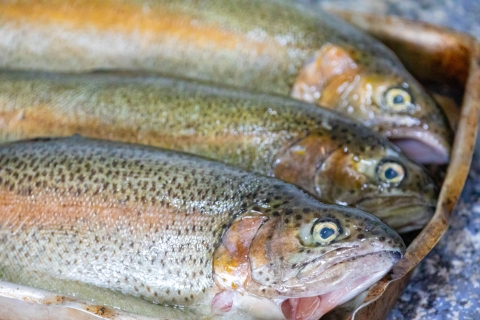
No fishmeal, no problem? Trout study highlights new trade-offs
Italy, 27 March 2026 | Removing marine ingredients works, but shifts pressure to colour and sustainability
-
Fishmeal-free diets work in rainbow trout, but raise new challenges in fillet colour and sustainability
Italy, 26 March 2026 | Additionally, the use of alternative raw materials in aquaculture may shift environmental impact rather than reduce it