
The validation of new feed ingredient in aquaculture often remains confined to controlled experimental conditions, far removed from the operational complexity of commercial farms.
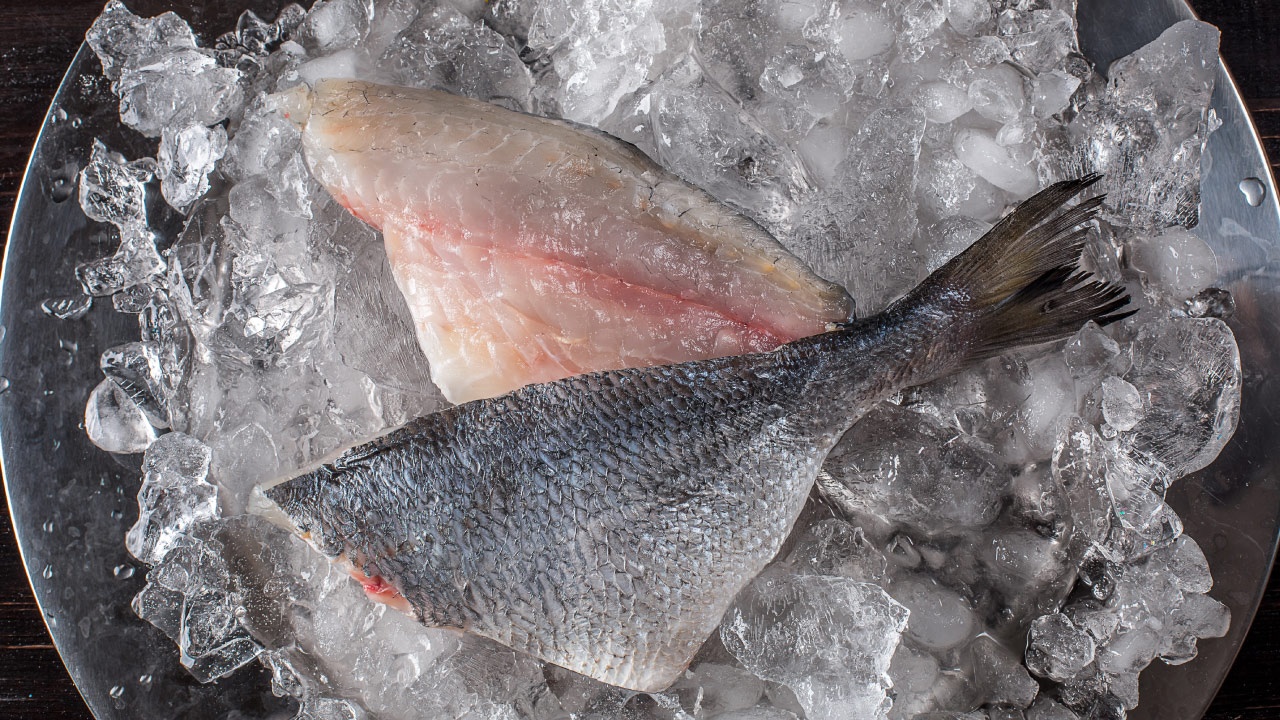
However, a recent study in gilthead seabream (Sparus aurata), conducted by the University of Florence and a consortium of Italian research institutes, goes a step further by demonstrating at commercial scale that a finishing diet incorporating insect meal and poultry by-product meal is not only viable, but can improve production performance without compromising the final product.
The trial, carried out over 65 days in an intensive farming facility in Italy with thousands of fish, compared a standard commercial feed with a low-marine-protein alternative diet supplemented with 10% Hermetia illucens meal and 30% poultry by-product meal.
Unlike laboratory-based studies, the experimental design reflects real production conditions, including stocking densities, farm management practices, and operational variability.
Results show that fish fed the alternative diet achieved higher final body weight and improved growth rates, alongside a significant improvement in feed conversion ratio (FCR), which decreased to 1.75 compared to 1.97 in the conventional feed. In a context where feed represents the main production cost, such gains have direct implications for farm profitability.
Beyond performance, one of the main risks associated with scaling new formulations – the loss of biological robustness – did not materialise. Fish maintained good health status, with no external lesions or diet-related histopathological alterations, and mortality rates below 2%. This reinforces the view that the current barrier for these ingredients is no longer technical, but related to industrial implementation.
The study addresses another critical market factor: consumer perception. Sensory analysis revealed acceptance levels above 90% for both treatments, with no significant differences in overall liking. In fact, fillets from fish fed the conventional diet were penalised for lower juiciness and firmer texture.
One of the most relevant contributions of the study is the positioning of the finishing phase as a strategic control point in aquaculture production. It is at this stage that final product quality is largely defined, and where feed formulation can act as a fine-tunning tool, both from a production and a market perspective.
Overall, the findings point to a shift in paradigm: alternative proteins are no longer an experimental solution, but an operational tool validated under real farming conditions. The focus now moves from biological feasibility to the sector’s ability to scale, standardise, and capture the economic value of these new formulations.
Reference:
Pulido-Rodríguez, L. F., Petochi, T., Secci, G., Lira de Medeiros, A. C., Donadelli, V., Di Marco, P., Di Giacinto, F., Marino, G., Longobardi, A., Capoccioni, F., Di Marzio, V., Pomilio, F., Cardinaletti, G., & Parisi, G. (2026). Commercial-scale evaluation of finishing diet containing poultry by-product and insect meals for Sparus aurata: From fish welfare to consumer acceptance. Sustainability, 18(7), 3235.

Latest news
-
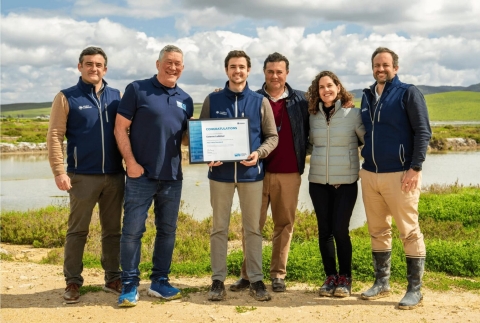
Lubimar’s fish farms: from traditional model to globally certified benchmark under the Aquaculture Stewardship Council
Barbate, Cádiz, 30 March 2026 | Andalusian aquaculture takes a significant step towards a unified certified model.
-
Nueva Pescanova returns to profit and confirms shift towards efficiency and aquaculture as recovery drivers
Vigo, Spain, 30 March 2026 | The group closes 2025 in positive territory, improves margins and enters a new phase focused on value and productivity
-
Finishing diets with insect and poultry by-product meals prove their effectiveness at commercial scale in gilthead seabream
Italy, 30 March 2026 | A real farm trial confirms improved growth and efficiency without compromising product quality or consumer acceptance