
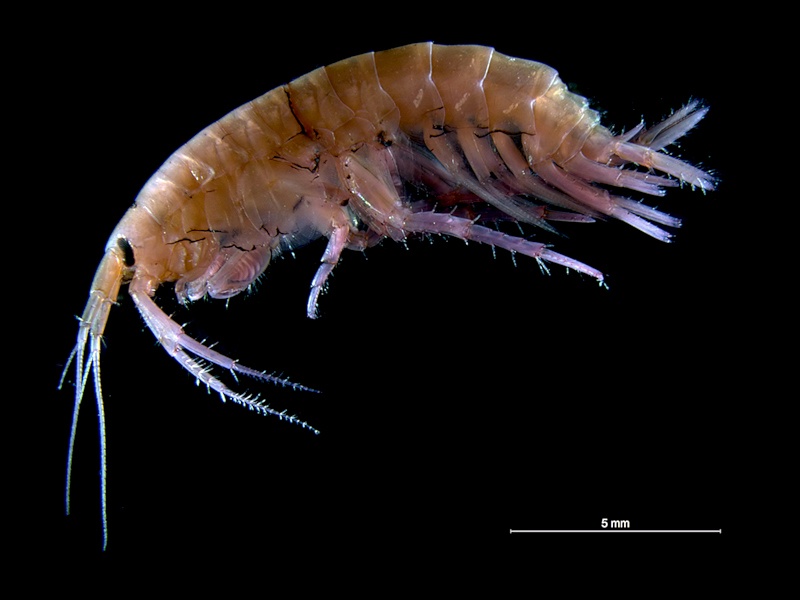
The growth of fed aquaculture is directly constrained by the limits of fish oil derived from extractive fisheries. This is why, for more than a decade, scientists and feed manufacturers around the world have been grappling with the same question: where will future omega-3s come from?
Plants do not provide EPA and DHA; insects rely on marine inputs to obtain them; microalgae remain expensive; genetically modified crops face regulatory and societal barriers; and krill raises ecological concerns.
A recent paper published in Frontiers in Marine Science does not claim to solve this problem. Its proposal is more modest – any arguably more realistic: marine gammarids should be part of the future portfolio of aquafeed ingredients, not as replacements for fish oil, but as a complement.
Marine gammarids are small amphipod crustaceans that form a natural component of marine food webs and are consumed by many fish species. From a nutritional perspective, some species show relatively high levels of EPA and DHA fatty acids, in certain cases comparable to other alternative ingredients currently under evaluation in aquaculture.
What is truly interesting, however, is not only how much omega-3 they contain, but how they retain it.
The experimental studies reviewed indicate that gammarids can maintain high EPA and DHA levels even when fed low-value, non-marine substrates, such as plant by-products or aquaculture waste. In practice, they function as biological biorefineries, converting low-value organic matter into omega-3-rich biomass.
This shifts the focus away from competition for scarce marine resources towards nutrient recovery and system efficiency.
The authors are clear in stating that gammarids are unlikely to become a global raw material comparable for fishmeal and fish oil. Production volumes are limited, scaling is complex, and costs remain poorly defined.
Scientific evidence is still limited and uneven. Some promising results exist, including improved survival and partial or total replacement of fishmeal in specific cases, but there are no commercial-scale trials and no robust economic assessment. At present, this is not a commercial solution, but an indication of where to look next.
Their real value lies in the shift in perspective they introduce: the omega-3 challenge will not be solved by a single replacement for fish oil, but by a combination of partial solution. Within this framework, gammarids represent a supporting component of more circular and integrated strategies, relevant for IMTA systems and waste valorisation, but not a short-term option for conventional aquaculture.
Reference:
Calado, R., Carvalho, M., Marques, L., Rodrigues, D. P., Sousa, J. P., Rey, F., Domingues, M. R., Fernandes, J. F., Silva, R. X. G., Madeira, D., Malzahn, A. M., Monroig, Ó. & Leal, M. C. (2025). Why marine gammarids belong to the future portfolio of aquafeed ingredients. Frontiers in Marine Science, 12, article 1697384. doi:10.3389/fmars.2025.1697384

Latest news
-
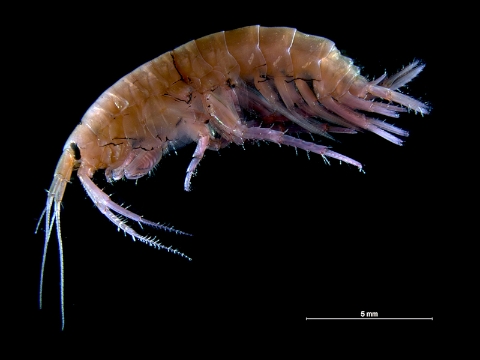
Gammarids will not replace fish oil – but they could change how aquafeeds are designed
Portugal, 9 January 2026 |
-
Choosing an aquafeed is strategic decision that defines the business model
By Alejandro Guelfo, 9 January 2026 |
-
Gilthead seabream by-products: technical potential, industrial pathway still uncertain
Reggio Emilia, Italy, 8 January 2026 |