
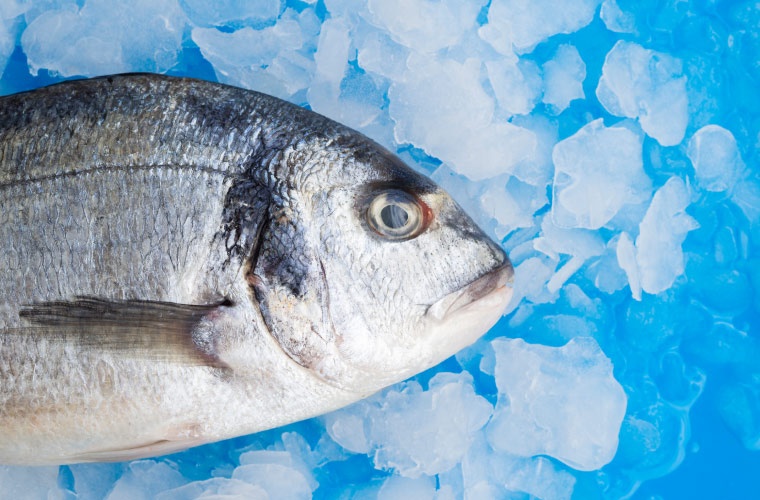
The valorisation of fish by-products has long been part of the sustainability and circular economy narrative in aquaculture. Turning that potential into technically and economically viable solutions, however, remains one of the sector’s major challenges.
A recent study led by researchers from the University of Bologna adds new insight to this debate by exploring the recovery of bioactive proteins from gilthead seabream (Sparus aurata) processing waste, one of the most widely farmed species in Mediterranean aquaculture.
Published in the International Journal of Biological Macromolecules, the study focuses on tissues that are typically discarded during processing, including skin with mucus, liver and intestine.
According to the authors, filleting gilthead seabream can generate close to 60% by-products, a figure that helps explain the growing interest in alternative valorisation routes beyond traditional uses.
Rather than presenting a market-ready ingredient, the study aims to assess whether functional proteins – particularly lysozymes, an enzyme with antimicrobial properties – can be recovered using relatively simple and low-cost extraction techniques. To this end, the researchers compare different chemical extraction methods and evaluate both protein yield and biological activity in the resulting extracts.
The results show that certain tissues, especially intestine and liver, provide higher protein recovery than others, although yields vary significantly depending on pH and extraction conditions. The extracted lysozyme exhibits activity against Gram-negative bacteria such as Listeria monocytogenes, reinforcing its potential interest for food preservation applications.
The study goes a step further by examining the incorporation of these protein extracts into biodegradable polymer matrices, simulating their use in active food packaging or edible coatings. Under these conditions, antimicrobial activity is at least partially retained after incorporation into the biopolymers, suggesting possible applications in active packaging systems with preservative functionality.
At the same time, the authors introduce important caveats. More advanced purification techniques, such as ion-exchange chromatography, improve extract selectivity but reduce overall yields and increase process complexity. The study also acknowledges that the methods tested do not yet match the efficiency of other established systems used for protein recovery from fishery by-products.
From a sector perspective, the findings reinforce a familiar but often oversimplified message: technical potential alone is not enough. Translating by-product valorisation from the laboratory to industrial reality depends on a range of additional factors, including processing costs, product stability, scalability and actual market demand.
The study does not address key aspects such as regulatory approval, acceptance by the food industry or competitiveness against existing solutions. Its contribution therefore lies less in offering an immediate industrial answer and more a clarifying where opportunities may exist – and where significant barriers remain.
As circular economy principles become increasingly central to European aquaculture strategies, studies like this help to temper expectations. The valorisation of gilthead seabream by-products shows promise, particularly for high value-added applications, but still requires substantial technological and economic development before it can be considered a fully stablished industrial option.
Rererence:
Maurizzi E, et al. (2025). Valorisation of gilthead seabream by-products through recovery of antimicrobial proteins for active biopolymer formulations. International Journal of Biological Macromolecules. Article 150014. DOI: 10.1016/j.ijbiomac.2025.150014.

Latest news
-
Gammarids will not replace fish oil – but they could change how aquafeeds are designed
Portugal, 9 January 2026 |
-
Choosing an aquafeed is strategic decision that defines the business model
By Alejandro Guelfo, 9 January 2026 |
-
Gilthead seabream by-products: technical potential, industrial pathway still uncertain
Reggio Emilia, Italy, 8 January 2026 |