The question of whether bivalve aquaculture acts as a carbon sink or a carbon source remains one of the most contested issues in blue carbon science. Previous studies have reached opposing conclusions, fuelling an ongoing scientific debate.
A new paper published in iScience shifts the discussion from individual case studies to a global scale.
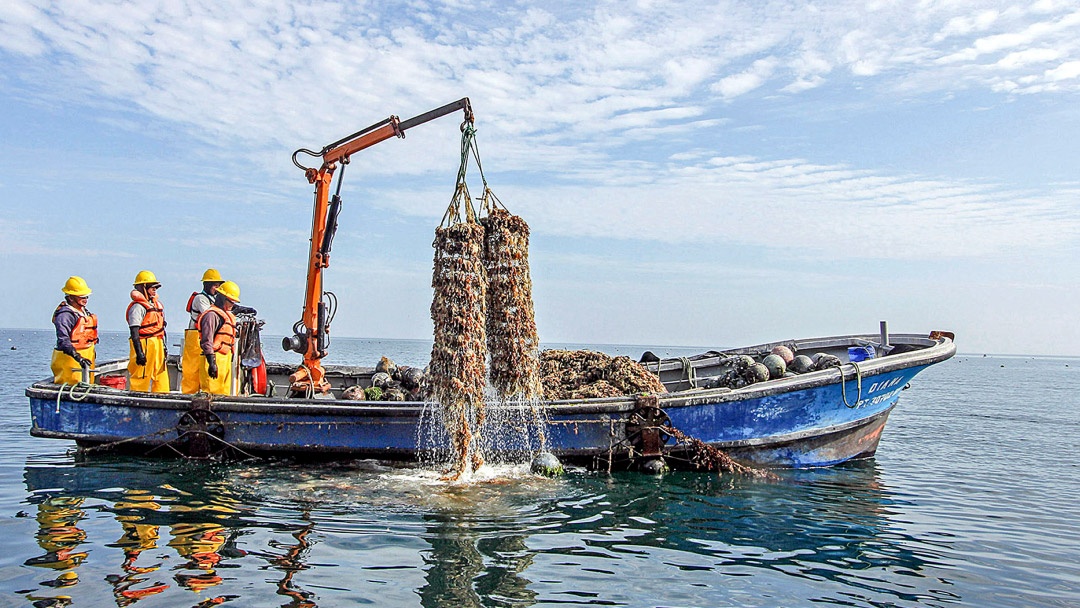
According to the authors, net oceanic carbon removal associated with global bivalve aquaculture increased by 42% between 2010 and 2022, rising from 0.91 to 1.29 million tonnes of carbon per year. Over the same period, global production expanded by 53%, reaching 20.9 million tonnes in 2022.
Beyond the chemical debate over calcification and CO2 fluxes, the study introduces a strategic dimension: the current annual removal is comparable to approximately 0.3 million hectares of afforestation.
The findings highlight clear differences among species. Scallops and oysters show the highest net removal potential per kilogram produced, while razor clams appear to act as a net carbon source due to high respiration emissions.
This introduces a production variable into the climate equation: species composition could influence the sector’s aggregated carbon balance.
The authors acknowledge significant uncertainties, including shell dissolution, post-harvest shell management, microbial sediment processes and phytoplankton dynamics. These factors remain central to the dispute over whether bivalve aquaculture should be classified as a net sink.
However, the scale of the estimated control – exceeding one million tonnes annually – brings the discussion into the regulatory arena. If measurable and verifiable, could shellfish aquaculture be considered with blue carbon accounting or future carbon credit frameworks?
While some scientists argue that calcification releases CO2 and offsets much of the claimed benefits, other maintain that long-term storage in shells and sediments represents meaningful sequestration.
What this new global assessment makes clear is that the quantitative dimension of the issue is now too significant to ignore.
The controversy persists. But the numbers are growing.
Reference:
Tan, K., Li, Z., Yan, X., Carbon removal from the ocean by bivalve
aquaculture: a global view, iScience (2026), doi: https://doi.org/10.1016/j.isci.2026.114972.

Latest news
-
Sea Eight advances industrial-scale sole RAS expansion with 1,400-tonne capacity projected at El Musel
Gijón, Spain, 17 February 2026 |
-
-