Strategic planning of macroalgae cultivation for nutrient extraction has taken a significant step forward. Researchers from Zhejiang University have published in Scientific Data the first open-access global dataset standarising the nutrient removal capacity of marine macroalgae.
The study, A Global Dataset on Nutrient Removal Capacity by Marine Macroalgae, compiles 2,011 records from 149 studies published between 1995 and 2024, covering 113 species across 23 countries and 234 marine locations. It represents the most comprehensive synthesis to date of macroalgal performance in removing dissolved nitrogen and phosphorous.
Rather than presenting new experimental results, the value of the works lies in harmonising previously scattered data. The dataset integrates removal rates (μg g⁻¹ FW h⁻¹), removal efficiencies (%), field-based nutrient removal amounts, and key environmental variables including temperature, salinity, pH, light intensity, stocking density and experimental duration.
Coastal eutrophication remains one of the major environmental pressures in regions with intensive aquaculture and urban development. In this context, macroalgae cultivation has increasingly been recognised as a nature-based solution capable of combining biomass production with nutrient mitigation.
The new dataset provides a comparative framework for selecting species according to environmental conditions and the dominant nutrient form – ammonium, nitrate, nitrite or phosphorous. For integrated multi-trophic aquaculture (IMTA) systems, this information supports more precise design decisions based on nutrient uptake kinetics rather than headline efficiency percentages.
Importantly, the authors highlight a methodological issue that is often overlooked in applied discussions. Removal efficiency cannot be directly compared across studies with different experimental durations due to saturation effects and non-linear kinetics. For robust comparisons, the authors recommend using removal rate, which inherently integrates biomass and time and therefore provides a more stable performance metric.
The dataset spans six continents, although with a marked concentration in the Northern Hemisphere, particularly China, the United States and South Korea. This reflects East Asia’s leading role in macroalgae aquaculture and bioremediation research, but also means that extrapolation to tropical or polar regions should be approached with caution.
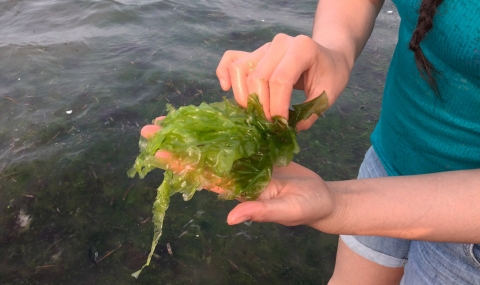
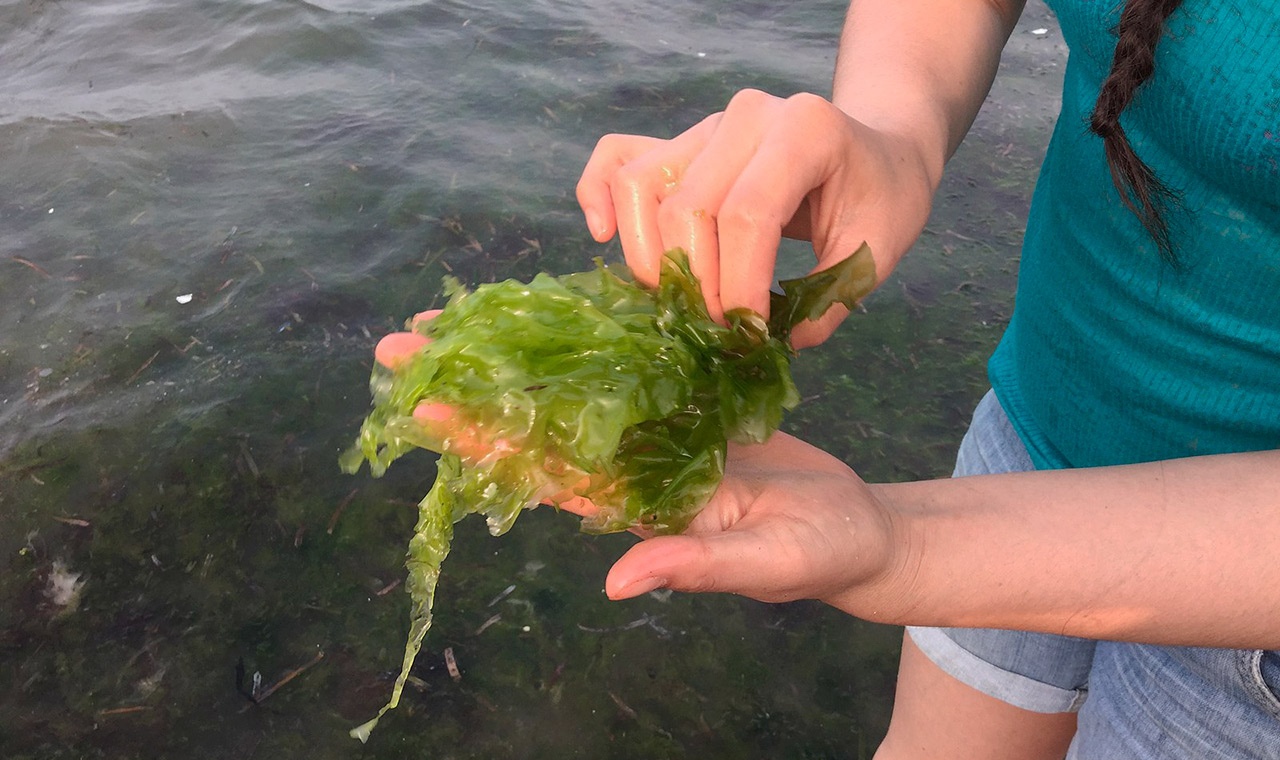
From a taxonomic perspective, Rhodophyta account for 51% of records, followed by Chlorophyta (27%), and Phaeophyta (22%). Commercially relevant genera such as Gracilaria, Saccharina, Pyropia and Ulva are among the most extensively represented.
While macroalgae uptake transfers nutrients into harvestable biomass rather than permanently removing them from the system, effective harvesting and downstream use can result in net nutrient extraction. The availability of standarised global data allows operators, regulators and project developers to quantify potential mitigation more realistically.
For a sector moving towards measurable environmental performance and ecosystem-based production models, access to a harmonised global bioextraction dataset provides an important step from conceptual nature-based solutions towads quantifiable planning.
The dataset is publicly available in open access together with the full reference list of the underlying studies.