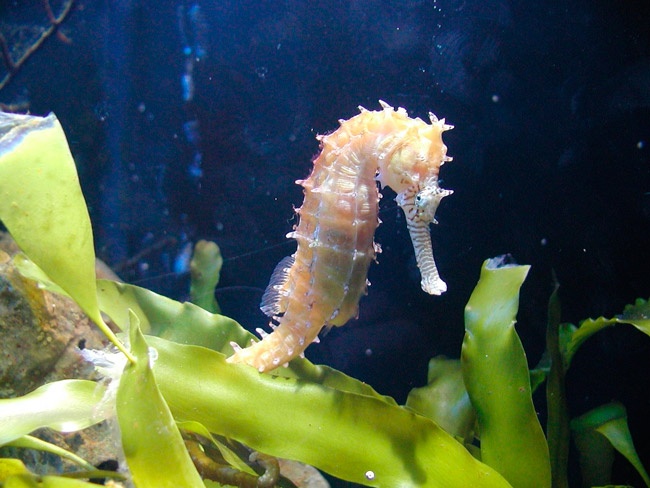
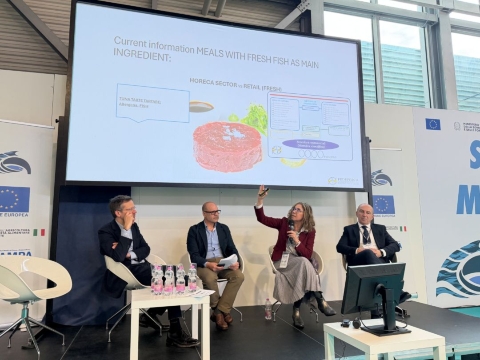
Gran Canaria has become an international meeting point for tackling one of the most complex challenges in marine conservation: the recovery of syngnathids, the group that includes seahorses, pipefish and seadragons. At the SyngCo 2026 congress, specialists in marine biology, genetics and resource management are discussing how advanced genomics and captive breeding can be integrated into a coordinated global strategy.
The event, organised by the Universidad de Las Palmas de Gran Canaria (ULPGC) through its ECOAQUA Institute and supported by the Fundación Loro Parque, is being held at Poema del Mar and the Marine-Maritime Innovation Centre. Beyond its academic dimension, the congress is conceived as a strategic working forum aimed at defining technical and scientific priorities at a critical time for these highly specialised fish.
Syngnathids are characterised by low mobility, strong habitat fidelity to specific coastal environments and complex reproductive systems. While these traits make them emblematic species, they also increase their vulnerability to seagrass degradation, pollution, climate change and bycatch. In this context, updating their status on the IUCN Red List and identifying genetically distinct management units are seen as essential steps towards more effective conservation policies.
A central theme of the meeting is the use of genomic tools to resolve taxonomic uncertainties and uncover hidden population structures. Accurate identification of lineages and stocks will help refine recovery plans, prevent inappropriate genetic mixing and design reintroduction strategies with greater chances of success. The integration of such data into international regulatory frameworks could significantly reshape the management of these species.
The second major focus concerns captive breeding programmes aimed at population reinforcement. Advances in reproductive protocols, larval nutrition and controlled rearing systems are paving the way for more robust reintroduction initiatives, provided they are grounded in solid scientific criteria and ecological impact assessments. In this respect, aquaria and research centres are consolidating their role as hubs of applied innovation, capable of bridging conservation science and specialised aquaculture practices.
In a context of mounting pressure on coastal ecosystems, the discussions in Gran Canaria highlight a key message: safeguarding seahorses can no longer rely solely on passive habitat protection. It requires a coordinated strategy that brings together genomics, aquaculture and international governance to secure the future of these iconic marine species.