
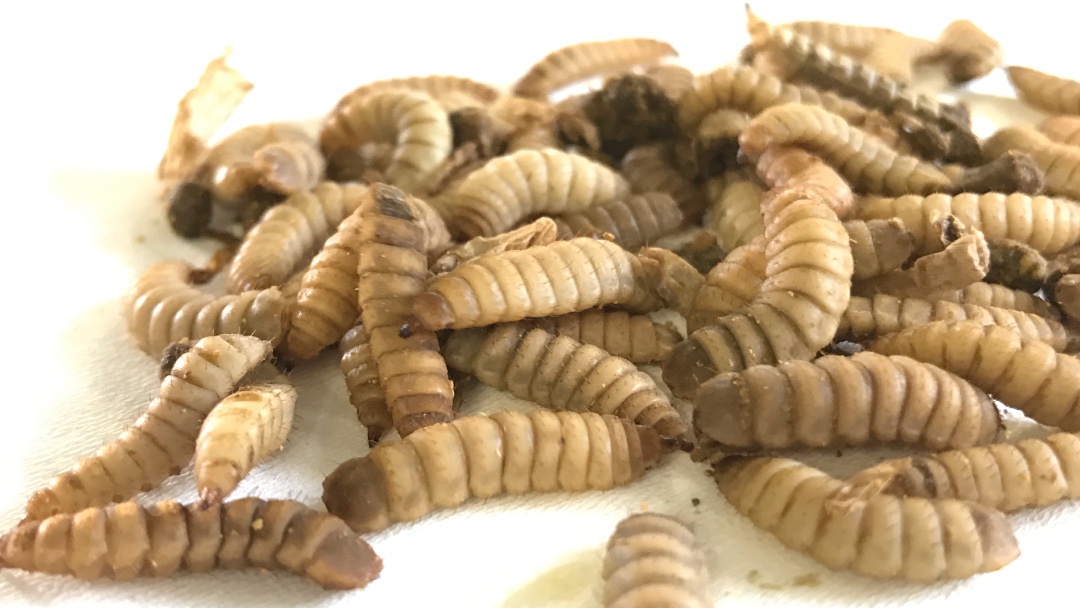
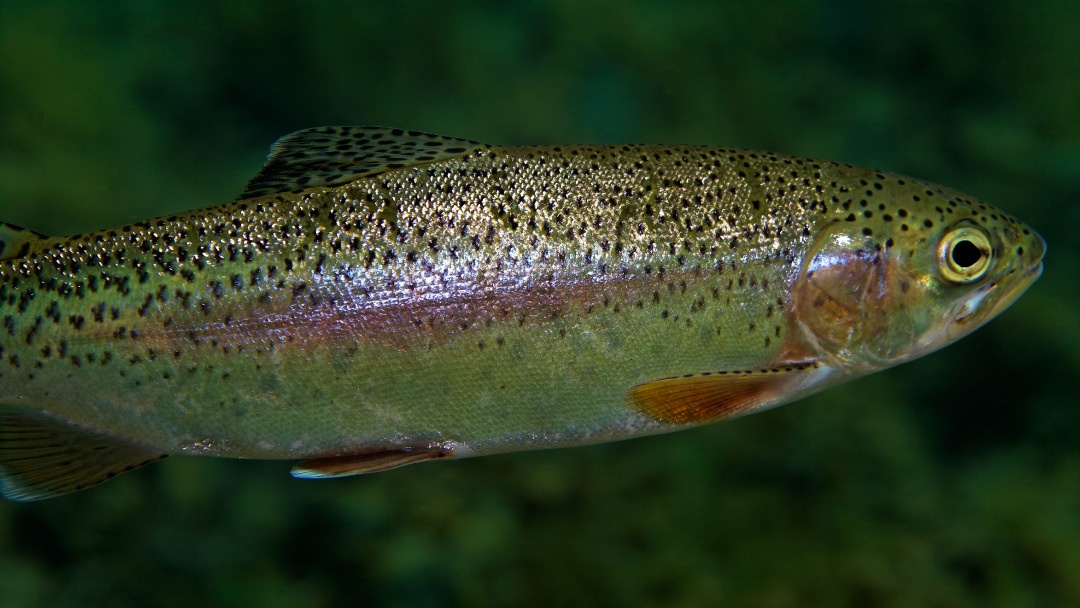
Insect-based feeds, often presented as a strategic lever to make aquaculture more sustainable and circular, are still struggling to move beyond the experimental phase on European fish farms. This is highlighted by a recent study carried out by researchers at the University of Bologna, in Italy, among Italian trout farmers.
The research shows that, despite a high level of awareness and widespread recognition of environmental benefits, many producers continue to adopt a cautious approach.
Published in the journal Agricultural and Food Economics, the study focuses on the use of insect meal derived from the black soldier fly (Hermetia illucens) in trout diets. Using an innovative analytical model, the research goes beyond the simple decision to adopt this feed ingredient, also examining what happens after its introduction at farm level – a phase that is often overlooked in sustainability debates.
All farmers involved in the study stated that they were aware of insect-based feeds, and almost 80% said they would be willing to use them. However, only 14% have adopted them on a stable basis, while 25% have tested them experimentally. More than 60% have never introduced them at all.
A particular significant finding is that experimentation does not guarantee continuity. Some farmers who had trialled insect meal later decided to abandon it, citing the high cost of feed and the lack of adequate economic returns. This is compounded by a crucial external barrier: consumers’ limited willingness to pay a premium for fish raised on insect-based feeds.
Most farmers recognise the environmental advantages of insect meal, such as reduced dependence on fishmeal and closer alignment with circular economy principles. By contrast, economic and social benefits appear far less evident.
More than 80% of respondents believe that insect-based feeds are more expensive than conventional alternatives, and many doubt that these additional costs can be offset under current market conditions. Even among adopters, opinions are divided as to whether costs are effectively balanced by benefits.
Yari Vecchio, the lead author of the study, believes that one of the most interesting findings to emerge from the research is that “farmers do not perceive insect meal as a radical innovation. They consider that its introduction requires only minimal changes to feeding practices and farm organisation, making it technically accessible even to small and medium-sized enterprises.”
“The technology is ready and the sustainability benefits are clear, but the economics remain fragile. Today, the economic dimension of insect-based feeds is so unstable that it risks turning a long-announced revolution into a missed opportunity. We cannot afford for sustainability to remain an experimental luxury: coherence between environmental ambitions and real profitability is essential,” Vecchio emphasises.
The real challenge, the authors stress, is therefore not technical, but economic and market-related.
This gap between the sustainability narrative and genuine economic sustainability does not concern farms alone.
The real challenge is moving from theoretical sustainability to real profitability
The recent collapse of Ÿnsect, one of the most ambitious insect-protein projects in Europe, has refocused attention on the structural difficulties facing the sector. Despite unprecedented financial backing and narrative closely aligned with European Union climate policies, the company failed to establish an economically sustainable business model in a market that is extremely price-sensitive.
The Ÿnsect case shows that neither the scale of investment nor environmental value alone is sufficient to guarantee success if economic sustainability does not find concrete expression along the value chain.
Fernando Sanz, Commercial Director at Skretting Spain told misPeces that “the real critical issue remains the ability to industrialise these projects. Many initiatives are not cost-competitive and, without a change in approach, they risk collapsing once subsidies are withdrawn.”
The underlying problem, the expert explains, “is the imbalance between investment, production costs and the market.” In the feed sector, he adds, “sustainability alone does not generate sufficient margins to support such costly industrial processes.”
The findings highlight a growing gap between Europe’s sustainability ambitions and the operational realities faced by farmers. Although insect-based feeds are fully aligned with the European Green Deal and the Circular Economy Action Plan, producers continue to perceive insufficient institutional support and unclear market signals.
According to the authors of the study, better monitoring of post-adoption phases, targeted incentives and more effective communication to consumers about environmental benefits could help foster wider uptake.
The study sends a clear message to policymakers, feed manufacturers and sector stakeholders: testing a sustainable innovation is not the same as adopting it. Without genuine economic sustainability and market engagement, even the most promising solutions risk remaining niche.
For insect meal to become a truly widespread ingredient in aquaculture feeds, the transition will need to go beyond the farm, involving policies, supply chains and consumer alike.

Latest news
-
Gilthead seabream by-products: technical potential, industrial pathway still uncertain
Reggio Emilia, Italy, 8 January 2026 |
-
FCR is not enough: How to truly measure productive performance in aquaculture
By Alejandro Guelfo, 8 January 2026 |
-

Oregano essential oil enhances the preservation of gilthead seabream fillets under modified atmosphere packaging
Athens, Greece, 7 January 2026 | A study shows that the use of oregano essential oil in active packaging can extend shelf life by up to four days