When discussing climate change and global warming, it is difficult to find good news. However, in the field of aquaculture – and in relation to the climate exposure of 327 marine aquaculture species, including finfish, molluscs, crustaceans and algae – there is room to optimism, provided countries are able to meet the goals of the Paris Agreement.
According to a study led by scientists from Nord University in Norway and the CCMAR at the University of the Algarve in Portugal, marine aquaculture species could avoid the most severe impacts of climate change if global warming is limited to 1.5ºC.
This is the first global study to assess marine aquaculture under an explicitly optimistic scenario compatible with 1.5ºC of warming. The researchers estimate that 41% of the world’s Exclusive Economic Zones (EEZs) would experience no significant climate change for aquaculture species under this scenario.
These areas include regions of high economic value and major aquaculture production, suggesting that the sector could remain viable in the long term without the need of large-scale geographic relocation, as long as global emissions are effectively reduced.
In addition, key groups such as crustaceans, tunicates and echinoderms would show little to no exposure to climate change under this Paris-aligned scenario.
The picture changes dramatically under scenarios of higher greenhouse gas emissions. Under an intermediate scenario known as SSP3-7.0, 96% of EEZs with current aquaculture activity would be exposed to novel climatic conditions – environments outside those that currently support marine farming.
Under the worst-case scenario, SSP5-8.5, the situation becomes even more severe: 98% of global marine aquaculture could be affected, including production in major aquaculture nations such as China, India, Indonesia, Chile and Norway.
The study identifies semi - enclosed seas – including the Baltic Sea, the Black Sea and the Red Sea – as particularly vulnerable, alongside equatorial regions, where many species already live close to their thermal tolerance limits.
Unlike previous research, this analysis does not focus on temperature alone. Instead, is uses a “climate dissimilarity” index that integrates multiple environmental variables – including oxygen levels, salinity, primary productivity and nutrients – offering a more realistic picture of future conditions for marine aquaculture.
The study also assesses climate exposure in relation to the economic value of aquaculture at the national level, classifying regions according to recommended strategies: develop, optimise, adapt or mitigate. This framework may prove particularly valuable for business planning, investment decisions and public policy design.
While the research shows that marine aquaculture has the potential to be one of the most climate-resilient food production systems, the authors caution that this favourable outcome depends on rapid and sustained emissions reductions.
They also note that the 1.5ºC threshold was temporarily exceeded in 2024, adding urgency to the findings and underscoring that the resilience of aquaculture depends not only on technological innovation or local adaptation, but on global climate decisions made this decade.
Reference:
Mackintosh, A. L., Hill, G. G., et al. (2025). No significant projected climate change effects on the global geographic suitability of marine aquaculture under a 1.5 °C warming scenario. npj Ocean Sustainability. DOI:10.1038/s44183-025-00178-7

Latest news
-
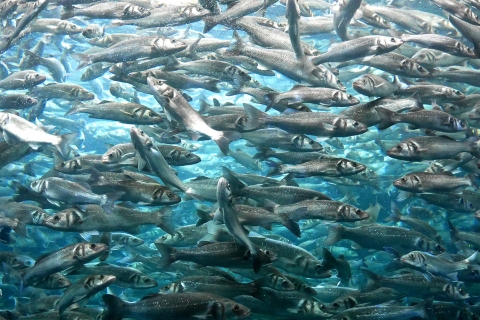
Marine aquaculture could remain climatically viable if the Paris Agreement is met
Portugal, 2 January 2026 | The study warns that greenhouse gas emissions must be reduced to limit global warming to 1.5 °C. Otherwise, 98% of global aquaculture production would be affected.
-
Strengthening the fish natural defences is key to the future of aquaculture health
China, 5 January 2026 |
-