

A recent European Commission proposal to limit the use of certain “meat-related terms” could end up creating an indirect problem for the marketing of fishery and aquaculture products. While the initiative is not aimed at the sector, the absence of an explicit exclusion in the draft legislation risks opening the door to interpretations that could affect well-established commercial designations.
This warning comes from the Market Advisory Council (MAC) in advice adopted on 17 December 2025, analysing the Commission proposal presented on 16 July 2025 to amend the Common Market Organisation (CMO) for agricultural products. The stated objective of the Commission is to protect certain meat-related terms in order to improve consumer transparency, reserving them for products made exclusively from meat, defined as “the edible parts of an animal”.
The issue arises because several of the terms that could be protected under the proposal — such as “loin”, “fillet”, “steak”, “burger” or “sausage” — are long-established and widely used in the marketing of fishery and aquaculture products across different Member States and languages. In practical terms, this could affect products marketed as “salmon burgers”, “cod fillets” or “tuna loin”, names that are familiar to consumers and clearly associated with fish rather than meat.
Although the Commission’s proposal focuses on meat and does not explicitly refer to fishery or aquaculture products, the MAC points out that amending agricultural market rules without clarifying their relationship with fisheries legislation creates legal uncertainty. Fishery and aquaculture products are covered by a separate common market organisation, and EU food law defines “meat” in a way that clearly excludes fish and seafood.
According to the MAC, if this issue is not addressed during the legislative negotiations, operators in the sector could face labelling changes, marketing restrictions or divergent interpretations between Member States. Such outcomes, the Council warns, would disrupt the market and confuse consumers — the opposite of what the Commission intends to achieve.
For this reason, the MAC calls for fishery and aquaculture products to be explicitly excluded from the scope of the proposed restrictions, in order to ensure legal clarity, regulatory consistency and stability for the sector’s value chain.

Latest news
-

Market Advisory Council warns that proposal to limit “meat-related terms” could affect fishery and aquaculture products
Brussels, 22 December 2025 | The MAC says the Commission initiative, although focused on meat, could create legal uncertainty and market disruption for fisheries and aquaculture products
-

AquaFarm 2026 (Italy): the first major aquaculture meeting of the year
Pordenone, Italy, 22 December 2025 | 18-19 February: the first major event of 2026 for the Mediterranean aquaculture sector
-
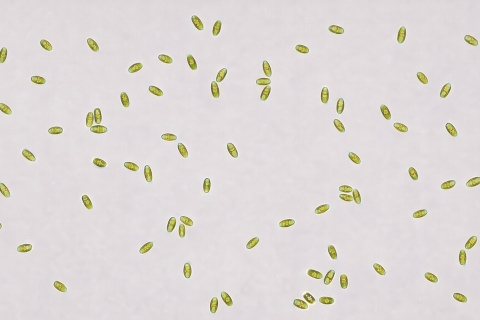
Study shows how light and temperature shape fatty acid profiles in Sellaphora mínima
India, 19 December 2025 | Controlled light and temperature conditions could optimise diatom lipids for aquaculture and biofuel use