
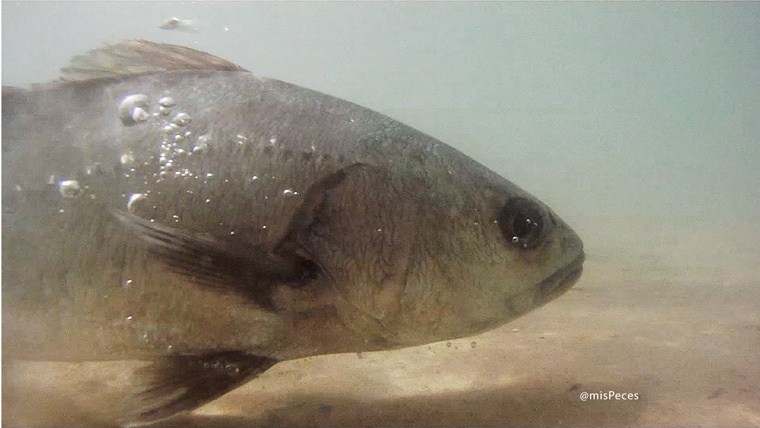
A commercial scale study shows that meagre (Argyrosomus regius) can be produced profitably, efficiently, and with minimal losses in semi-intensive earthen ponds, challenging the assumption that marine fish farming must rely on highly intensive or technologically complex systems.
The research, published in the Turkish Journal of Agriculture – Food Science and Technology, is based on commercial-scale production data from an earthen pond fish farm located in the Milas district of Muğla Province, southwestern Türkiye, a region with a long tradition in marine aquaculture.
Unlike many aquaculture studies conducted under laboratory or experimental conditions, the fish in this study were raised in operational ponds supplying the market, offering picture of performance under everyday farming conditions.
Over a production period of 237 days, meagre reached an average harvest weight of nearly 500 grams, while achieving a feed conversion ratio of 0.84, meaning less than one kilogram of feed was required to produce one kilogram of fish. Survival rates exceed 99 per cent, indicating low biological risk and strong adaptability to pond-based systems.
Beyond biological performance, the study highlights the economic viability of the system. Using actual feed prices and market selling values from the farm, researchers calculated an economic conversion ratio of approximately 1.6 US dollars per kilogram of fish and an economic profit index close to 2 US dollars per fish.
Feed is typically the largest cost in aquaculture, often accounting for more than 60 per cent of total expenses. The ability to maintain strong growth while feeding fish at just 1 percent of total biomass per day suggests that meagre production in earthen ponds can remain profitable even as feed prices rise.
The study also places the farm-level results in a global context, drawing on FAO production data. While meagre production is increasing worldwide, it remains concentrated in a small number of countries – including Egypt, Spain, Türkiye, Greece and Croatia – and current volumes are still far below the species’ estimated biological and economic potential. Average market prices of 5-6 US dollars per kilogram indicates sustained demand.
According to researchers, semi-intensive earthen ponds – which require lower investment than offshore cages or recirculating aquaculture systems – could play a key role in expanding production, particularly in coastal and brackish-water regions.
As governments and producers seek ways to increase seafood supply while limiting environmental impact, the findings suggest that meagre could emerge as a strategic species for sustainable aquaculture development. High survival rates, efficient feed use and strong market value position the species as an attractive option for farmers aiming to balance profitability with operational simplicity.
The authors caution that any production increase should be carefully aligned with market demand to avoid price pressure, but conclude that meagre farming in earthen ponds represents a practical and scalable opportunity for the sector.
Reference:
Tezel, R. (2025). Assessment of production metrics of meagre (Argyrosomus regius) in semi-intensive earthen pond systems under commercial conditions. Turkish Journal of Agriculture – Food Science and Technology, 13(12), 4087–4092

Latest news
-
Energy costs and consumption patterns vary widely across aquaculture systems, new EU analysis shows
Brussels, 7 April 2026 |
-

Digital twins in aquaculture are advancing fast, but remain far from commercial farms
Portugal, 6 April 2026 | The technology promises to optimise production and reduce risks, but the gap between laboratory performance and real-world deployment remains critical
-
Replacing fishmeal with mussels does not reduce environmental impact in seabream juvenile farming
Norway, 6 April 2026 | Partial and total substitution increases impacts in key categories, while energy use during the juvenile stage emerges as the main environmental hotspot