Sustainability has become a central theme in debates about the future of aquaculture. Concepts such as “natural”, “blue” and “circular” increasingly shape industry narratives, and novel feed ingredients are often presented as inevitable replacements for conventional raw materials. However, industry specialists caution that sustainability alone does not determine whether a new ingredient will be adopted in aquafeeds.
Research efforts have expanded significantly into insect meals, single-cell proteins, microalgae and other emerging raw materials. Yet strong performance in the laboratory is rarely sufficient to secure commercial uptake. For a novel ingredient to move beyond trials and into mainstream formulations, it must meet requirements that extend well beyond scientific promise and reflect the realities of feed manufacturing: an industrial process run at scale, under tight economic constraints, and with limited tolerance for risk and variability.
Aquafeed production demands ingredients that can be stored for extended periods and handled, processed and formulated reliably within existing systems. This places strict expectations on physical stability, compositional consistency, extrusion performance and security of supply. Ingredients that fall short may generate interest in R&D programmes or pilot projects, but they seldom progress to widespread market adoption.
A key obstacle is industrial fit. Many emerging raw materials offer environmental potential but lack the level of processing maturity and standardisation needed for large-scale production. Variability in composition or physical properties increases formulation and manufacturing risk, while the additional processing required to address these issues often raises costs and undermines competitiveness.
Economic and supply factors further shape adoption decisions. Feed producers prioritise price performance and dependable volumes, typically favouring established raw materials with proven behaviour and predictable availability. Novel ingredients that cannot demonstrate long-term supply at scale therefore find it difficult to compete, regardless of their sustainability credentials.
This does not make sustainability irrelevant. Once an ingredient proves technically viable, consistent and economically competitive, its environmental footprint can become a genuine differentiator. Ultimately, the future of novel aquafeed ingredients is likely to be driven less by ideology and more by their ability to integrate seamlessly into the realities of industrial production.

Latest news
-

Applied aquaculture science needs “quality time” and less bureaucracy
By Alejandro Guelfo, 15 January 2026 | The sector needs to accelerate innovation, but bureaucracy and competition for funding are holding research back: the key is to ensure every euro pays for more science and less paperwork
-
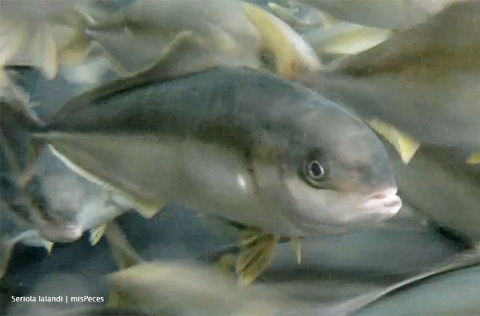
The Yellowtail Kingfish (Seriola lalandi) genome decoded: future implications
New Zealand, 15 January 2026 |
-