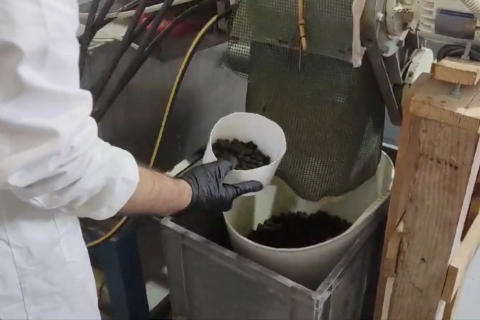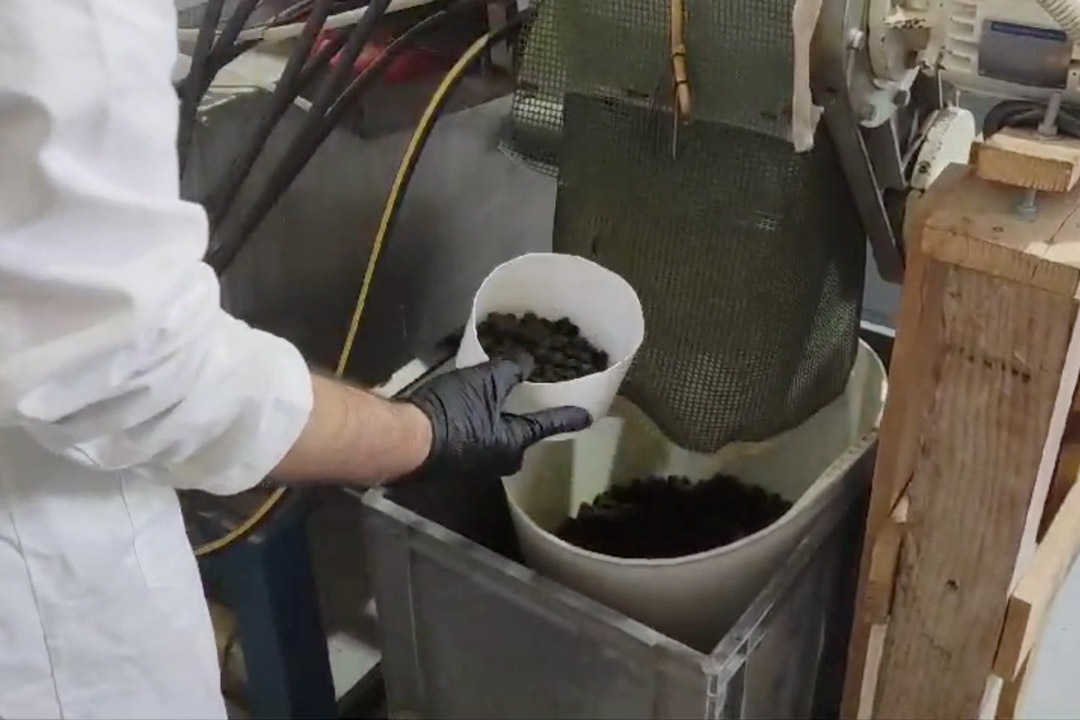
The physical architecture of aquafeed pellets – beyond their nutritional formulation – may play a more strategic role in feed efficiency than previously assumed.
A study published in Aquaculture Nutrition has demonstrated that pellet size and raw material particle size can significantly modulate gut transit time (GTT) in Atlantic salmon (Salmo salar). While the diets were nutritionally identical, differences in pellet diameter (3mm vs 5mm) and ingredient grind size altered the time required for 50% of ingested feed to evacuate the gastrointestinal tract (T50).
The smallest and finest formulation (3mm pellet with fine grind) showed the longest retention time (T50 ≈ 42.5 hours), whereas the coarsest 5mm pellet reached 50% evacuation in approximately 22.8 hours.
Although digestibility differences were modest, finer and smaller pellets tended to show numerically higher apparent digestibility coefficients, particularly for dry matter and energy. The authors also highlight that pellet hardness and bulk density – both influenced by grind size – may contribute to the observed transit dynamics.
Beyond formulation: physical feed design as a management tool
Accelerated gut transit has been associated with reduced nutrient exposure time to digestive enzymes, potentially limiting absorption efficiency and increasing nitrogenous waste outputs. In intensive systems, this may translate into reduced nutrient retention, higher environmental discharge and lower feed conversion performance.
From an industrial perspective, the findings suggest that feed manufacturers may have an additional lever to fine-tune digestive dynamics without altering ingredient matrices. Adjustment in extrusion parameters, pellet diameter and grind size could become part of a broader strategy to optimise feed utilisation under thermal stress scenarios; improve nutrient retention when using novel ingredients; reduce environmental loading linked to inefficient digestion.
While the study does not report dramatic improvements in performance metrics, it reinforces an often-overlooked dimension of feed engineering: the physical properties of the pellet itself.
As climate variability increasingly affects digestive physiology and appetite regulation in farmed fish, understanding and managing gut transit dynamics may become a relevant component of sustainable intensification strategies in European salmon farming.
Referencia:
Paige C. Miles, Thomas S. Mock, Matthew K. Jago, Michael J. Salini, Richard P. Smullen, David S. Francis. Influence of the Physical Characteristics of Feed on the Digestive Processes of Atlantic Salmon, Salmo salar, Focusing on Gut Transit Time. Aquaculture Nutrition. Volume 2026, Article ID 3269414, 14 pages
https://doi.org/10.1155/anu/3269414

Latest news
-
-
-
RAS-farmed greater amberjack meets organoleptic quality benchmark
El Puerto de Santa María, Spain, 26 February 2026 |