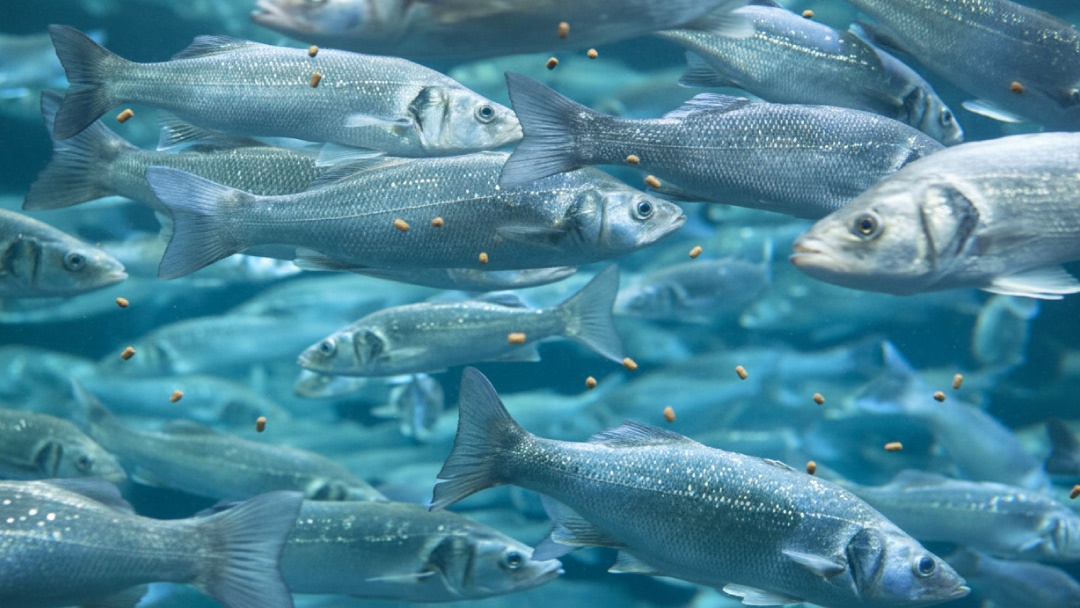
Spanish researchers have confirmed the first detection of the bacterial pathogen Lactococcus garvieae as the causative agent of haemorrhagic septicemia outbreaks in European seabass (Dicentrarchus labrax) farms in Spain.
The study, recently published in the Journal of Fish Diseases, represents a collaboration between academic institutions and the production sector, and warns of the pathogen’s expanding potential, with virulence seemingly heightened by elevated water temperatures.
The infectious episodes occurred in autumn 2023 at two separate facilities, coinciding with water temperatures of around 25ºC. The disease resulted in moderate cumulative mortalities of 5-10%, alongside classic clinical signs of lactococcosis, including exophthalmia, periocular haemorrhages, anal prolapse and severe congestion of internal organs.
The authors emphasise that warm environmental conditions appear to favour the pathology, noting that rising seawater temperatures linked to climate change pose an additional risk for the consolidation of this disease in marine aquaculture.
A particular concerning finding is the pathogen’s ability to infect other high-value species. In experimental challenge trials, the isolates obtained from European seabass proved virulent not only for the original host but also for Senegalese sole (Solea senegalensis). In this species, infection caused mortality rates of between 33.3% and 100%, depending on the strain, and reproduced clinical signs such as erratic swimming and exophthalmia.
The study addresses one of the major current challenges for fish pathology laboratories: differentiating Lactococcus garvieae from the closely related species Lactococcus petauri, with which it is often confused when using conventional methods.
To resolve this, the researchers provide precise diagnostic tools. At the molecular level, identification is confirmed via a duplex PCR that detects a species-specific 132 bp marker (glycosyltransferase gene), unique to L. garvieae, against the 583 bp marker to L. petauri.
At the proteomic level, the authors describe a characteristic MALDI-TOF mass spectrometry peak at m/z 3328.76, consistently present in all L. garvieae isolates and absten in L. petauri. Field observations also confirmed that, unlike L. petaurid, L. garvieae isolates from European seabass do not ferment sucrose or hydrolyse hippurate – useful traits for preliminary screening.
Treatment and vaccination outlook
Regarding prevention, the study brings encouraging news. Immunoblot analyses revealed that the European seabass isolates share antigenic proteins with rainbow trout strains.
Serum from trout vaccinated with commercial formulations (the bivalent L. garvieae – Yersinia ruckeri vaccine) reacted positively with the European seabass isolates. This suggests that currently available vaccines may offer partial cross-protection while specific marine formulations are being developed. The isolates also showed in vitro sensitivity to authorised antibacterial treatments.
For the industry, this first record of Lactococcus garvieae in European seabass in Spain underscores the urgent need to reinforce health surveillance, update diagnostic protocols and adopt preventive strategies – including the evaluation of existing vaccines – before warming waters increase both the frequency and severity of outbreaks.
Early response, close coordination between farms, laboratories and feed manufacturers, and sustained investment in immunoprophylaxis will be essential to prevent this emerging pathogen from becoming a structural challenge for Mediterranean aquaculture.
Reference:
Fouz, B., Carballeda-Carrasco, E., Barriga-Cuartero, J., Torres-Corral, Y., Robles, Á., Zarza, C., & Santos, Y. (2025). First description and characterisation of Lactococcus garvieae strains causing septicaemic disease in farmed sea bass (Dicentrarchus labrax; Linnaeus) in Spain. Journal of Fish Diseases, 00, 1–12. https://doi.org/10.1111/jfd.70089

Latest news
-
-
-
RAS-farmed greater amberjack meets organoleptic quality benchmark
El Puerto de Santa María, Spain, 26 February 2026 |