
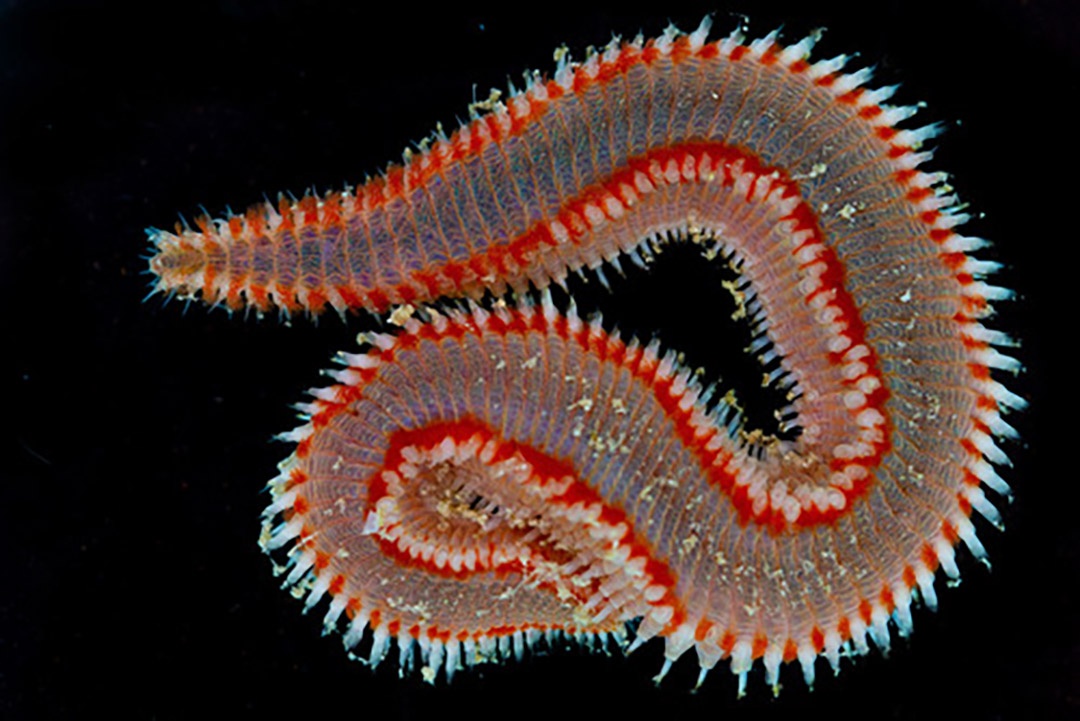
Interest in polychaete worms as alternative ingredients for aquaculture feeds continues to grow, driven by their protein content, their ability to recycle organic matter and their potential role in integrated multi-trophic aquaculture systems. However, knowledge about how to cultivate these organisms efficiently and how their nutritional value varies remains limited. A study led by researchers at the Leibniz Centre for Tropical Marine Research (ZMT) in Germany provides new insights that help clarify both the opportunities and the constraints for the sector.
Rather than simply confirming that polychaetes are a source of protein, the study shows that their nutritional value depends on both sex and diet. It also demonstrates that commercial feeds currently outperform plant-based alternatives in terms of growth, while biological traits such as spontaneous fragmentation may limit scalability under farming conditions.
One of the most novel findings of the research is the identification, for the first time, of nutritional differences between male and female individuals of the polychaete Eurythoe cf. complanata. The results indicate that males contain significantly higher levels of carbohydrates, whereas females tend to accumulate more lipids, a pattern consistent with the higher energy demands associated with egg production. This sexual differentiation in body composition opens up the possibility of a more selective and targeted use of polychaete biomass in aquafeed formulations.
Diet also proved to be a decisive factor for growth. In a 90-day feeding trial, worms fed with standard commercial aquaculture pellets achieved higher growth rates than those fed with algae or spinach, which overall lost weight during the experiment. This finding challenges the assumption that polychaetes can be efficiently reared on low-value plant-based feed alone and has direct implications for the economic and sustainability assessments of worm farming as a feed ingredient.
In addition to nutritional and dietary factors, the researchers identified spontaneous fragmentation as a key biological constraint. Although fragmentation is a natural reproductive strategy in Eurythoe, the study shows that it can significantly reduce biomass accumulation, as newly formed fragments are unable to feed until regeneration is complete. From a production perspective, this behaviour introduces an additional management challenge that must be addressed before large-scale cultivation can be considered.
Overall, the authors conclude that polychaetes have clear potential as aquafeed ingredients, but they are not yet a ready-made solution for industry. While Eurythoe species offer promising protein levels and could fit into more circular production models, several issues remain unresolved, including the presence of toxin-containing bristles, incomplete knowledge of fatty acid and amino acid profiles, and the need for controlled feeding trials with commercially farmed fish and crustaceans.
Taken together, these findings shift the discussion from “worms are promising” to a more nuanced conclusion: polychaetes may become a valuable component of future aquafeeds, but only if their biology is properly understood and carefully managed.
Reference:
Heydtmann, A. V., von Waldthausen, C., Keuter, S., Kunzmann, A. & Stuthmann, L. (2026). Polychaetes as aquaculture feed: feeding experiments and nutritional value analysis of Eurythoe spp. Aquaculture International, 34, Article 15.

Latest news
-
From innovation to integration: the next phase of aquafeed ingredients
By Alejandro Güelfo, 30 December 2025 | The challenge for 2026 is to consolidate alternative ingredients into a robust nutritional model
-
Sex matters in the nutritional value of polychaetes as aquafeed ingredients
Germany, 30 December 2025 |
-
AVRAMAR Greece’s 2026 begins with a choice between cash and restructuring
Athens, 30 December 2025 | Next year creditor banks must decide to back Cooke’s immediate recovery or Aqua Bridge’s longer-term rescue plan