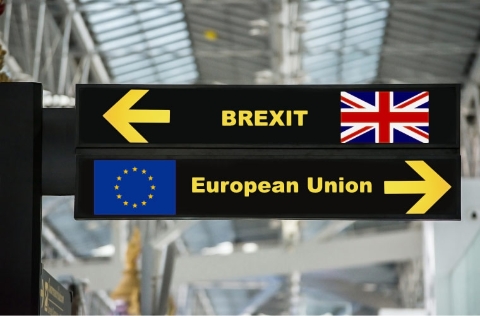
Five years after the United Kingdom left the EU single market, live bivalve molluscs continue to illustrate the structural consequences of regulatory separation. As negotiations progress towards a possible sanitary and phytosanitary (SPS) agreement, the sector is once again at the centre of the EU-UK trade equation.
The Market Advisory Council (MAC) has adopted an opinion urging the development of a structured and specific SPS framework for bivalve molluscs within the broader negotiations. The request reflects persistent friction that has not dissipated since 2021, when shellfish trade became subject to third-country controls, including export health certificates, systematic border inspections and additional administrative procedures.
Although sanitary standards remain high on both sides, the absence of mutual recognition has introduced structural uncertainty into a segment where timing is commercially decisive. For live and chilled molluscs, delay at Border Control Posts translate directly into product degradation, mortality risks and financial losses. The burden has fallen particularly heavily on small and medium-sized operators dependent on high-frequency, time-sensitive shipments.
One of the most sensitive unresolved issues concerns live bivalves originating from Class B production areas, a common and regulated practice before Brexit under harmonised EU rules. The MAC argues that, within a future SPS framework, mechanisms should be explored to restore flows comparable to pre-2021 conditions while preserving biosecurity safeguards. This question is strategically significant for regions such as Galicia, Ireland and Scotland, whose coastal economies have historically depended on fluid cross-Channel shellfish trade.
An SPS agreement would not reintegrate the UK into the single market or customs union, and customs formalities, rules of origin and the risk of regulatory divergence would remain. However, a structured framework could substantially reduce routine certification requirements, streamline inspections and improve digital interoperability between EU and UK systems. For highly perishable aquaculture products, such operational adjustments would carry measurable economic impact.
The political dimension remains delicate, as any durable SPS arrangement would imply some degree of regulatory alignment and dynamic adaptation. For the shellfish sector, however, the negotiations are less about sovereignty debates than about restoring predictability, reducing mortality-linked losses and enabling investment planning in depuration and processing capacity. Whether the talks succeed or stall, live bivalves remain one of the clearest indicators of how far post-Brexit regulatory cooperation can realistically evolve.

Latest news
-
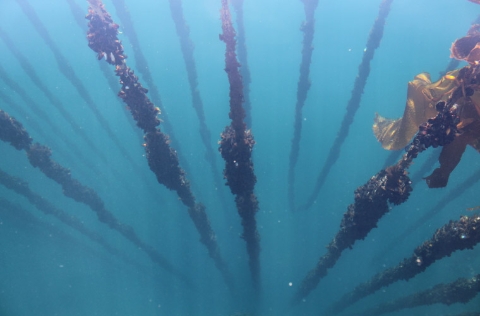
Science challenges current carrying capacity models in Galician mussel farming
New CSIC study calls for dynamic biomass calculation based on real hydrodynamics and climate variability
-

Middle East tensions add cost pressure to Mediterranean aquaculture
Spain, 3 March 2026 |
-