
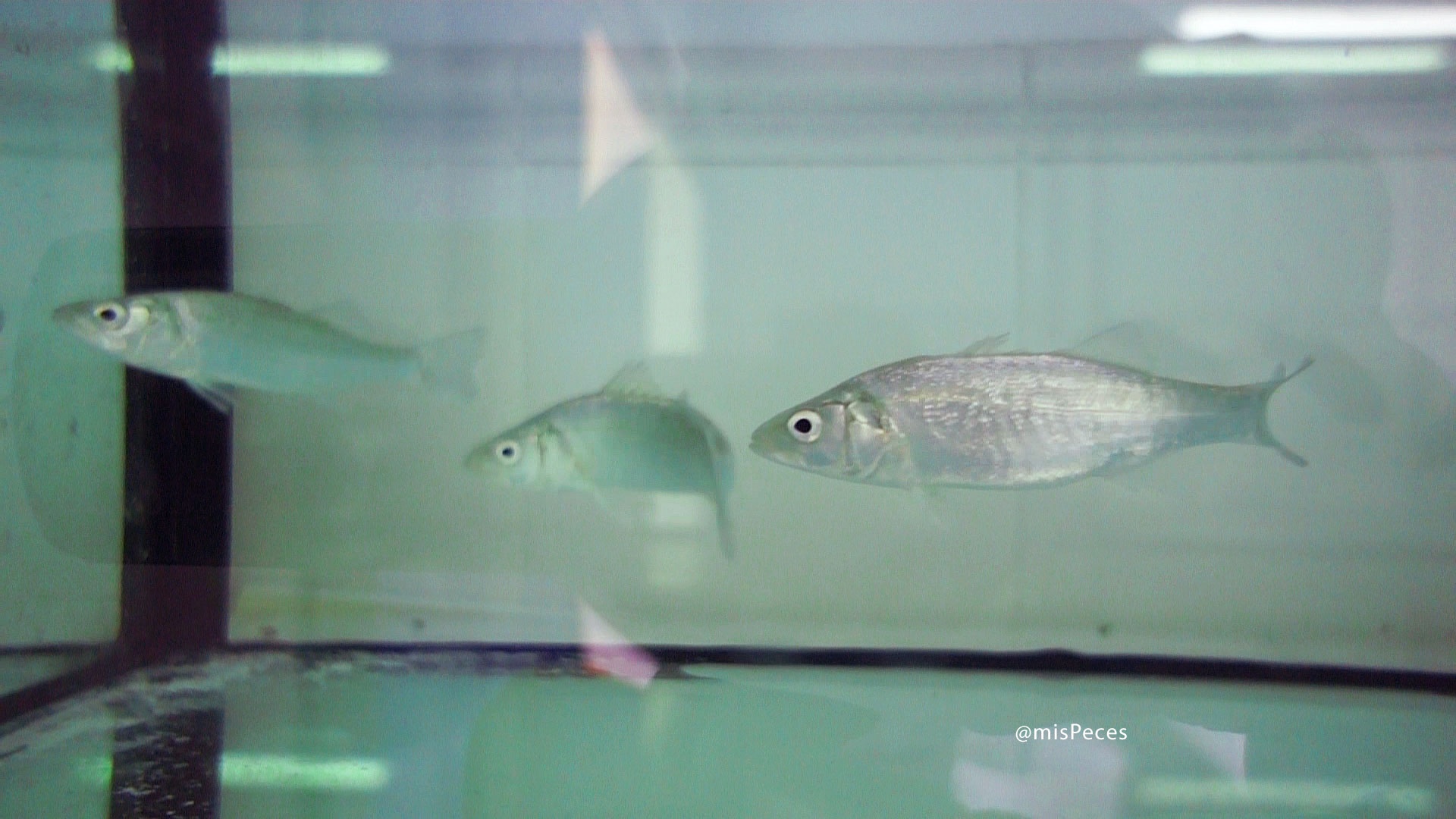
A Spanish-led consortium says it’s taking a concrete step toward a question that used to belong to science fiction: can we farm fish in orbit to feed astronauts on long missions? The project, SpaceGenFish, launched in November under the coordination of the Institute of Marine Sciences (ICM-CSIC) with partners including the IEEC, Radian and Ifremer, and is funded via Spain’s space agency within an ESA programme.
The headline ambition is bold—fresh animal protein in space—but the real scientific hook is more specific: SpaceGenFish plans a 15-day orbital experiment to track how fish biology responds to microgravity and radiation, and to probe something no one has measured in this context before: which epigenetic switches flip when fish live off Earth.
That epigenetic angle matters because it’s the difference between “the fish survived” and “the fish adapted”—a key threshold if anyone is serious about routine food production for lunar or Martian bases.
One major engineering challenge sits underneath the biology: fish can’t simply be “kept” in microgravity. SpaceGenFish is developing an autonomous life-support and monitoring system designed to maintain stable conditions and collect reliable data without constant crew intervention—exactly the kind of technology that could later translate to remote aquaculture on Earth.
Which fish? The project’s official announcement doesn’t yet disclose the species. But SpaceGenFish explicitly builds on Ifremer’s Lunar Hatch research track, where peer-reviewed studies have already tested European sea bass (Dicentrarchus labrax) and meagre (Argyrosomus regius) as candidate aquaculture species for space-related constraints (including launch vibration and altered gravity simulations).
That makes sea bass—widely used as an aquaculture model—one of the leading suspects for SpaceGenFish’s first orbital run, even if the team hasn’t formally confirmed it yet.
If SpaceGenFish works, it won’t just be a curiosity on the ISS. It would be an early proof point that closed-loop animal food production—not only plants—could become part of serious mission planning, and that the biological rules of farming may be rewritten when “environment” stops meaning Earth.

Latest news
-
Seafood Legacy Spain begins construction in Burela to bring salmon to market by 2029
Burela, Lugo, 17 March 2026 | The project, backed by more than €80 million in investment and public funding, reinforces Europe’s push for land-based salmon production using RAS technology
-
Five strategies proposed to strengthen the resilience of global shrimp aquaculture
United Kingdom, 17 March 2026 |
-
The EU already imports 83% of the seafood it consumes, report warns of a “competitiveness gap” with third countries
Brussels, 16 March 2026 | Rising energy, labour and regulatory costs in the EU contrast with significantly lower operating costs in major exporting countries