The Universitat Politècnica de València, in Spain, is leading SwitchFloc, a European research project aimed at accelerating the adoption of biofloc technology in European aquaculture while training a new generation of professionals specialised in sustainable production systems.
The initiative is funded under the Horizon Europe programme, specifically through the Marie Sklodowska-Curie Doctoral Networks, with a total budget of more than €3 million shared among the participating organisations. Of this amount, over €750,000 is allocated to Universitat Politècnica de València, which coordinates the consortium.
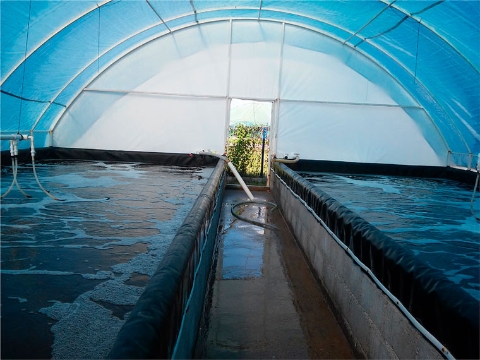
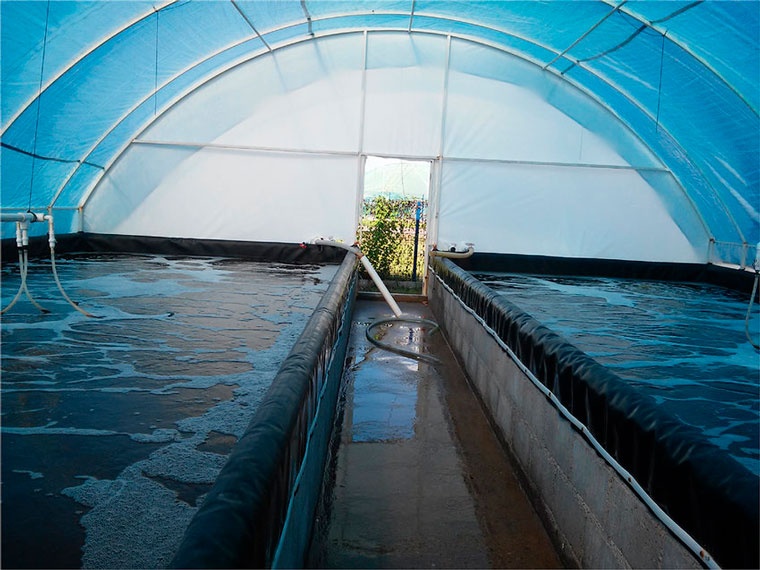
According to the project team, SwitchFloc focuses on developing and optimising aquaculture systems based on Biofloc Technology (BFT). This approach allows carbon and nitrogen wastes generated in aquaculture system improves water quality, reduces the need for water exchanges and enhances production efficiency.
For David Sánchez Peñaranda, professor and researcher at the Universitat Politècnica de València (UPV) and coordinator of the project, advancing sustainable production models is essential at a time when aquaculture already supplies more than half of the fish consumed worldwide and demand is expected to continue rising in the coming decades. In this context, he notes that improving the environmental and economic sustainability of aquaculture systems is crucial both for food security and for protecting aquatic ecosystems.
Although biofloc technology is widely used in regions such as Latin America and Southeast Asia particularly in semi-intensive farming systems, its adoption in Europe remains limited. According to information provided by the project, one of the main bottlenecks for its expansion in Europe is the shortage of specialised personnel trained in these production systems.
SwitchFloc therefore aims to support its implementation in Europe through a programme that combines applied research, advanced training and collaboration with industry, with the goal of improving productivity while maintaining high standards of animal welfare within the European regulatory and production framework.
The four-year project will focus primarily on the farming of Pacific white shrimp (Penaeus vannamei), currently the most widely produced aquaculture species globally. At the same time, researchers will explore the adaptation of biofloc systems to species relevant to European aquaculture, such as gilthead seabream (Sparus aurata).
In addition, the consortium will evaluate the integration of biofloc systems with other innovative production approaches, including integrated multi-trophic aquaculture (IMTA-FLOC) and combined aquaculture-hydroponic systems known as FlocPonics, which aim to improve nutrient recycling and overall sustainability in aquaculture operation.
According to the project partners, the research activities will be progressively scaled from experimental trials to validation in commercial companies, allowing the results to be tested under real production conditions and facilitating knowledge transfer to the aquaculture sector.
SwitchFloc brings together academic institutions and companies from seven countries, including the Universidade do Porto (Portugal), the UiT The Artic University of Norway, the Alfred Wegener Institute (Germany) and several Italian universities, together with technology companies linked to the aquaculture industry.

Latest news
-

Military escalation in the Middle East could affect aquaculture and RAS projects involving European technology
Middle East, 13 March 2026 |
-
-