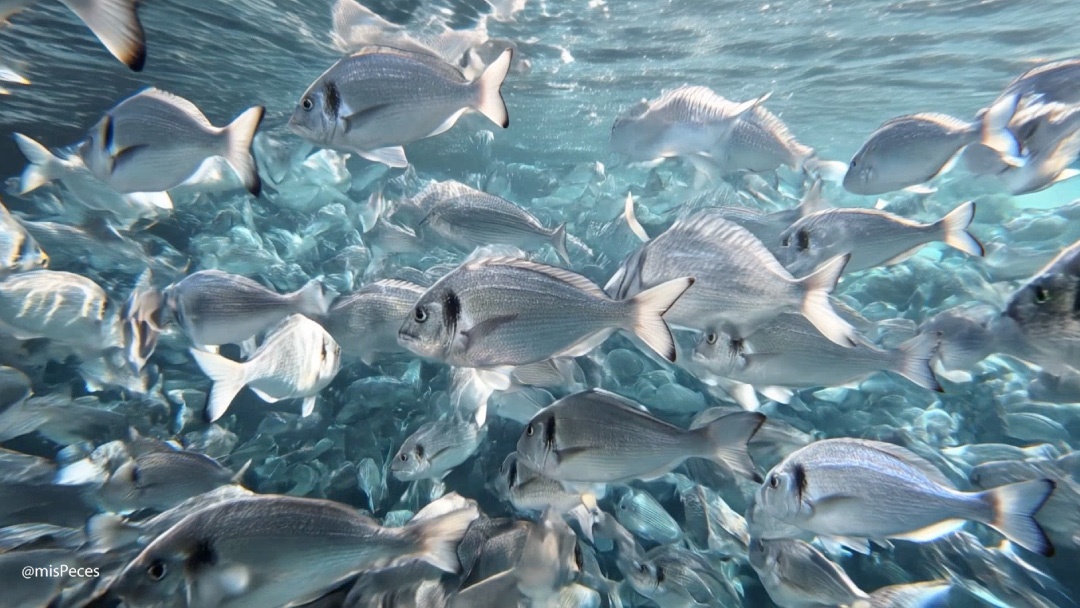
Chronic physiological stress associated with high stocking densities, rather than aggressive social behaviour, emerges as the primary factor limiting fish growth in intensive aquaculture systems. This is the main conclusion of a large-scale meta-analysis the relationship between density, welfare, and productive performance in fish.
The study integrates 2,507 observations from 214 scientific papers and 108 species, allowing robust conclusions to be drawn at a global level. Compared to low-density conditions, high stocking densities result on average in a 9.4% reduction in specific growth rate (SGR), a 13.6% decrease in daily feed intake (DFI) and an 8.8% increase in feed conversion ratio (FCR), confirming that intensification through higher density carries a measurable productive cost.
However, the analysis introduces a key nuance: the frequency of aggressive behaviours decreases significantly (-38.9%) at high stocking densities. Far from indicating improved welfare, the authors explain that crowding promotes shoaling behaviour and suppresses territoriality. As a result, the establishment of dominant hierarchies and targeted attacks in physically constrained. In contrast, the decline in productive performance is linked to an increase in cortisol levels (+11.3%) and a deterioration of digestive function (-15.5%), both of which are directly associated with reduced appetite and poorer feed efficiency.
The study also identifies critical differences between species. Carnivorous fish show a greater tolerance to high stocking densities, with smaller growth penalties and a more moderate stress response. By contrast, omnivorous species exhibit stronger increases in cortisol, lower feed intake and greater size heterogeneity. In fish group, the most striking result in the sharp rise in cannibalism rate (+469.5%), indicating intense and lethal competition for resources that is not observed in carnivorous species under comparable conditions.
From a productive perspective, the authors conclude that intensification requires targeted measures beyond general husbandry practices. The results highlight the effectiveness of indoor farming systems, including recirculating aquaculture systems (RAS), which maintain stable survival rates (+1.1%) thanks to tighter environmental control, compared with the significant decline in survival (-6.3%) observed in outdoor systems. The study also emphasises the need for precise feeding management and nutritional strategies aimed at reducing the metabolic burden associated with chronic stress.

Latest news
-
Study debunks the role of aggression in the productive effects of high density in aquaculture
China, 6 February 2026 | Carnivorous fish tolerate high densities better than omnivores
-
-