
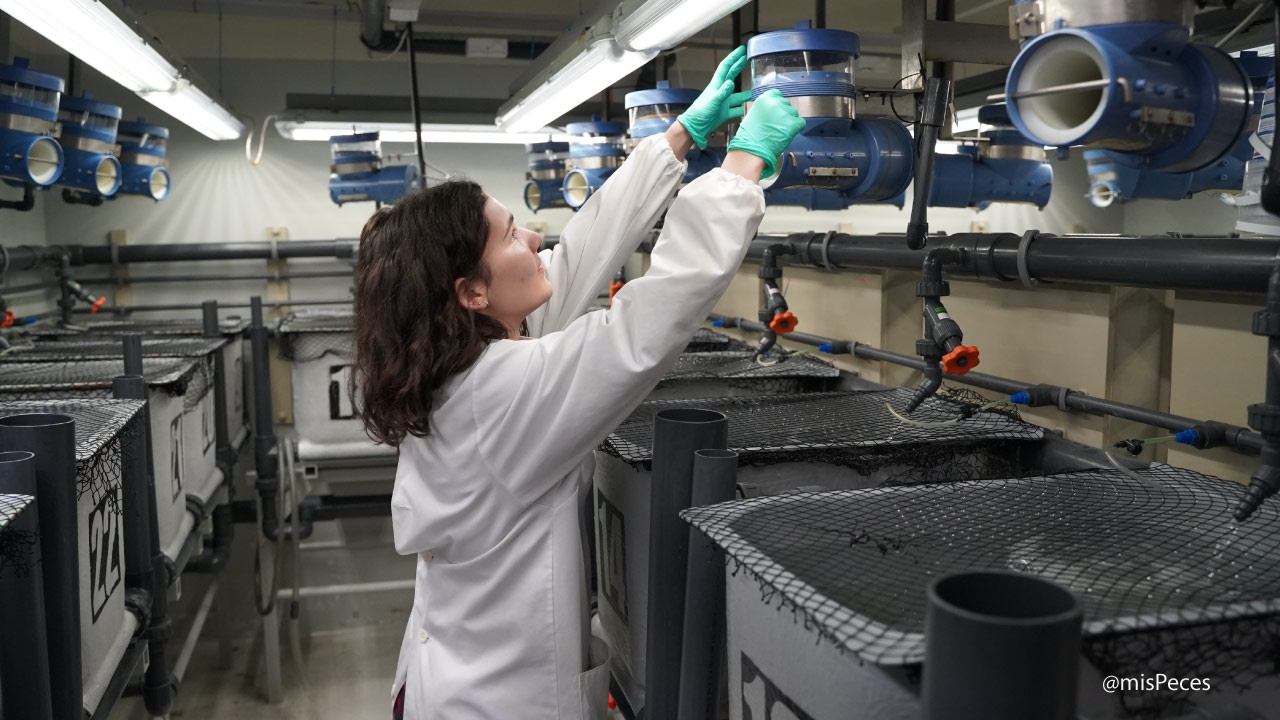
A study led by researchers at CIIMAR – Interdisciplinary Centre of Marine and Environmental Research, University of Porto, in Portugal, shows that it is possible to reduce fishmeal inclusion in diets for European seabass (Dicentrarchus labrax) without compromising growth or fillet quality, while significantly increasing iron bioavailability in the fish.
In European seabass, improving iron absorption is not a minor nutritional detail; it goes further, as it is a key way to sustain health, stress resilience and production stability in diets with reduced fishmeal inclusion.
Published in the scientific journal Aquaculture Nutrition, the work was carried out within the Pep4Fish project and provides relevant evidence for one of the key debates in aquaculture nutrition: how to move towards more sustainable feeds without sacrificing production performance or nutritional value.
The study assessed diets in which part of the fishmeal was replaced by hydrolysed proteins derived from food industry by-products, including non-edible fish fractions, dogfish skin and porcine by-products. Through hydrolysis, these ingredients generate small peptides that improve digestibility and nutrient absorption.
Over an 89-day experimental period, juvenile seabass fed the experimental diets showed normal growth rates, high feed efficiency and fillet quality comparable to the control diet, with adequate levels of omega-3 fatty acids. From a production standpoint, the results confirm that partial fishmeal replacement does not penalise performance.
The most striking finding relates to micronutrition. Fish fed the experimental diets were able to absorb up to three times more iron than those receiving a conventional formulation. According to the authors, this effect is linked to the ability of hydrolysis-derived peptides to chelate iron, facilitating its transport and absorption in the intestine.
Beyond growth metrics, the study introduces a less common perspective in nutritional trials by focusing on the actual bioavailability of essential minerals – a factor relevant both to fish health and to the nutritional value of the final product for human consumption.
From a sustainability perspective, the work reinforces the potential of circular economy approaches in feed formulation, by valorising by-products and reducing pressure on limited marine resources such as fishmeal. As the researchers note, the next key step will be to assess the economic feasibility and industrial scalability of these ingredients in commercial feed formulations.
The Pep4Fish project is funded by Portugal’s Plano de Recuperação e Resilência and brings together companies and research centres to develop functional ingredients aimed at improving the efficiency and sustainability of aquaculture nutrition.

Latest news
-

Storm Kristin causes severe damage to Portuguese aquaculture
Portugal, 3 February 2026 | The Centre region and the Algarve have been affected, according to the Portuguese Aquaculture Association
-
Study shows how to triple iron absorption in European seabass diets while reducing fishmeal use
Porto, Portugal, 3 February 2026 |
-

“AI washing” in aquaculture: when artificial intelligence changes nothing
By Alejandro Guelfo, 2 February 2026 |