Reproduction remains one of the major challenges facing aquaculture producers, whether due to persistent difficulties in closing the life cycle under farming conditions or to irregular reproductive performance. In many cases, this makes the development of genetic improvement programmes difficult – or even unfeasible – limiting the long-term consolidation of several cultured species.
In recent years, research has increasingly focused on surrogate broodstock technology as a way to address these constraints. The approach is based on the transplantation of germ cells – precursors of eggs and sperm – from a donor species into a recipient species that is generally easier to manage and reproduce.
In theory, this can reduce the costs associated with broodstock maintenance, shorten reproductive cycles and provide greater control over reproduction.
The aim is for the recipient animal to produce gametes of the donor species, effectively acting as a “surrogate breeder”. This is neither cloning nor genetic editing, and it does not eliminate the need for selective breeding programmes or sound reproductive management. Rather, it is a biotechnological tool designed to bypass specific biological or logistical limitations.
For the sector, however, the key question is not whether the technology works, but when it delivers real value – and when it fails to address the underlying problem.
Surrogate broodstock technology is most relevant when reproductive bottlenecks are not genetic in nature, but instead linked to species biology or production systems.
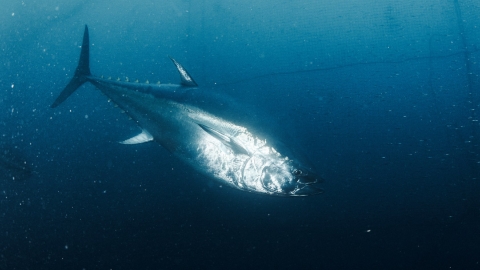
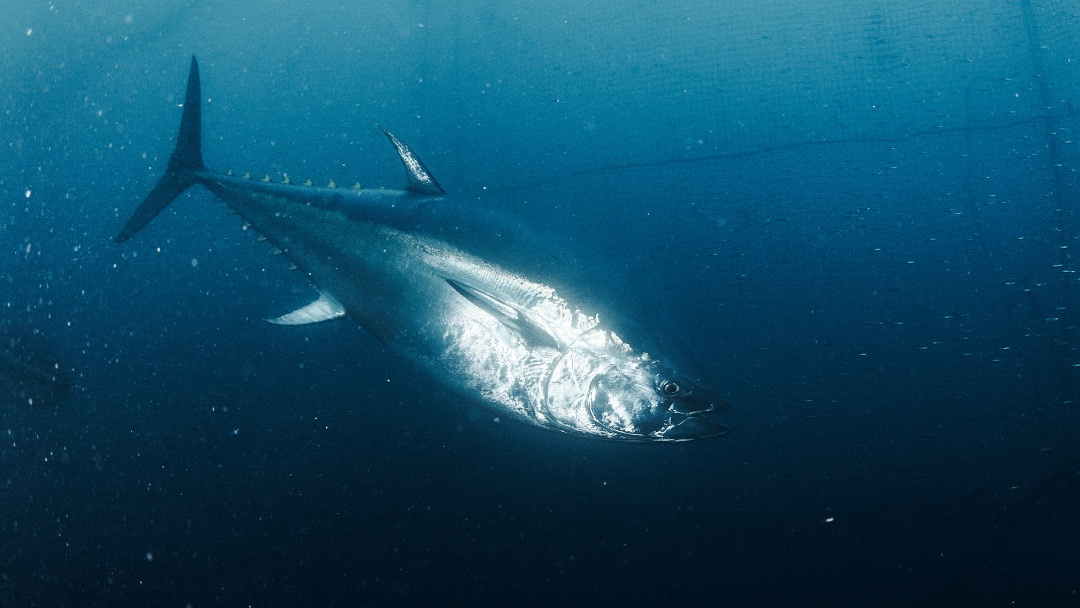
A first clear group includes species is with late sexual maturation, where maintaining broodstock for many years entails substantial investment in time, space and resources. Bluefin tuna (Thunnus thynnus) and other large, long-cycle marine species fall into this category. In such cases, surrogate reproduction may facilitate genetic improvement or conservation programmes, rather than immediate commercial production.
It may also be useful in farming systems that remain highly dependent on wild broodstock, a situation that compromises supply stability and hampers genetic progress. This applies to marine flatfish such as Senegalese sole (Solea senegalensis) or common sole (Solea solea), where reproduction in captivity – particularly in farmed males – remains inconsistent, as well as to some flatfish species of the genus Paralichthys, which have yet to achieve fully stable reproductive cycles.
Another relevant scenario involves species that are difficult to manage as broodstock, whether due to large body size, behavioural issues or high sensitivity to stress. European hake (Merluccius merluccius) is a good example, where reproductive limitations are largely biological and behavioural in nature.
Finally, surrogate broodstock is frequently discussed in the context of conservation and genetic improvement programmes, where the number of available breeders is extremely limited. Sturgeons (Acipenser spp.), characterised by long life cycles and high economic value, are among the most frequently cited candidates in the scientific literature.
In all these cases, using a more robust or easier-to-rear recipient species could help reduce costs, shorten timelines and improve reproductive control – always as a complement to, not a replacement for, a well-designed production system.
By contrast, surrogate broodstock offers little advantage for species that already reproduce reliably in captivity and are supported by well-established genetic selection programmes. Atlantic salmon (Salmo salar), rainbow trout (Oncorhynchus mykiss) and tilapia (Oreocrhomis spp) fall squarely into this category. In these species, current production challenges are far more closely linked to environmental conditions, welfare or health management than to reproduction itself.
In such context, introducing a complex technology does not correct structural weaknesses. As several authors have noted, if the production system does not work, changing the breeder will not fix it.
Despite its potential, surrogate broodstock technology still faces significant barriers: high technical complexity, limited combability between donor and recipient species, very restricted industrial scalability and costs that currently place it closer to R&D than to commercial production.
Moreover, it does not replace the need for a deep understanding of reproductive physiology, nor does it remove the requirement to improve husbandry practices and rearing conditions.
Ultimately, surrogate broodstock is not a universal solution for aquaculture, but it does point to the direction in which part of the research effort is moving. Its real value will always depend on the species, the production context and whether the main bottleneck is biological, logistical or systemic. For the sector, the real challenge is not adopting the newest technology, but recognising when a tool truly fits – and when it does not – within the reality of each farming system.

Latest news
-
Stolt Sea Farm emerges as a stable pillar within Stolt-Nielsen, with 65% operating profit growt
London, 28 January 2026 | SSF closed with an operating profit of USD 48.1 million, an increase of almost 65% on the previous year
-
-