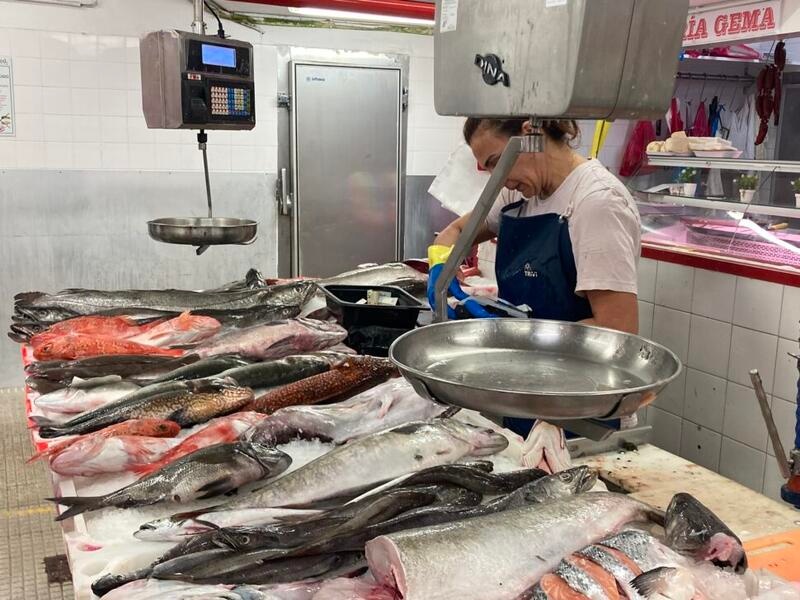
The European Union’s food sovereignty in seafood is at one of its lowest levels in decades. A recent study prepared for the European Parliament’s Committee on Fisheries (PECH) shows that the EU’s self-sufficient rate for fish and seafood fell to 37.5% in 2022. When exports are excluded, the situation appears even more concerning, as domestic production covers only 14.2% of total consumption.
According to the report, this growing dependence on imports is closely linked to an expanding competitiveness gap between European producers and suppliers form third countries. While energy, labour and regulatory costs have risen significantly across the EU in recent years, several exporting countries have strengthened their market position through substantially lower operating costs.
The study highlights how these differences are particularly visible in Mediterranean aquaculture. In some EU countries electricity prices can reach around €0.19 per kilowatt hour, whereas in Turkey they are close to €0.04. This energy advantage allows Turkish producers to place gilthead seabream and European seabass on the European market at highly competitive prices, significantly increasing their presence in EU retail channels.
The report also presents several examples illustrating how disparities in production costs, industrial structures and regulatory frameworks shape global competition. In the mussel sector, the analysis compares Chilean production with that of Galicia in Spain, noting that Chilean producers benefit from high level automation and lower labour costs. As a result, production costs are estimated at around €0.69 per kilogram, compared with approximately €074 per kilogram in Galicia.
In aquaculture, Turkey provides another example of structural advantage. The country’s aquaculture sector is highly vertically integrated and operates at a much larger production scale than many European producers. In some segments, Turkish production is estimated to be four times higher than that of certain Mediterranean countries, enabling producers to benefit from economies of scale that are difficult for many European small and medium-sized enterprises to achieve.
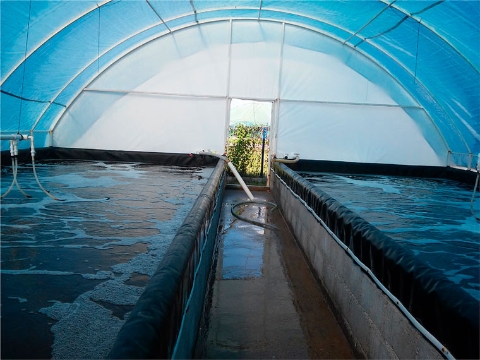
Against this backdrop, the report emphasises that technological that technological innovation will be essential to strengthen the resilience of European aquaculture. Among the most promising solutions identified are recirculating aquaculture systems (RAS) and the expansion of offshore shellfish farming, both of which could help increase production without placing additional pressure on coastal ecosystems.
However, the authors note that the deployment of these technologies continues to face significant barriers, including administrative complexity and lengthy licensing procedures, which still discourage private investment in the sector.
The report therefore calls for stronger efforts to ensure a level playing field in international trade. Among its recommendations are the introduction of stricter requirements to ensure that imported seafood meets environmental and social standards comparable to those applied within the EU, as well as the development of clearer sustainability labelling schemes that would allow consumers to better recognise and value European products produced under higher regulatory standards.

Latest news
-
The EU already imports 83% of the seafood it consumes, report warns of a “competitiveness gap” with third countries
Brussels, 16 March 2026 | Rising energy, labour and regulatory costs in the EU contrast with significantly lower operating costs in major exporting countries
-
Military escalation in the Middle East could affect aquaculture and RAS projects involving European technology
Middle East, 13 March 2026 |
-