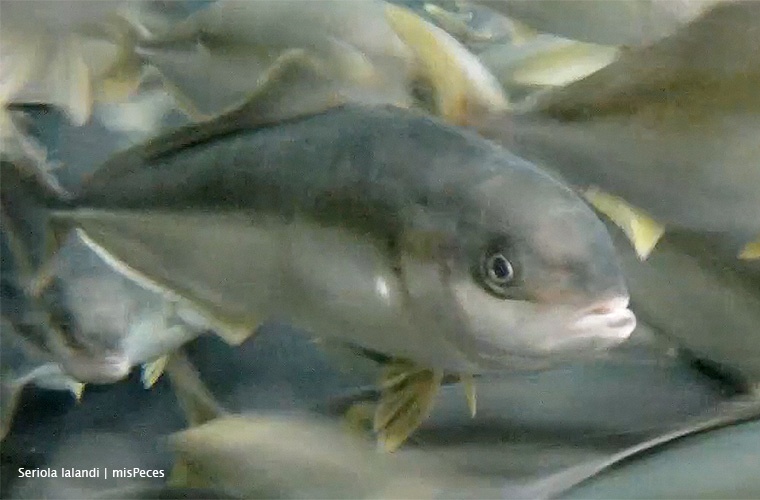
 Seriola lalandi |@misPeces
Decoding the genome of an aquaculture species means having access to its complete genetic map – understanding how its DNA is organized and where the genes that regulate key biological traits are located.
For aquaculture, this goes far beyond basic science: a well-assembled genome is the foundation on which genetic improvement programmes, disease research and the identification of traits such as growth or feed efficiency are built. Without a robust genetic reference, many of these tools lose precision and are difficult to translate into tangible production gains.
In this context, the recent achievement of a chromosome-level genome assembly for Seriola lalandi, commonly known as Yellowtail Kingfish, by an international consortium led by researchers in New Zeland represents a significant qualitative step forward. The work goes beyond partial or fragmented sequencing, delivering a high-quality assembly with well-defined chromosomes and a genetic annotation that allows relevant functional regions to be identified.
One of the most significant aspects of the study is that the genome was developed from a specific population, avoiding the common practice of extrapolation genetic data from other regions or subspecies. This detail, which may appear minor at first glance, is crucial from an applied perspective: genetic variability between populations can have a substantial impact on the validity of markers used in selective breeding or health-related studies.
From a scientific standpoint, the genome opens the door to more precise research into the genetic basis of growth, environmental adaptation, metabolism and stress response in Seriola. It also enables comparisons with other species within the same genus or with high-value marine fish, refining both evolutionary and functional understanding.
In the short term, this advance will not translate into visible changes at farm level. It does not imply the immediate emergence of new commercial lines or automatic improvements in performance. However, over the medium term, its potential impact is considerable.
A high-quality reference genome facilitates the development of more accurate genetic section programmes, based on well-validated markers tailored to the population of interest. It also improves the identification of genes associated with disease resistance or tolerance to demanding farming conditions, an especially relevant aspect for emerging or expanding species.
In addition, the study reinforces a clear trend in modern aquaculture: the shift from genetic approaches towards more localized and specific strategies, where genetics are adapted to the production context rather than the other way around.
The work also touches on broader debates that are gaining traction within the sector, such as the responsible management of genetic resources and control over biological data. In an environment of increasing technological dependence, having well-characterised, locally relevant genomic references become a strategic asset, not only a scientific one.
Overall, the new yellowtail kingfish genome is not a story of immediate impact, but it is a key building block in the development of a more precise, efficient and knowledge-driven aquaculture. As with many scientific infrastructures, its real value lies not in the initial announcement, but in everything it will enable over the coming years.
Reference:
Carla Finn, Maren Wellenreuther, David Chagne, Tom Oosting, Yvan Papa, Alvin Setiwan, Vinko Besic, Peter Ritchie. The complete chromosome-level genome and mitogene assembly of Seriola lalandi lalandi (Yellowtail Kingfish) for aquaculture and fisheries management.

Latest news
-

Applied aquaculture science needs “quality time” and less bureaucracy
By Alejandro Guelfo, 15 January 2026 | The sector needs to accelerate innovation, but bureaucracy and competition for funding are holding research back: the key is to ensure every euro pays for more science and less paperwork
-
The Yellowtail Kingfish (Seriola lalandi) genome decoded: future implications
New Zealand, 15 January 2026 |
-