
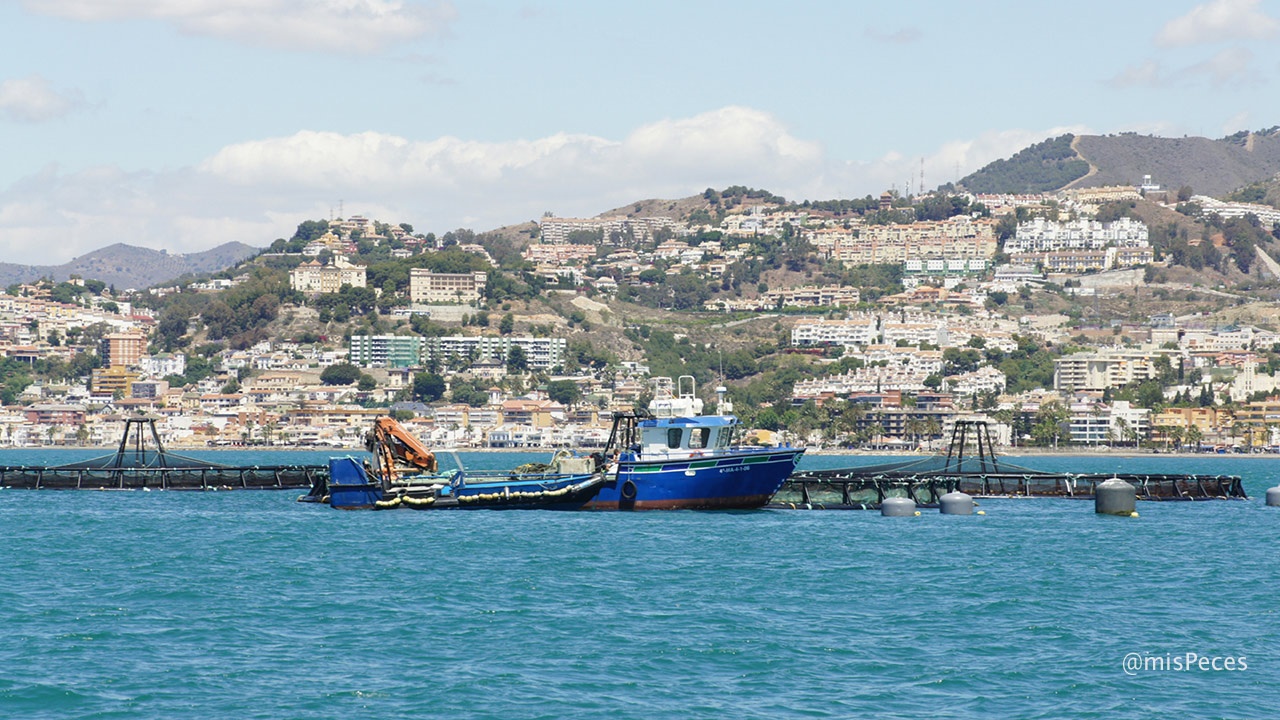
Mediterranean aquaculture of gilthead seabream (Sparus aurata) and European seabass (Dicentrarchus labrax) has reached a high level of technological maturity. Advances in captive reproduction, larviculture, genetics and nutrition have stabilised the combined production of both species around 520.000 tonnes per year while significantly improving production efficiency across farming systems.
However, as the sector consolidates its industrial scale, new limiting factors for its expansion are emerging, among them the availability of marine space compatible with other coastal uses.
Paradoxically, while farming technology continues to advance, the real bottleneck for Mediterranean aquaculture may lie outside the farms themselves, in the map of marine areas available for their development.
For decades, the development of Mediterranean aquaculture was driven by the need to solve biological challenges related to captive reproduction, larval survival and feed formulation. Today, most of these issues have been largely resolved from a technological and production standpoint. The new constraint appears in a different domain: the spatial and political dimension, in other words where and how new farms can be installed.
Coastal areas that provide suitable environmental conditions for fish farming are also zones where several strategic economic and environmental activities converge. Coastal tourism, small-scale fisheries, marine protected areas, shipping routes, port infrastructure and, more recently, marine energy projects and offshore wind farms all compete for the use of the same marine space.
An additional and increasingly decisive factor is the social acceptance of aquaculture. In many Mediterranean coastal regions, the installation of new farms faces resistance from local communities, environmental organisations or tourism-related sectors, which often perceive aquaculture as an activity that alters coastal landscape or may generate environmental impacts.
Although numerous scientific studies have shown that well-managed marine aquaculture can coexist with other maritime uses, public perception continues to play a crucial role in licensing processes and spatial planning decisions.
The implementation of European marine spatial planning policies is forcing aquaculture to be integrated into an increasingly complex mosaic of maritime uses. In many cases, even when environmental conditions are suitable for farming, the authorisation of new sites becomes constrained by territorial, regulatory or social conflicts that slow down or block development.

Latest news
-
The real bottleneck for Mediterranean aquaculture is marine space
By Alejandro Guelfo, editor of misPeces, 9 March 2026
-
Zebrafish reveals a new brain circuit acting as a biological “sleep switch”
Vigo, 9/03/2026 | This discovery may help identify new molecular targets for drugs to treat sleep disorders
-
Cooke strengthens its position in the Mediterranean with the potential integration of Culmarex and Avramar Spain
Alicante, 5 March 2026 | Cooke could create a group generating more than €300 million in seabream, seabass and meagre sales