
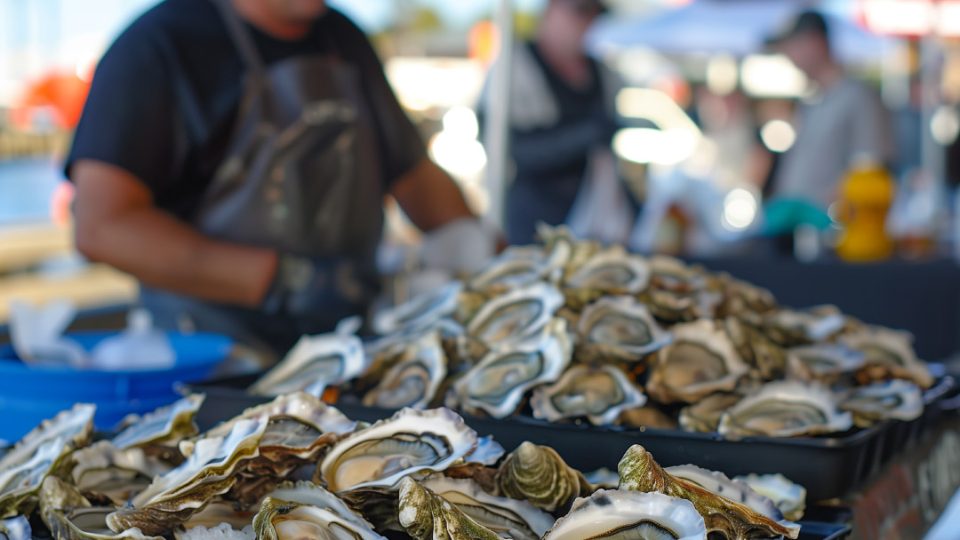
The combined use of bioenergetic models and high-resolution satellite data is beginning to transform how aquaculture production is planned.
A study by researchers at the Aquaculture Research Institute of the University of Maine shows that it is now possible to accurately predict how long it will take oysters to reach market size, based solely on the environmental conditions of each location derived from satellite data.
The work, focused on the eastern oyster (Crassostrea virginica) along the coast of Maine, integrates Dynamic Energy Budget (DEB) models with sea surface temperature and food availability data obtained from Landsat and Sentinel-2 satellites. Unlike traditional suitability-based approaches, this method does not simply identify “suitable” areas, but translates environmental conditions into a directly operational variable: time to market.
The results reveal significant differences within the same region. In optimal areas, oyster can reach market size in approximately 392-399 days, just over one year. In less productive zones, however, this period can extend to 1,255 days when estimated using chlorophyll-a, or up to 1,565 days – more than four years – when based on particulate organic matter estimates. This variability, often overlooked in conventional planning, has a direct impact on farm profitability.
The model was validated using real farm growth data collected over several years, showing strong predictive performance with both in situ and satellite-derived inputs. Notably, the study demonstrates that satellite data alone can reliably reproduce observed growth patterns, opening the door to operational planning tools without the need for local instrumentation.
Beyond oysters, the approach signals a broader shift in aquaculture site selection. Decisions are no longer based solely on whether a location can support production, but on how long it takes to generate returns. In a context of rising operational costs, increasing production risks, and growing pressure on coastal space, the ability to estimate time to market spatially can improve investment decisions and reduce uncertainty.
While limitations remain – particularly in accurately estimating food availability and incorporating factors such as salinity – the study represents a significant step towards integrating physiological modelling and remote sensing into decision-making tools.
In practice, it points towards a future where aquaculture relies not just on local experience, but on predictive systems capable of quantifying production performance before a farm is even installed.

Related

Latest In-depth
-
Clams more resistant to heat and Perkinsus: research paves the way for selective breeding
Padua, Italy, 16/10/2026 | University of Padua researchers explain to misPeces the findings presented at Aquaculture Europe 2026 and the steps needed to transfer them to hatcheries. Initial applications could emerge within the next two or three years, although the relationship between resistance, growth and other production traits still need to be assessed