
When working with natural immunostimulant, the method of incorporation is just as decisive as the choice of ingredients themselves. It is not enough to select an additive that is theoretically functional; how it is included in the feed also matters.
This has been demonstrated by a recent study on gilthead seabream (Sparus aurata), published in Water Biology and Security by researchers from the University of Cádiz and the University of Almería, in Spain.
The study compared the same blend of garlic essential oil, carvacrol and thymol using two common manufacturing methods: incorporation during the extrusion and post-extrusion coating.
Although both feeds contained identical concentration of additives, the physiological effects were strikingly different.
The post-extrusion coated feed improved key parameters of intestinal mucosa, such as tissue structure absorptive surface and goblet cell density. These indicators reflect a more functional intestine and a better-prepared immune response in a fundamental mucosal tissue such as the GALT.
In contrast, when the same compounds were added before extrusion, the fish displayed a less favourable profile: reduced intestinal absorptive surface, fewer goblet cells in the critical anterior intestinal region, and an increase in digestive enzyme activity associated with compensatory towards greater oxidative stress, suggesting a less balanced physiological response.
According to the researchers, the high temperatures and pressures involved in extrusion can degrade or transform volatile and sensitive compounds such as carvacol, thymol or essential oils, reducing or altering on sensitive tissues like the intestine, skin and gills.
Post-extrusion coating better preserves the bioactivity of these compounds and produces more stable physiological responses that benefit fish welfare. Inclusion before extrusion, on the other hand, may reduce the expected efficacy and even induce unwatend physiological adjustments.
The study highlights an aspect often overlooked: processing technology. In an aquaculture sector moving towards more sustainable, health-centred systems, understanding that form is as important as substance becomes both a scientific and competitive advantage.
Immunostimulant work when they are applied in the right way
The study involved research teams from the University of Cádiz and the University of Almería, in Spain, who analysed growth parameters, plasma biochemistry, digestive activity and the structure of intestinal, skin and gill mucosae to assess how the processing method influences the efficacy of the supplement.
The experimental feeds were manufactured by Lifebioencapsulation SL, a spin-off of the University of Almería, which produced two identical dietes except for the method of immunostimulant inclusion: one coated after extrusion and the other with the compounds added before extrusion.
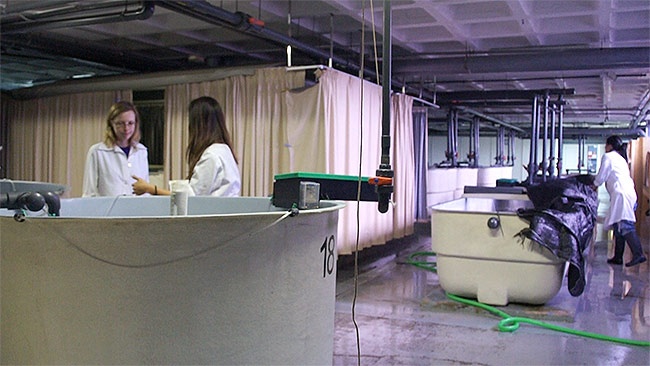
The feeds were tested at the Central Research Service for Marine Cultures (SCI-CM) at the University of Cádiz, where 180 juvenile gilthead seabream were maintained in nine tanks.
The experiment lasted 78 days, during which the fish were fed either one of the two supplemented diets or a control feed.
Reference:
Cartan, S., Oliva, M., Santos-Rosendo, C., Galafat, A., de las Heras, V., Martos-Sitcha, J. A., Mancera, J. M., & Jerez-Cepa, I. (2025). The method by which natural immunostimulants are included in the diet of gilthead seabream (Sparus aurata) modulates their physiological effects on mucosal tissues. Water Biology and Security, 100510. https://doi.org/10.1016/j.watbs.2025.100510
Related
Latest In-depth
-

Bacteriohages in aquaculture: What should we know?
Phage therapy – a natural alternative to antibiotics – is gaining ground in aquaculture