
For years, aquaculture has remained one of the major blind spots in models assessing the sustainability of European food systems. Often represented in a simplified and homogeneous way, the sector’s real diversity of species, production systems and environmental conditions has been largely absent form tools that nonetheless play a direct role in shaping public policy and dietary transition strategies.
A recent study published in Ecological Modelling now proposes a shift in approach, arguing for the integration of aquaculture with a level of detail far more consistent with the sector’s reality and with its potential contribution in terms of production efficiency, resource use and nutritional supply.
Food system and resource allocation models are increasingly used to explore how Europe could meet future nutritional needs while reducing environmental impacts. These models inform debates on climate mitigation, land use, circularity and dietary change. While agriculture and livestock systems have been extensively characterised in this context, aquaculture has typically been reduced to one or two representative species and uniform production assumption, limiting its analytical relevance.
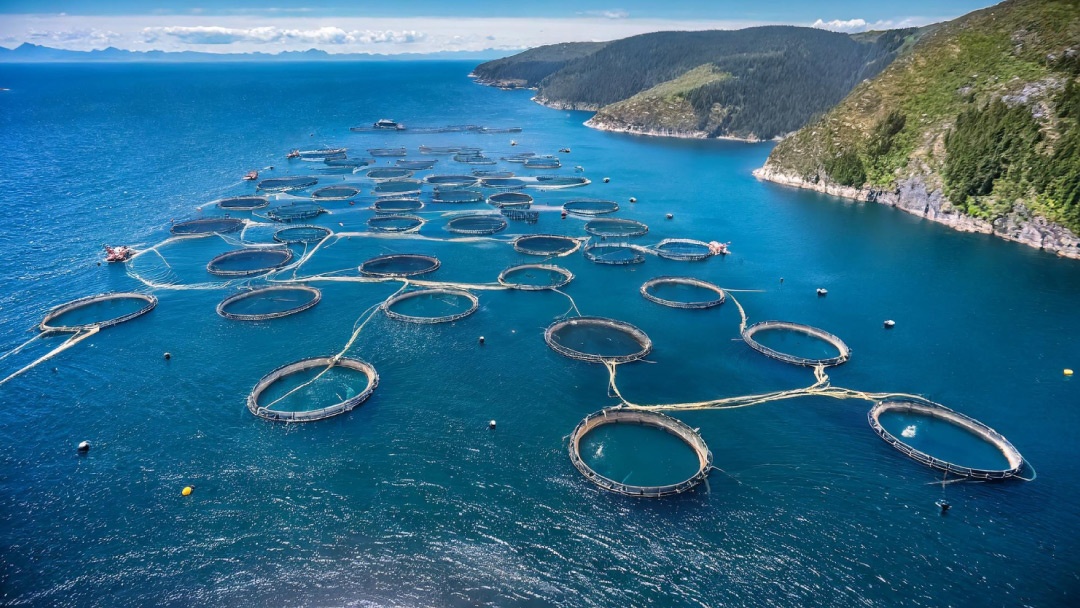
The study addresses this limitation by explicitly modelling three representative finfish species produced in Europe: Atlantic salmon, European seabass and common carp. Together, these species reflect contrasting trophic levels, farming environments and production systems, ranging from intensive marine cage farming to freshwater pond systems with varying degrees of intensification.
This choice allows the authors to represent aquaculture not as a single, generic production system, but as a heterogeneous sector whose performance and resource requirements vary substantially depending on species and farming practices. Such differentiation is essential if aquaculture is to be meaningfully compared with terrestrial livestock within food system analyses.
A central element of the proposed approach is the introduction of regional water temperature clusters. Rather than assuming uniform growth conditions, the model simulates fish performance under different thermal regimes across European regions. The results show that temperature strongly influences growth rates, time to harvest and feed requirements for the same species.
By explicating accounting for these regional differences, the study highlights a key limitation of previous modelling approaches: production performance cannot be separated from environmental context. From a food system perspective, this means that aquaculture’s efficiency and resource use must be assessed regionally, not averaged at continental scale.
Beyond growth performance, the modelling framework estimates feed intake and nutrient requirements across the entire life cycle of farmed fish, including broodstock and early life stages that are often excluded from aggregated assessments. This life-cycle perspective enables a more robust comparison between aquaculture and other animal production systems.
In particular, the study provides insight into differences between species in terms of amino acid requirements and the supply of long-chain omega-3 fatty acids (EPA and DHA). Species such as common carp, especially in extensive and semi-intensive systems, emerge as relevant contributors to circular food systems due to their ability to utilise lower-quality feed resources while still delivering nutritionally valuable outputs.
The authors do not propose direct policy recommendations. Instead, they focus on providing a methodological foundation that allows aquaculture to be incorporated into food system models on equal analytical footing with livestock. This is a necessary step if future assessments are to properly evaluate trade-offs between different animal protein sources, dietary scenarios or circular resource use strategies.
As food system modelling increasingly informs European sustainability debates, the way aquaculture is represent within these tools matters. By moving beyond oversimplified assumptions, the approach outlines in this study enables a more realistic assessment of where, how and under what conditions aquaculture can contribute to sustainable diets and reduced environmental pressure.
In this sense, the work marks an important step towards recognising aquaculture not as a marginal or auxiliary component of food system transitions, but as a structurally diverse production sector whose role must be analysed with the same level of detail as agriculture and livestock.
Related


EVENTS
-
21AprTue, 21 Apr - Fri, 24 AprGran Via - Fira Barcelona - Barcelona