

In aquaculture, having a couple of tanks full of fish running at full capacity is not something you can easily replicate and scale up commercially. However much some consultants insist on making the difficult look easy, the truth is that in aquaculture there are often more problems than real solutions. Why? Because things are something oversimplified.
Nobody likes being reminded that things are complicated -especially if they already have the entrepreneurial itch to launch an aquaculture venture. Nobody likes to hear that RAS trades environmental uncertainty for operational complexity, or that offshore farming needs industrial-grade engineering and a team that can handle the ocean on its worst day, not its best.
If this sector has a weakness at time, it is the presence of consultants who can convince even the most sceptical business owner in ten minutes that the future of protein is here, that the model is scalable and that, of course, it’s “plug-and-play”.
PowerPoints aside, the reality is harsher, and a farm is not a household appliance. There are a few basic concepts that must be kept in mind: whether the site is suitable, the fact you are working with living animals, that feed isn’t everything, and that stock is susceptible to disease.
The site matters a lot – a great deal. Moving away from species’ ideal farming conditions means having to use technology to compensate for key parameters, including fluctuations in oxygen and temperature, and that comes with an added cost.
It is also worth repeating a phrase like a mantra. “Biology doesn’t follow manuals”. If a batch becomes stressed, you can’t reboot it. There is no version 2.5 to roll back to. Fish change their behaviour, stop feeding without warning, and rarely tell you why. And even if the feeding plan is perfectly calculated, feed doesn’t perform miracles: if the animal doesn’t eat, it won’t grow, and if it eats poorly, profitability quietly falls apart.
Then there is fish health, which is the axis everything revolves around. Even in the most tightly controlled closed system, an outbreak can occur. There is no such thing as a 100% foolproof biosecurity protocol, and each location has its own mix of pathogens, stressors and risk windows.
A farm may look perfect on paper, but reality is stubborn and nature doesn’t ask permission to take its course. That is why, even if you have everything mapped out with tables and growth curves, the uncomfortable truth is that in aquaculture you always have to adjust – and more often than not, you do it through experience.
A few days ago, we published a couple of stories about new ventures that, within the sector, have been described as “April Fools’ Day projects”. It is not the purpose of this article to point fingers or to pass judgement on them. But it is important to be clear that not everything can be financed with public grants. The sector has outstanding professionals who can deliver quick, and fairly accurate, verdicts.
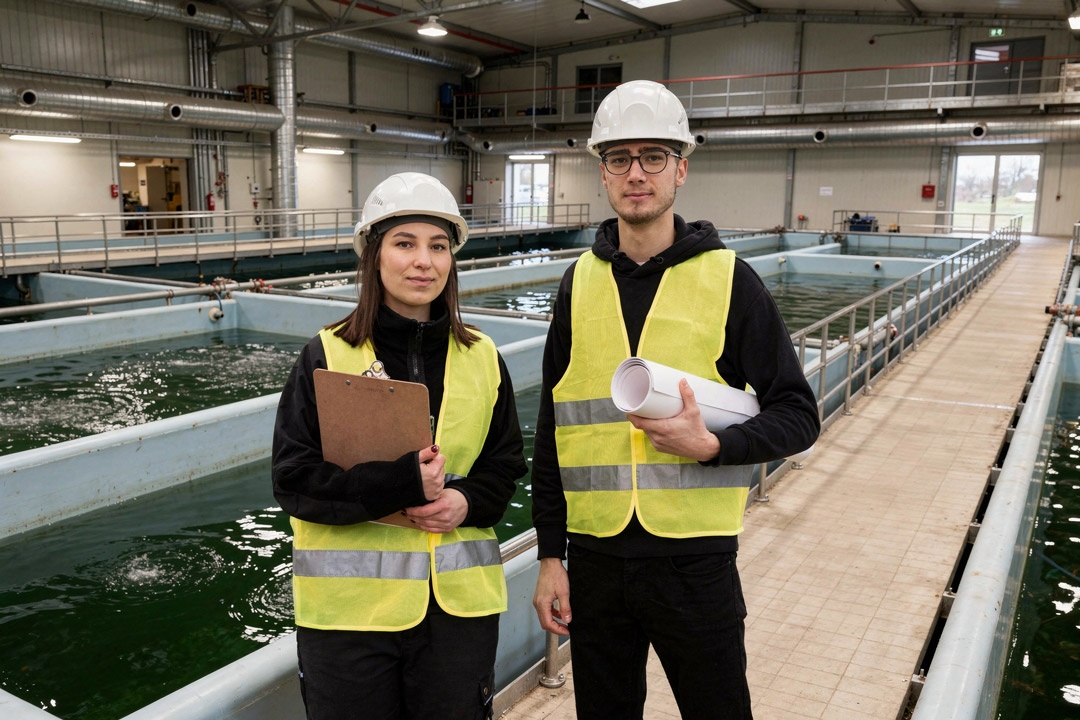
Even so, it would be unfair to end on a gloomy note. If aquaculture isn’t plug-and-play, it’s not because it is a bad idea – it’s because it is a serious business, and serious things rarely fit neatly into a marketing slogan.
The interesting part begins when you accept that complexity and start designing systems that work in the real world, not in a demo. Today there are more tools than even to do it properly: technology that helps when used with humility, better engineering, and greater ability to anticipate issues, and teams who truly understand the craft.
Aquaculture isn’t going to become plug-and-play, and perhaps that’s for the best. It can be replicated, yes – but with judgement: local adaptation, sensible engineering, realistic biosecurity and consistent operations.
The optimistic message isn’t “this is easy”. It’s better than that: this can be done well. Fewer promises. More well-built systems. Because aquaculture can’t simply be plugged in: it has to be built. And when it works, it’s worth it. You just need to know how to surround yourself with the best professionals.
Related


EVENTS
-
21AprTue, 21 Apr - Fri, 24 AprGran Via - Fira Barcelona - Barcelona