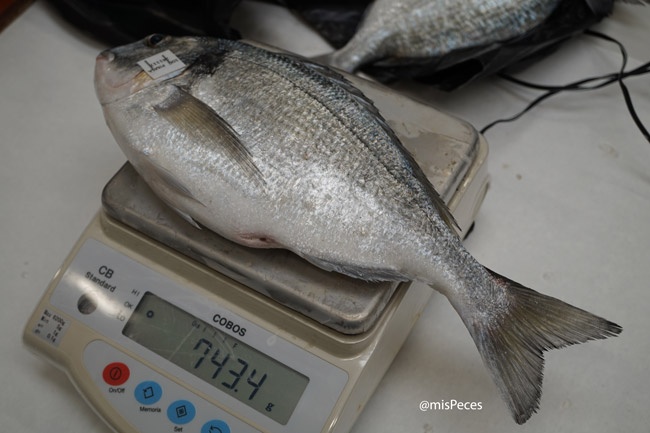
Until recently, artificial intelligence has been only partially exploited in aquaculture. Most proposed applications have focused on narrowly defined tasks such as estimating weight, measuring size or automatically counting fish. While useful, these applications remain limited in scope.
The real potential of AI lies elsewhere: in providing practical access to complex biological information – metabolism, health and welfare – without relying on invasive or costly sampling methods.
A doctoral thesis recently defended by Xuanxu (Yuuko) Xue at Wageningen University & Research suggests that this shift is now beginning to take place. Not through futuristic sensors or idealised experimental conditions, but by using something far more routine: images collected during standard fish handling, combined with artificial intelligence models designed to fit into real-world selective breeding programmes.
The research is based on data from key species in European aquaculture, including gilthead seabream, rainbow trout and Atlantic salmon. It shows that images contain far more information than has traditionally been exploited. Beyond growth, image-based models can extract signals related to body composition and even aspects of physiological performance.
In gilthead seabream, for instance, the developed models improve the prediction of quality traits that previously could only be measured after slaughter, such as fillet fat content. This opens the door to more efficient selection strategies, based on non-invasive and repeatable data.
One of the most significant contributions of the work is the objective quantification of fish body shape. Morphology has long been difficult to integrate into breeding programmes, largely because it depends on subjective assessment and market preferences. Through image analysis, the study proposes continuous body-shape indicators with demonstrated genetic relevance, allowing morphology to be incorporated into selection indices in a more structured and transparent way.
The research also explores less conventional ground, such as the relationship between morphology and swimming performance in rainbow trout. Using explainable artificial intelligence models, specific body regions associated with poorer swimming performance were identified. The results suggest that genetically heavier fish do not necessarily show better physiological efficiency – a relevant observation at a time when welfare, robustness and efficiency are gaining increasing importance.
The study is equally clear about the current limitations of these technologies. One major constraint is the individual re-identification of fish from images, which is essential for tracking traits over time. In Atlantic salmon, environmental variability – particularly lighting – and limited phenotypic stability mean that image-based re-identification is not yet feasible under commercial conditions.
Rather than promising immediate solutions, the research offers something potentially more valuable for the sector: perspective. Artificial Intelligence does not replace biological understanding or well-designed breeding programmes, but it can become a powerful tool when combined with clear objectives, genetic validation and a realistic understanding of production systems.
Image-based phenotyping is not a sudden revolution, but a gradual evolution. A quieter shift towards observing fish more effectively, supporting better-informed decisions, without increasing handling pressure – and without losing sight of a basic principle: technology only matters when it genuinely improves how animals are produced and understood.
Related