
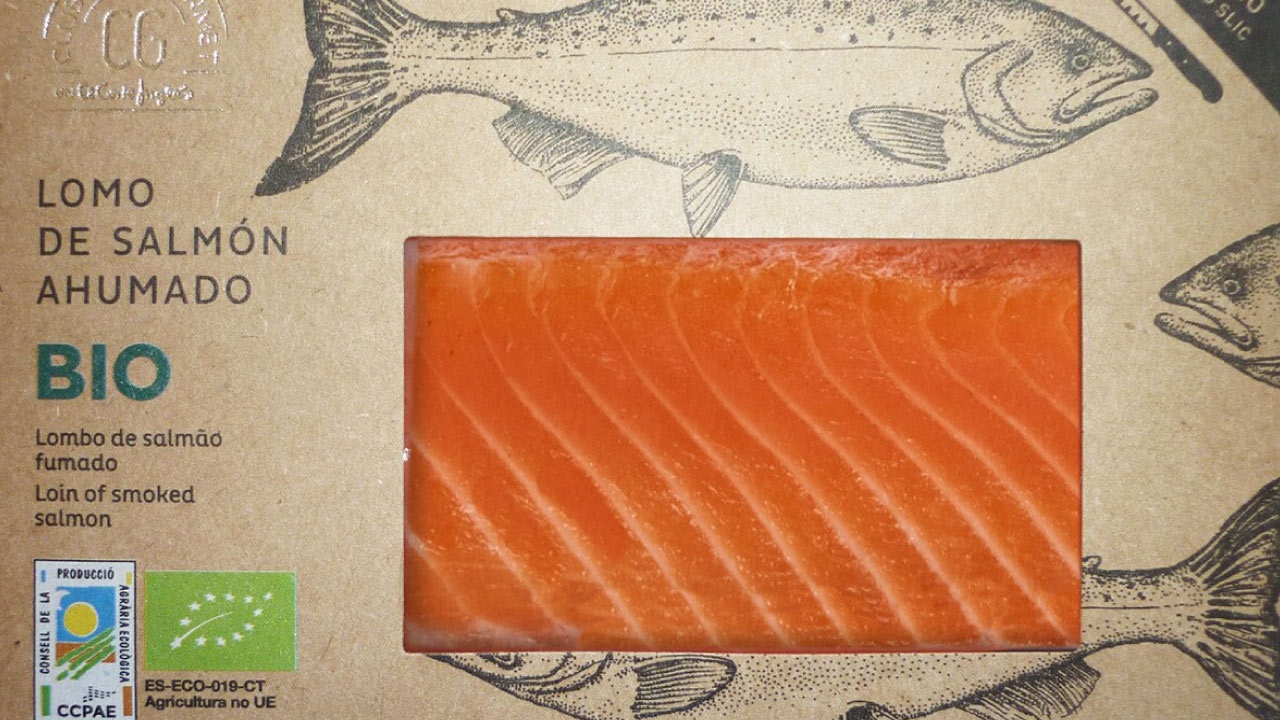
Although organic shellfish production has expanded steadily, the organic finfish sector still makes only a marginal contribution to overall output. This is largely due to a combination of structural constraints and “intertwined technical, economic and regulatory barriers” identified in a new study commissioned by the Federation of European Aquaculture Producers (FEAP).
Produced in collaboration with Fondazione COISPA ETS and Aristotle University of Thessaloniki, the report warns that these limitations continue to undermine the development and long-term viability of organic fish farming in Europe.
Across all surveyed farms, feed emerged as the most severe constraint. Farmers consistently reported that the “cost of certified organic feed” is very high and limits profitability. The report also highlights the “limited availability of adequate certified ingredients”, particularly for new species and early life stages, as well as the small number of feed suppliers operating under current organic rules.
These limitations significantly affect carnivorous species, which rely heavily on marine-derived proteins. Feed producers confirmed that sourcing certified high-quality raw materials remains a “serious challenge” due to the narrow global supply and competition with other sectors.
Juvenile availability was identified as the second critical bottleneck. For Mediterranean species, the study notes “difficulties in obtaining certified juveniles in sufficient quantities or at the appropriate time for stocking”, with some hatcheries ceasing organic production entirely. Several farms reported being forced to rear their own broodstock or risk shutting down organic operations.
For meagre, the situation is even more acute: “no organic juveniles are currently available commercially”, leaving producers dependent on internal hatchery production or repeated derogations from certifiers.
Despite higher production costs, many producers struggle to obtain the necessary price premiums. The report describes “weak market demand and distribution barriers” in countries such as Spain and Hungary, and notes that a number of farms have discontinued organic production as a result.
Even where demand is stronger, consumer awareness remains low, and the presence of alternative labels—such as ASC—creates confusion. Some producers reported selling 30–40% of their organic output as conventional due to insufficient market uptake.
For carp, the report notes that consumers perceive little added value in organic certification, as conventional production is already seen as environmentally friendly.
As a result, organic carp was deemed “not economically viable”, and certification ceased in 2024.
The study also highlights regulatory obstacles, particularly for Atlantic salmon, with one Irish producer facing licence applications pending for more than a decade and reporting “inconsistencies/variability in interpretation” of the rules between certifiers and national authorities, especially in mixed organic–conventional hatchery systems.
Mediterranean producers also reported a lack of expertise among some certification bodies, which often apply terrestrial farming criteria to aquaculture systems. Several farms have halted planned investments due to conflicting interpretations of the rule requiring separation of organic and conventional production.
The report warns that without clearer and more flexible rules, innovation could be stifled, stating that “the current rigidity of the organic framework risks killing the sector before it develops.”
Health issues received intermediate concern levels. Most producers consider organic restrictions on allopathic treatments manageable and consistent with organic principles. However, climate change is expected to exacerbate disease pressures, and the absence of organic medicated feeds is seen as a significant vulnerability.
Rainbow trout farmers also highlighted welfare issues linked to mandatory male–female broodstock composition, with males showing increased susceptibility to saprolegniosis.
One major European feed producer interviewed for the study reported that organic feed now accounts for just 14% of its production, down from up to one-third in previous years, mainly due to reduced demand. The company emphasised that ingredient availability—not manufacturing capacity—is the limiting factor, particularly the absence of concentrated plant proteins and the prohibition of synthetic amino acids.
As a result, organic diets rely more heavily on marine ingredients, which are costly and increasingly scarce. Some vegetable oils suitable for aquafeed, such as rapeseed oil, are difficult to procure due to competition from the food sector.
Related


EVENTS
-
21AprTue, 21 Apr - Fri, 24 AprGran Via - Fira Barcelona - Barcelona