
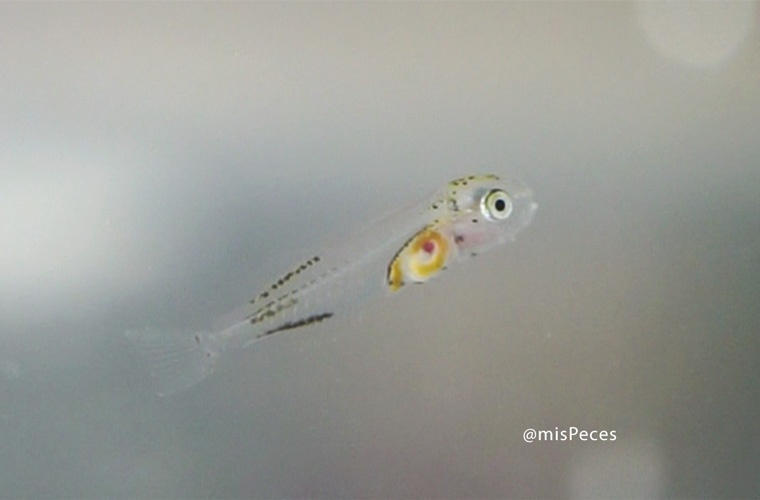
Feeding gilthead seabream (Sparus aurata) larvae with the copepod Acartia tonsa during the first days of life significantly reduces vertebral deformities and increases the proportion of fish achieving proper swim bladder inflation – two factors closely linked to larval quality and subsequent production performance.
Researchers at the University of Patras (Greece) evaluated the inclusion of Acartia tonsa in larval diets between 3 and 17 days post-hatching, comparing it with a standard protocol based on rotifer and Artemia. The trial continued until 25 days post-hatching and assessed digestive development, skeletal ontogeny and deformity prevalence.
Vertebral deformities affected 50% of larvae in the control group, compared with 17.3% in the copepod-fed group. Scoliosis, the most common abnormality, declined from around 38% to approximately 10%.
Successful swim bladded inflation exceeded 80% in the copepod group, while remaining below 60% in the control. In addition, the cleithrum – a key bone of the pectoral girdle connecting the fin to the axial skeleton – was fully calcified at the end of the trial only in copepod-fed fish.
Although growth rates did not differ significantly during most of the experimental period, copepod-fed larvae achieved a greater total length by the end of the trial.
More advanced digestive development
Larvae receiving Acartia tonsa also displayed more advanced digestive development, with longer intestinal villi and greater absorptive surface area, earlier appearance of goblet cells and increased hepatic lipid accumulation during critical developmental stages. According to the authors, this structural advantage may enhance nutrient digestion and absorption during the sensitive transition to Artemia and weaning diets.
The differences appear to be linked to the nutritional profile of copepods, which surpassed that of enriched rotifers and Artemia. Copepods provide higher levels of highly unsaturated fatty acids, a DHA/EPA ratio closer to optimal values, a naturally high phospholipid content and greater availability of key structural minerals such as calcium, zinc and magnesium. Moreover, as they do not require enrichment copepods reduce the formation of oil films at the water surface – a factor known to interfere with proper swim bladder inflation.
While large-scale commercial copepod production still presents logistical and economic challenges, the findings reinforce that structural fish quality is largely determined during the earliest days of life. Under increasing pressure to improve efficiency, reduce culls and enhance batch uniformity, targeted copepod inclusion may become a differentiating tool for Mediterranean hatcheries. The focus is shifting grom growth alone towards structural robustness and long-term performance.
Related

EVENTS
-
21AprTue, 21 Apr - Fri, 24 AprGran Via - Fira Barcelona - Barcelona