
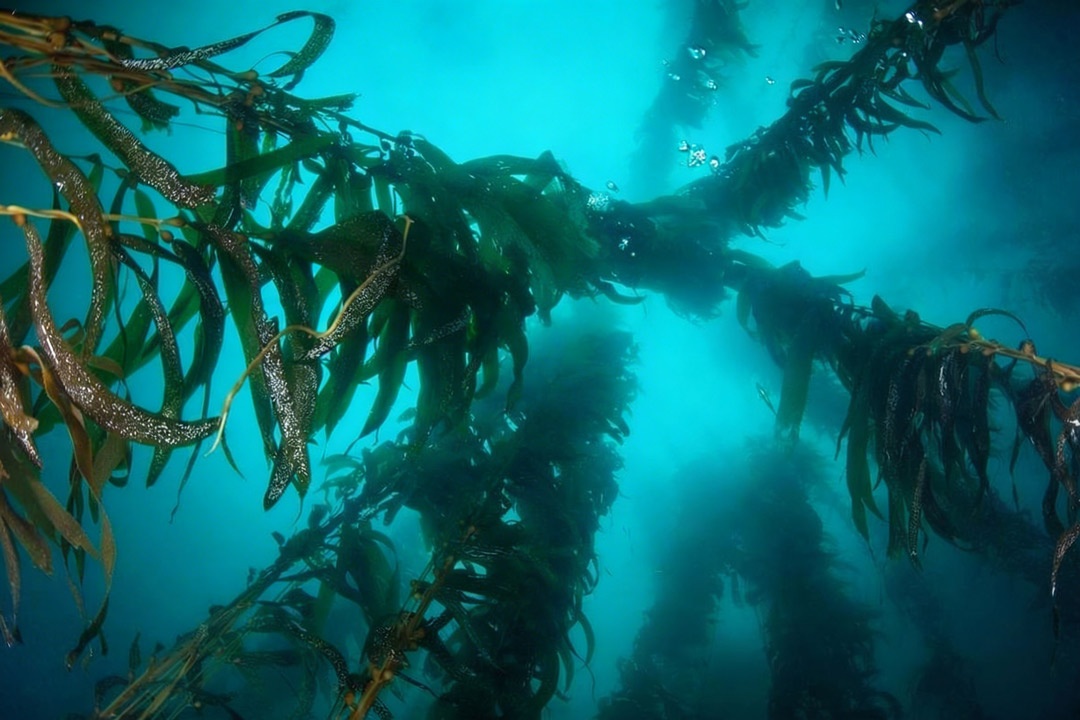
A new study from southern Chile suggests that not all kelp is equally suited for aquaculture – and that choosing the right strain could significantly improve performance under changing environmental conditions.
Researchers working on Macrocystis pyrifera found clear physiological differences between populations originating from estuarine and oceanic environments when exposed to low salinity and varying temperatures.
The biological origin of the strain proved to be a decisive factor. Juvenile kelp form inner-sea estuarine populations consistently maintained higher growth rates, superior photosynthetic performance, and a robust antioxidant capacity when subjected to hyposaline conditions.
Conversely, their oceanic counterparts struggled significantly, exhibiting an approximate 43% reduction in relative growth rates under low salinity at specific temperatures. These oceanic specimens also suffered from lower photosynthetic efficiency, increased tissue bleaching, and clear sings of metabolic stress.
These findings point to a distinct case of ecotypic differentiation, where local environmental conditions have shaped functional traits that are highly relevant to the aquaculture industry.
These results carry immediate implications for strain selection strategies in kelp farming. Estuarine-derived genotypes appear far better equipped for cultivation in coastal environments subject to freshwater inputs, such as fjords, coastal embayment, or nearshore sites heavily influenced y river runoff.
Selecting locally adapted kelp genotypes could therefore significantly improve farm resilience and productivity. This strategic choice is becoming particularly urgent as climate change is projected to increase extreme precipitation events and glacial melt, thereby intensifying salinity fluctuations in coastal waters.
Although the research focused on the Chilean Patagonia region, the underlying message resonates across global kelp-producing areas, including Europe.
The study draws parallels with other commercially important species, such as Saccharina latissimi and Undaria pinnatifida, which are also cultivated in environments where variable salinity can severely impact early-stage development and overall farm performance. This reinforces a vital lesson for the sector, proving that strain selection must be treated as a core production variable rather than a secondary consideration.
It is important to note that the study was conducted under controlled laboratory conditions, meaning further validation under commercial, open-water farming scenarios is still required. While it does not offer an instant, ready-to-deploy solution, it provides a crucial strategic direction for future breeding and seed-sourcing programmes.
As kelp aquaculture continues to scale up globally, integrating local adaptation into strain selection could ultimately become the deciding factor for farm productivity, climate resilience, and geographic expansion. In an industry that often prioritises infrastructure and deployment logistics, this research firmly spotlights a less visible but absolutely critical variable: the biological origin of the crop itself.
Reference:
Fernández, P.A., Poza, A.M., Wallet, T., Hernández, X., Camus, C. (2026). Ecotypic differentiation in populations of the giant kelp Macrocystis pyrifera from southern Chile: Implications for the species aquaculture development. Algal Research
Related

EVENTS
-
21AprTue, 21 Apr - Fri, 24 AprGran Via - Fira Barcelona - Barcelona