
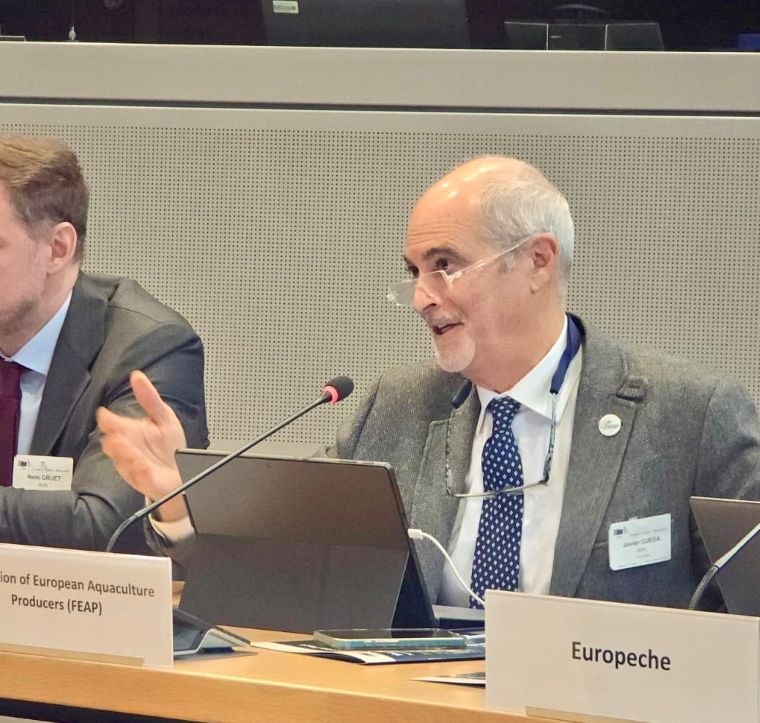
European aquaculture has raised its tone towards the EU’s evolving policy framework, warning that the newly established European Ocean Board will only have real impact if it addresses the accumulated regulatory pressure, widely seen as the sector’s main structural constraint.
During the Board’s inaugural meeting, held on 31 March in Brussels, the Federation of European Aquaculture Producers delivered a clear message to the European Commission: the sector does not need more strategic frameworks, but operational solutions that enable production under competitive conditions.
Representing the organisation, Javier Ojeda stressed that European aquaculture has seen little quantitative progress for over two decades, a situation he attributes not to technical limitations, but to an increasingly complex and restrictive regulatory environment .
“Fish farmers are tired of layers and layers of European regulations. They are exhausted by legislative inflation and cumulative regulatory pressure,” said Ojeda. “Even national competent authorities struggle to cope with it.”
He further warned that “the value of current legislative simplification efforts is very limited when, at the same time, new legislation continues to be promoted relentlessly”.
From a business perspective, FEAP underlined that this dynamic has direct consequences for the sector’s viability, particularly for micro and small enterprises, which face greater challenges in adapting to an ever-expanding regulatory framework.
“The sector needs a favourable business environment, not a regulatory nightmare,” Ojeda added.
Beyond the diagnosis, FEAP pointed to concrete examples of regulatory dysfunctions already affecting day-to-day operations. These include issues linked to packaging and packaging waste rules impacting fish transport, the lack of an EU-wide strategy to manage cormorant overpopulation, and organic aquaculture standards that are difficult to comply with in practice.
FEAP also warned that the Ocean Board risks becoming a forum with limited impact if it fails to influence EU policies beyond the maritime domain. “The Ocean Board cannot become a silo within DG MARE,” Ojeda stated.
In this context, the organisation called for the Board’s recommendations to be binding or, at least, to have real capacity to shape legislative action. “This Board will only provide added value to aquaculture if it serves to change this situation. This sector needs solutions, not more problems.”
As a concrete proposal, FEAP urged the European Commission to address the issue through empirical evidence. “The Commission seems not to recognise the real underlying reasons holding back aquaculture, namely legislative overregulation,” Ojeda said.
“We insist on carrying out at least one hundred reality checks across the EU, analysing both successful and unsuccessful projects, in order to identify the real barriers faced by producers.”
Ultimately, FEAP has made it clear that without a profound review of the regulatory framework, the political momentum behind the Ocean Board is unlikely to translate into tangible production growth.
Related
Latest In-depth
-
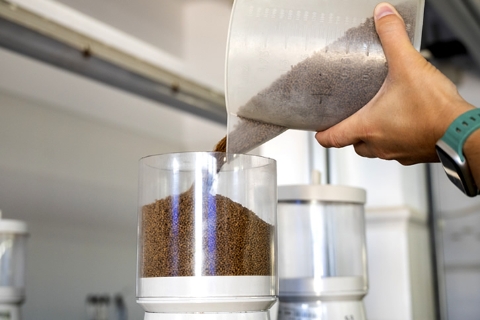
Alternative Ingredients: real diversification or a new dependency?
Global, 9 April 2026 | We have created a more complex system where production risk is distributed, but not eliminated
EVENTS
-
21AprTue, 21 Apr - Fri, 24 AprGran Via - Fira Barcelona - Barcelona