For decades, fishmeal and fish oil have underpinned the growth of aquaculture by providing a reliable source of high-quality protein. However, their finite nature and the increasing pressure on marine resources have exposed a structural limitation that has forced the sector to rethink its nutritional model.
In response, the industry has embarked on a sustained process of ingredient diversification, now widely recognised as essential to support future growth. The gradual incorporation of plant proteins, microalgae insects and microorganisms has significantly reduced reliance on traditional marine ingredients, while generating valuable technical and scientific knowledge that strengthens the resilience of the system.
Within this landscape of innovation, two ingredients have gained particular prominence: hydrolysates and fermentates. Rather than acting as simple substitutes, both introduce a new way of formulating aquafeeds, placing functionality, animal health and sustainability at the centre, while also enabling tangible progress towards circular economy models.
Hydrolysates illustrate the maturity achieved in the valorisation of by-products, transforming secondar streams of marine, agricultural or animal origin into highly digestible and biologically active ingredients. Their use has become well established, particularly at critical stages of the production cycle, thanks to their ability to stimulate feed intake, improve nutrient absorption and support gut health.
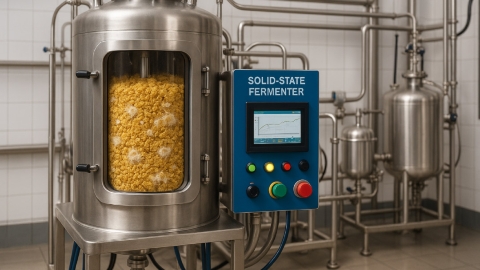
Fermentates represent a further step in this evolution. Produced through microbial fermentation, they enable the controlled and scalable production of proteins and functional compounds without direct dependence on finite resources. Their value lies not only in their nutritional contribution, but also in their capacity to enhance gut microbiota, strengthen innate immunity and improve animals’ resilience to stress and disease.
Taken together, hydrolysates and fermentates clearly reflect the shift underway in the industry: from diets formulated solely around cost and growth, to feeds designed to promote health, biological efficiency and production stability.
Looking ahead to 2026, the challenge is no longer to prove the viability of these alternatives, but to consolidate their integration in a coherent and systematic way. This will require continued investment in research, collaboration and standardisation, with the aim of turning recent advances into a nutritional model capable of sustaining aquaculture growth over the long term.
Related