
After several months of firm prices and a strong finish to 2025 marked by sharp market gains, the marine ingredients sector enters 2026 on a delicate footing. The latest data released by IFFO (The Marine Ingredients Organisation) show a positive production trend in some key origins, but fall short of dispelling uncertainty over the market’s ability to absorb further pressure amid rising demand and structurally limited supply.
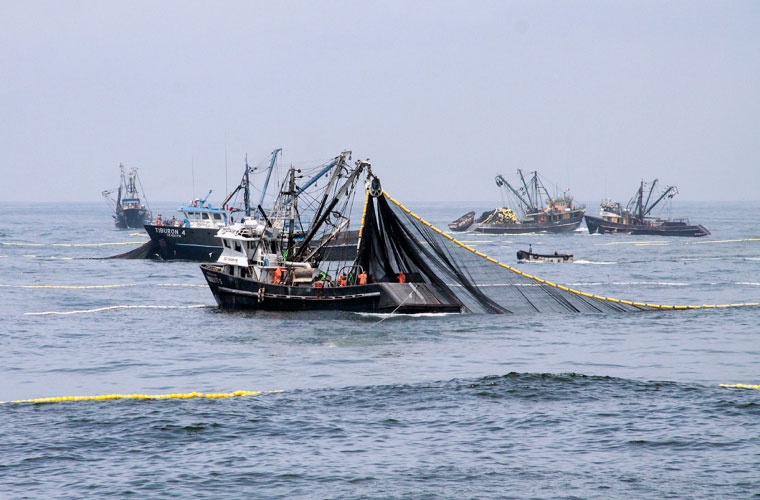
In Peru, the second anchoveta fishing season in the North-Central region has concluded with the fleet landing almost the entire authorised quota of 1.63 million tonnes. IFFO has described this outcome as good news for the market, while cautioning that, pending final consolidation of annual figures, total fishmeal and fish oil production in 2025 is expected to come in slightly below 2024 levels.
Cumulative data through November 2025 nevertheless point to year-on-year growth in aggregate production. According to IFFO, global fishmeal output rose by around 2% compared with the same period in 2024, driven by higher volumes across most regions, with the exception of parts of Africa, Iceland and the North Atlantic, where declines were reported.
Fish oil production showed a stronger increase, with cumulative output close to 7%. Here again, however, Peru stood out as an exception, as lower oil yields during 2025 limited growth.
These figures, based on statistics shared by IFFO members accounting for roughly 40% of global fishmeal production and 50% of fish oil output, help explain why the market has so far avoided a more pronounced imbalance. Even so, industry sources agree that the room for manoeuvre remains limited, and that the current balance depends heavily on the absence for further supply-side disruption.
Development in China reinforce this caution view. IFFO reports that domestic production of marine ingredients in China fell sharply in 2025 compared with 2024, with declines estimated at between 20% and 30%. Higher costs and weaker profitability have weighed on local producers and, with the main fishing season now over, prospects for recovery through to April 2026 appear limited.
At a result, China has increased its fishmeal imports, which rose by around 5% year on year, with Peru, Vietnam and Chile, emerging as the leading suppliers. This rise in imports coincides with continued growth in domestic aquaculture production. IFFO highlights that demand for fishmeal from the aquaculture sector – driven in particular by white-leg shrimp farming in southern China – is expected to continue rising into the March-April 2026 season.
At the same time, alternative raw materials offer little relief. Soymeal and maize prices have firmed in recent weeks, supported by stronger demand from the feed sector, limiting the scope to offset potential tightness in marine ingredients through substitution.
Overall, IFFO’s data point to a global supply picture that is somewhat more balanced than at certain points in recent years, but they do not alter the underlying assessment: the marine ingredients market remains highly sensitive. Factors such as fishery yields, developments in China and sustained international aquaculture demand continue to underpin the risk of volatile.
Looking ahead to 2026, industry attention remains firmly focused on fish oil. Although its inclusion rates are lower than those of other ingredients, its limited substitutability and direct dependence on yields make it the key trigger for price tension when markets tighten. As a result, despite signs of relative stability on the supply side, the combination of rising demand and limited capacity to absorb shocks keeps uncertainty firmly at the centre of the outlook for feed producers and aquaculture operators at the start of the year.
Related


EVENTS
-
21AprTue, 21 Apr - Fri, 24 AprGran Via - Fira Barcelona - Barcelona