
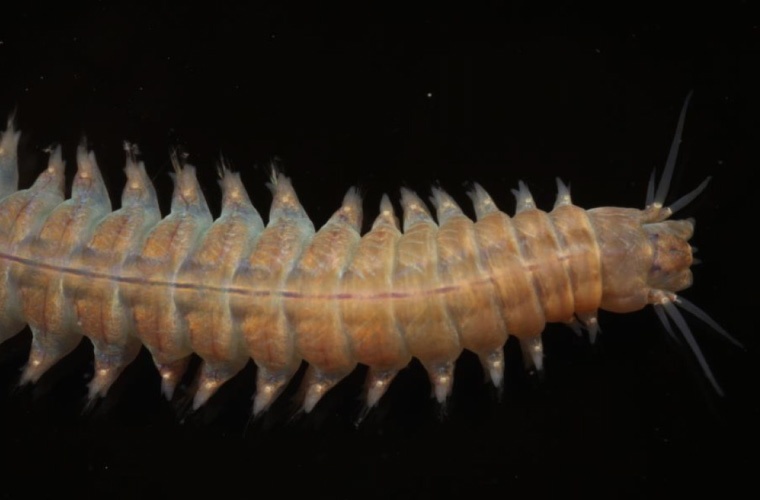
A recent study shows that polychaete meal from Hediste diversicolor can replace up to 50% of fishmeal in diets for European seabass (Dicentrarchus labrax) without compromising growth, feed efficiency or fillet quality, while significantly improving key sustainability indicators such as the Fish-in Fish-out (FiFo) ratio.
The research, published in the scientific journal Fish Physiology and Biochemistry, evaluated graded inclusion levels of polychaete meal – from 5% to 20% - in isonitrogenous and isolipidic diets for juveniles’ seabass, compared with a conventional fishmeal-based control diet.
After a seven-week feeding trial, the results showed that growth performance, specific growth rate (SGR) and feed conversion ratio (FCR) were not negatively affected by partial fishmeal replacement. No adverse effects were observed on condition factor or organosomatic indices, even at the highest polychaete inclusion level.
In parallel, the study reported a progessive improvement in apparent digestibility of protein, energy and organic matter as polychaete meal inclusion increased, indicating good nutrient availability and efficient utilisation of this alternative marine ingredient.
From a product quality perspective, the partial replacement of fishmeal did not compromise fillet quality. Fatty acid profiles remained stable, and in some cases the fillet showed increased levels of nutritionally relevant fatty acids, such as EPA and ARA, in fish fed diets containing polychaete meal.
Although some changes were detected in hepatic lipid metabolism – particularly at higher inclusion levels – the authors emphasise that not short-term negative effects were observed, and recommend longer-term studies to further assess potential physiological implications.
One the most relevant outcomes of the study is the reduction in the Fish-in Fish-out (FiFo) ratio. At a 20% inclusion level of polychaete meal, FiFo values dropped below 1, meaning that more farmed seabass biomass was produced than wild fish biomass used to manufacture the feed.
This result highlights the strong potential of polychaete meal as a strategic ingredient to reduce dependence waste flows, enabling integrated production systems and contributing to greater circularity within the aquafeed value chain.
In this context, polychaete meal emerges as a functional marine alternative to traditional ingredients, offering sustainability benefits without the anti-nutritional constraints associated with some plant-based protein sources.
The authors conclude that polychaete meal represents a viable and scalable solution to significantly reduce fishmeal and fish oil use in seabass diet, while maintaining productive performance and final product quality.
For the aquafeed industry, these findings reinforce the idea that the transition towards more sustainable feeds will be driven by evidence-based ingredient diversification, combining nutritional efficiency with measurable environmental benefits.
Related

Latest In-depth
-

European aquaculture self-sufficiency is not a production problem, but a policy coherence issue
Brussels, 28 January 2026 | Is the EU willing to bear the political and commercial consequences of such coherence?
EVENTS
-
21AprTue, 21 Apr - Fri, 24 AprGran Via - Fira Barcelona - Barcelona