
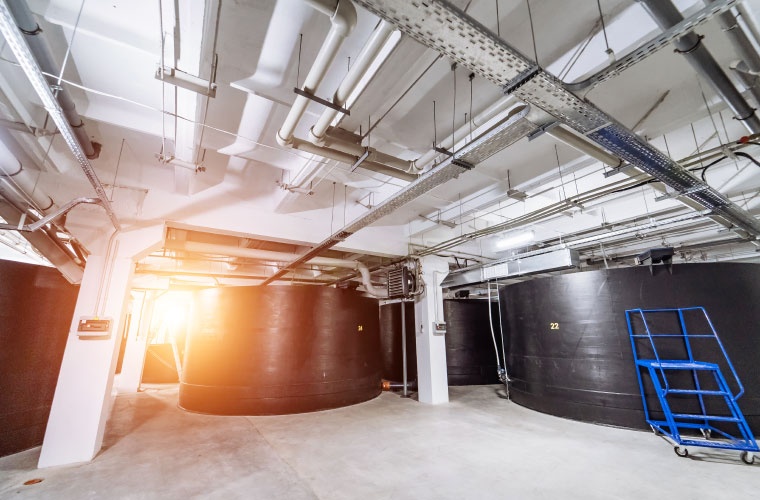
Recirculating aquaculture systems (RAS) are increasingly seen as one of the most promising technologies for expanding fish production close to markets while reducing water use and improving environmental control. However, their main limitation remains their high energy demand.
A recent scientific study shows that producing one kilogram of fish in RAS can require between 0.77 and 29.40 kWh of electricity, representing a difference of up to forty-fold between systems. This large variation reflects the strong influence of factors such as facility design, cultured species, environmental conditions and operational decisions on overall energy efficiency.
The research is based on a systematic review of scientific literature published between 2010 and 2024. In total, the authors analysed 25 datasets from 20 different studies in order to identify the main drivers of energy consumption in recirculating aquaculture systems.
The results show that energy consumption varies widely across facilities due to the diversity of system designs and operational configurations. Commercial RAS facilities, for instance, tend to use less electricity per kilogram of fish produced than experimental or research systems, where water quality control and experimental conditions often take priority over economic efficiency.
According to the study, commercial systems analysed consumed around 6.8 kWh per kilogram of fish, while research systems could reach 18.6 kWh per kilogram.
Differences were also observed between production environments. Freshwater RAS generally showed lower energy consumption than marine systems, mainly due to the additional water treatment and control requirements associated with saline environments.
Regarding biomass density, the authors note that systems operating at higher stocking densities tend to achieve lower energy use per kilogram of fish, since much of the equipment — such as pumps and filtration units — operates continuously regardless of production volume. However, the analysis did not identify a statistically robust relationship between stocking density and energy consumption, likely due to the limited amount of available data.
One of the key challenges identified by the researchers is the lack of standardisation in how energy data are reported in scientific studies. This heterogeneity makes it difficult to compare facilities and limits the ability to assess the real energy efficiency of RAS systems.
Indeed, the study found that it was not possible to establish clear correlations between energy consumption, water use or feed conversion ratios because of the scarcity and inconsistency of reported data.
To address this issue, the authors propose the development of common reporting standards for energy performance in RAS. Consistent indicators would help improve system design, enable more accurate estimates of the carbon footprint of land-based aquaculture and support better decision-making by producers, engineers and policymakers.
In a context of rising energy costs and increasing pressure to reduce carbon emissions, improving the energy efficiency of recirculating aquaculture systems is likely to become one of the key challenges for the sustainable development of land-based aquaculture.
Study reference
Shin, J. et al. (2026). Energy use in recirculating aquaculture systems: A systematic review of energy consumption per unit of fish production. Aquaculture
Related


EVENTS
-
21AprTue, 21 Apr - Fri, 24 AprGran Via - Fira Barcelona - Barcelona