
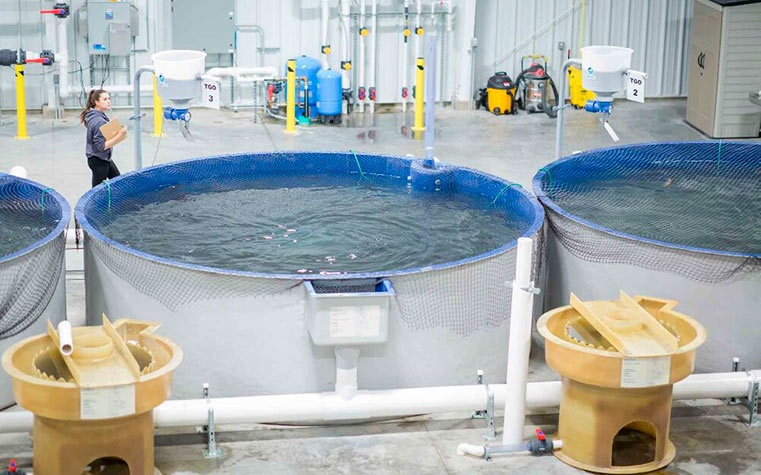
Not all aquaculture production systems face the same sanitary risk. Consequently, managing biosecurity in a recirculating aquaculture system (RAS) is fundamentally different from doing so in a flow-through facility.
RAS installations offer a very high degree of environmental control and greater efficiency in water use. However, this same structural design can create increased vulnerability if a pathogen gains entry.
Because water is continuously recirculated throughout interconnected units, any infectious agent may spread rapidly across the system. The very design that provides stability under normal conditions can, in the event of failure, become an amplifier of risk.
A new European biosecurity guideline for fish farm addresses these differences between production systems, providing a clear technical framework to adapt health management strategies to the specific design of each facility.
In well-designed RAS facilities, where preventive protocols are properly aligned, fish can benefit from a high level of biosecurity. To maintain this protection, water treatment processes must be continuously monitored, including ultraviolet disinfection and ozonation systems, ensuring they operate within validated performance parameters.
Particular attention must be paid to biofilter maintenance. While biofilters are essential for maintaining water quality, inadequate management may allow them to become reservoirs of opportunistic pathogens. In addition, robust backup systems – including pumps, oxygen supply and emergency power – are critical to prevent technical failures from escalating into large-scale health events.
Flow-through systems face different, and in some cases greater, challenges due to their lower level of environmental control. Here, the primary biosecurity risk lies not within the production circuit itself, but at the point of water entry. When water is sourced from surface supplies, the likelihood of introducing pathogens from the external environment increases significantly. Biosecurity therefore becomes a matter of establishing effective barriers and controlling access pathways.
The guidelines recommend physical protection of water intakes and, where feasible, the implementation of filtration or UV treatment systems. It also emphasises the importance of organising internal water flow to prevent effluent from older fish reaching younger, more vulnerable stocks.
In this context, practices such as the “all-in, all-out” principle, combined with complete tank draining, cleaning, disinfection and drying between production cycles, gain particular importance as practical tools to interrupt potential infection cycles.
Ultimately, the message is that in RAS facilities, the priority lies in maintaining internal microbial stability and preventing the spread of pathogens once inside the system. In flow-through farms, by contrast, the central challenge is preventing risk from entering in the first place, through stricter control of incoming water and the implementation of robust preventive barriers.
Related

Latest In-depth
-

Spain reshapes its aquaculture: investment, technology and new species in a phase of adjustment
By Alejandro Güelfo, Editor, misPeces | 20 March 2026
EVENTS
-
21AprTue, 21 Apr - Fri, 24 AprGran Via - Fira Barcelona - Barcelona