
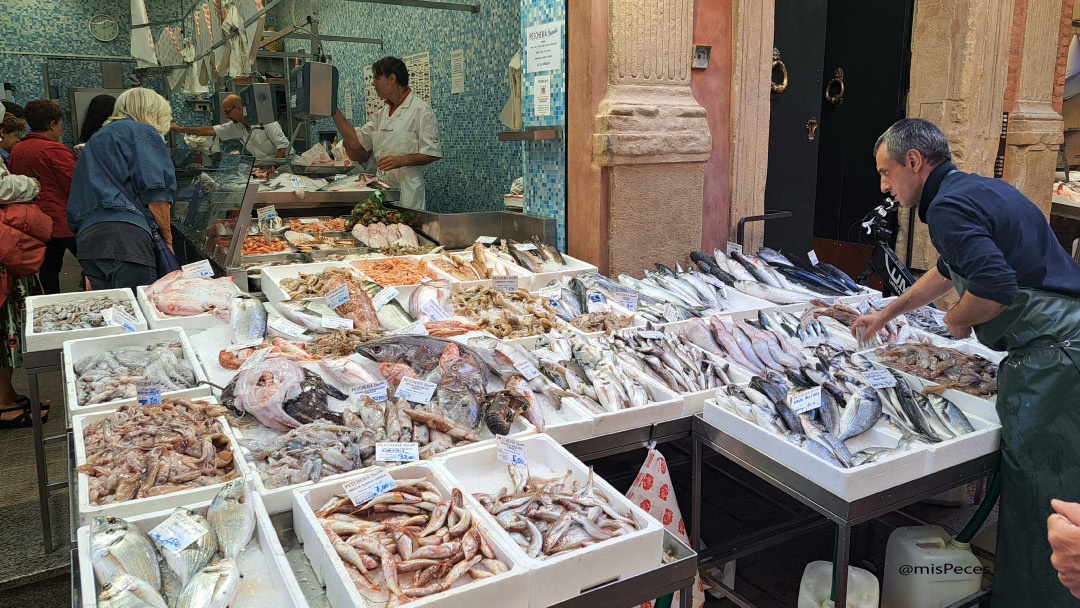
Europe’s “Blue Revolution” risks running aground before it even begins. This is the warning of a new study published in Marine Policy, carried out by researchers at the University of Bologna and the University of Foggia, in Italy.
It analyses, for the first time, the viewpoint of the entire supply chain – from producers to consumers – highlighting how the transition towards genuinely circular aquaculture is being hindered by deep disconnections between producers, policymakers, researchers, and citizens.
The authors point put that, although the sector has the potential to become “a driving force of the blue transition”, the adoption of circular models remains limited due to the absence of a “clear and consolidated vision” and to policies that are not fully aligned with real operational conditions.
The study reveals a clear conflict in the priorities of the various actors. For instance, while farmers emphasie energy costs – exacerbated by the pandemic and the war in Ukraine – policymakers are focusing the transition on the objectives of the European Green Deal.
In an interview with misPeces, researcher Margherita Masi explains that “producers prioritise cost-related strategies, such as energy interventions, whereas policymakers mainly focus on reducing emissions”.
Significant aspects also emerge on the societal front. The study highlights a marked “value-action gap” among Italian consumers. Previous literature has shown that a large proportion of citizens declare their support for more sustainable production models; however, actual purchasing decisions continue to be driven primarily by price.
The research shows that the same individual experiences a form of internal contradiction: as a citizen they express values and expectations linked to sustainability, yet as a consumer they are not willing to bear additional costs.
This distance between expectations and behaviour creates a contradictory market signal: society demands greater sustainability, but those who try to produce in a more circular manner are not truly rewarded. For companies, this translates into investments that are difficult to justify and even harder to recover.
The research highlights a marked “risk asymmetry”: policymakers set targets, researchers produce knowledge, but the burden of the transition falls entirely on farmers. Researchers confirm that “today aquaculture companies experience the circular transition as yet another crisis”: a process that adds to pre-existing economic challenges and requires further efforts, resources, and adjustments at a time when investment capacity is already severely limited.
The resulting picture is troubling. Researchers estimate that around 80% of Italian aquaculture companies currently operate under significant economic stress. Without policy cooperation, and widespread adoption of risk management tools, the transition towards sustainable models becomes scarcely sustainable for the sector itself.
To overcome these obstacles, the authors propose the creation of a “Blue-AKIS”, a knowledge and innovation system inspired by the agricultural AKIS under the CAP, capable of fostering dialogue between producers, science, policymakers, and citizens.
According to researcher Yari Vecchio, the blue transition risks failing if it is not accompanied by a cultural shift. “today farmers are no longer just fish producers but food producers”, a shift that “substantially transforms” their social and economic role.
The study ends with a clear warning: without coordination, without policies that reduce risks and social gaps, and without consumers willing to act according to the values they claim to uphold, the Blue Revolution will remain more an ideal than a reality. The opportunity exists, but -as the authors stress – it requires that “actors across the entire system start looking in the same direction”.
Reference:
M. Masi, E.S. Marrocco, G. Yeter, Y. Vecchio, R. Sardaro, M. Raggi, F. Adinolfi, Circular aquaculture: Unpacking views from farm to fork, Marine Policy, Volume 185, 2026, 106961, https://doi.org/10.1016/j.marpol.2025.106961
Related

EVENTS
-
21AprTue, 21 Apr - Fri, 24 AprGran Via - Fira Barcelona - Barcelona