
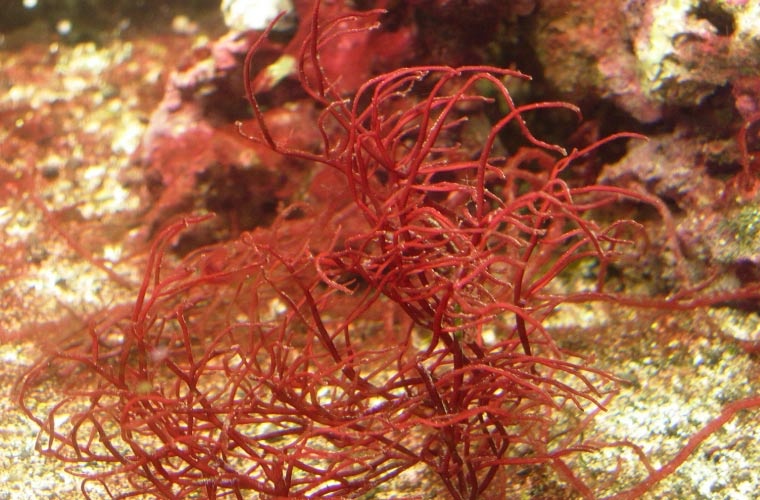
A seasonal rotation strategy using different red seaweed species could help stabilise biomass production and nutrient biofiltration in land-based Integrated Multi-Trophic Aquaculture (IMTA) systems. This is the conclusion of a new study examining how three commercially important macroalgae respond to changes in temperature and nutrient availability.
Researchers compared the physiological performance of Pyropia yezoensis, Chondrus ocellatus, and Gracilaria vermiculophylla under experimental conditions designed to simulate different operational scenarios in land-based aquaculture. The seaweeds were cultivated at three temperatures (10, 15 and 20 °C) and two nutrient concentrations, with measurements including carbon and nitrogen assimilation rates.
The results show that the three species occupy distinct thermal niches. Pyropia yezoensis behaved as a cold-water species, achieving optimal performance at temperatures between 10 °C and 15 °C but showing clear signs of stress at 20 °C.
By contrast, Gracilaria vermiculophylla demonstrated strong tolerance to warmer conditions, maintaining high growth and nutrient assimilation even at 20 °C. Meanwhile, Chondrus ocellatus showed intermediate performance, with optimal results around 15 °C.
Based on these findings, the authors propose a practical seasonal rotation strategy for land-based IMTA systems. In this framework, Pyropia yezoensis would be cultivated during winter and early spring, Chondrus ocellatus during transitional periods in spring and autumn, and Gracilaria vermiculophylla during the warmer summer months.
Such an approach could help maintain consistent macroalgal biomass production throughout the year while improving nutrient removal in integrated aquaculture systems. Land-based IMTA facilities often experience seasonal fluctuations in temperature and nutrient loads, which can limit the performance of a single seaweed species if used year-round.
According to the researchers, understanding species-specific responses to environmental conditions is essential for designing more resilient and efficient aquaculture systems. Selecting different macroalgae adapted to specific seasonal conditions may therefore support both stable production and enhanced bioremediation capacity in integrated aquaculture operations.
Reference
Shin, S., Han, Y.-S., Yarish, C., & Kim, J. K. (2026). Temperature and nutrient responses of three red algae: Implications for species rotation in land-based aquaculture. Journal of the World Aquaculture Society. https://doi.org/10.1111/jwas.70083
Related

EVENTS
-
21AprTue, 21 Apr - Fri, 24 AprGran Via - Fira Barcelona - Barcelona